
How We Work
Discover everything about our studio, from our creative process and workflow to what we deliver. Learn how we bring your vision to life with exceptional quality and clear communication.
See our process
3D rendering services turn architectural drawings into photoreal images of a space that is not built yet. Offices, buildings and retail interiors, as stills, walkthrough film and browser tours, with first drafts 3 to 4 days after the order.
A render is not a picture of your drawing. It is a build. We take the CAD or Revit model, rebuild what is not modelled properly, apply the real finishes from your schedule, light the space the way it will be lit on the day, and render it at a resolution that survives a 4K screen in a pitch room.
The tools, since people ask: 3ds Max with V-Ray and Corona for the model and the photoreal render, Chaos Vantage for real-time look development and fast camera iteration, DaVinci Resolve for the edit and the grade on anything moving. We do not build these in a game engine. Real-time engines are quicker to change and worse to look at, and the client signing the fit-out notices.
Most of what we do is commercial. The studio has delivered 500+ projects for clients including Unispace, Morgan Lovell, Oktra, Peldon Rose, Zoom and Revolut, and that concentration is the reason the pricing below is specific rather than a range. We have priced this exact job enough times.
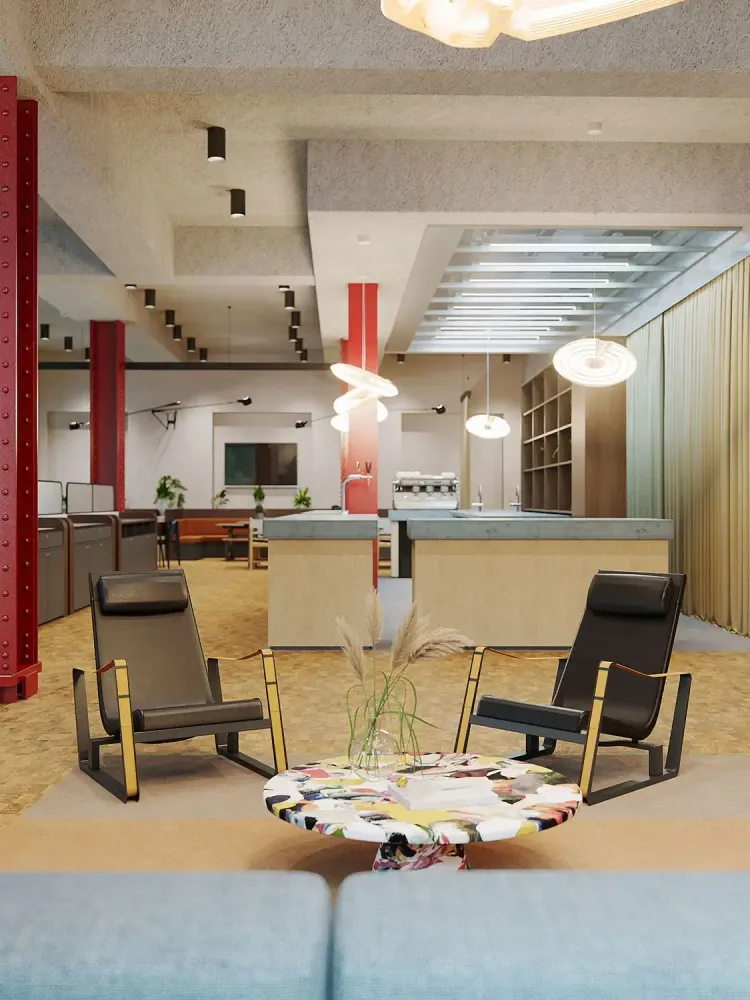
Offices and workplace fit-outs are the largest part of our work. A Design and Build firm sits in a pitch room with a client who cannot read a plan, and the render is the thing that closes the gap: reception, open plan, tea point, boardroom, lit the way the finished floor will actually be lit. The same set gets reused by agents marketing space that is still a shell.
The full breakdown, with fit-out examples, is on office and commercial interior rendering.
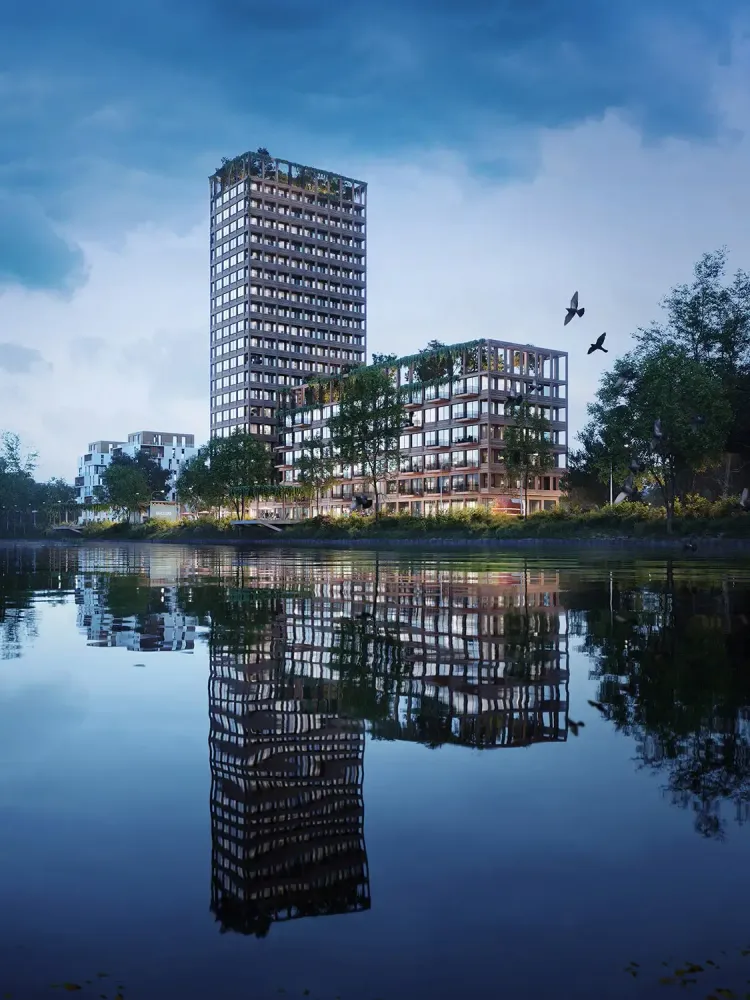
Exteriors and interiors of a scheme that has not been built, made from your drawings. Developers use them for planning submissions and for selling off-plan, which is a different job from a fit-out pitch: the image has to hold up next to the real street it will stand on, in the right light for the right time of day.
How we handle exteriors and the planning case: architectural visualization.
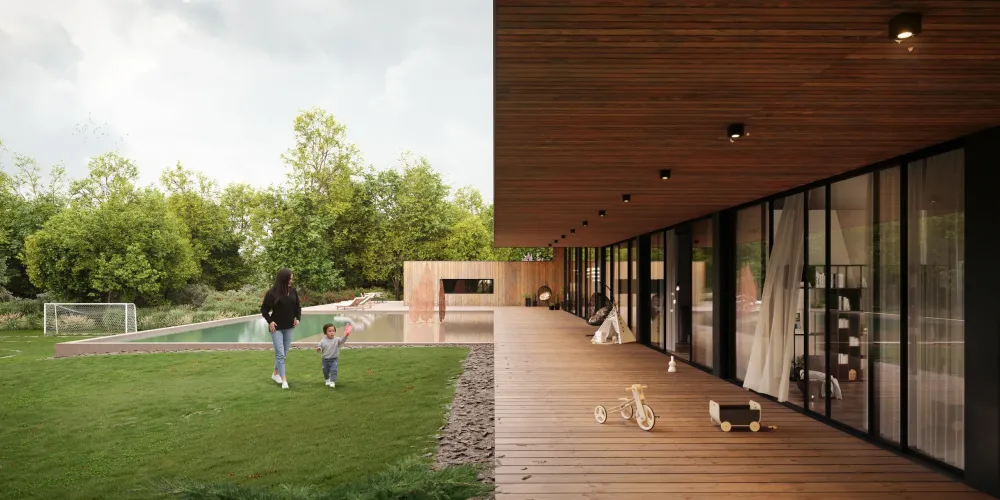
Villas, apartments and housing schemes sold before they are built. The buyer cannot visit, so the renders do the visiting: the street outside, the living room at dusk, each unit as a 3D floor plan. Developers and agents run one set across the brochure, the property portals and the site hoardings.
What a sales launch needs, from exteriors to floor plans: real estate rendering.
A film of the finished space, shot at eye level and at walking pace rather than as a camera gliding past on rails. Most walkthroughs on the market are fly-throughs, and they feel robotic because they are. Setup and the first 60 seconds of 4K cost 2,500 pounds, then 1,000 pounds for each additional 30 seconds.
The shot logic and the full pricing: 3D walkthrough animation.

A tour someone walks through in a browser, on any device, of a space that does not exist yet. A Matterport scan needs the room built first, so it answers a different question. We build the tour from the same CAD or Revit model as the stills, which is why a tour is cheaper when it runs alongside a render package for the same floor.
How the tours get built: CGI 360 virtual tours.

A branded 3D space customers move through in a browser, built for retail and product brands rather than for a tender. Amazon, Walmart and Shopify are all building versions of this, which tells you where the format is going.
What a showroom build actually involves: virtual showrooms.
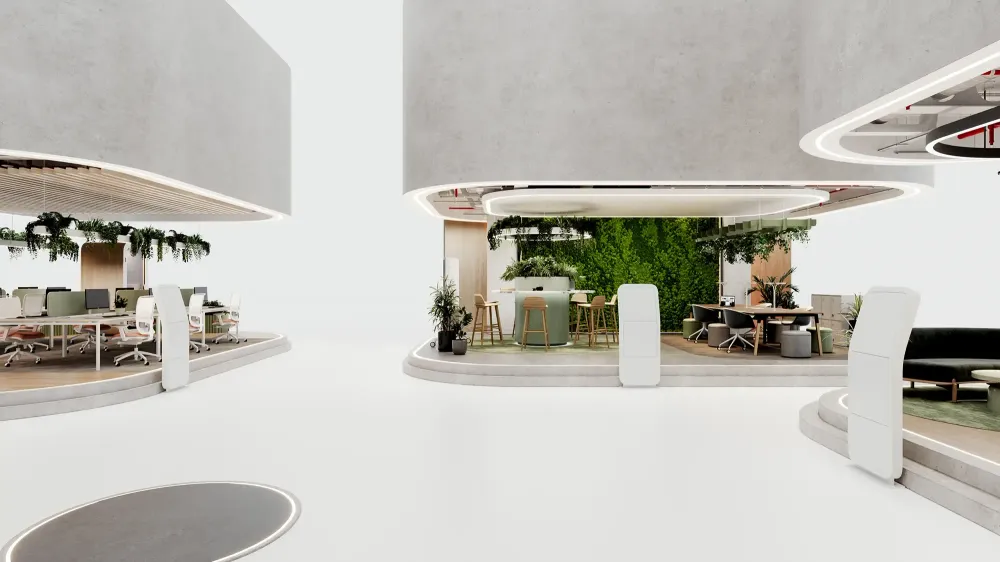
Galleries, museums and exhibitions rebuilt as something a visitor can walk through from anywhere. Same pipeline as the commercial work, different brief: the job is access and preservation rather than a signature on a tender.
The cultural side of the same pipeline: virtual culture work.
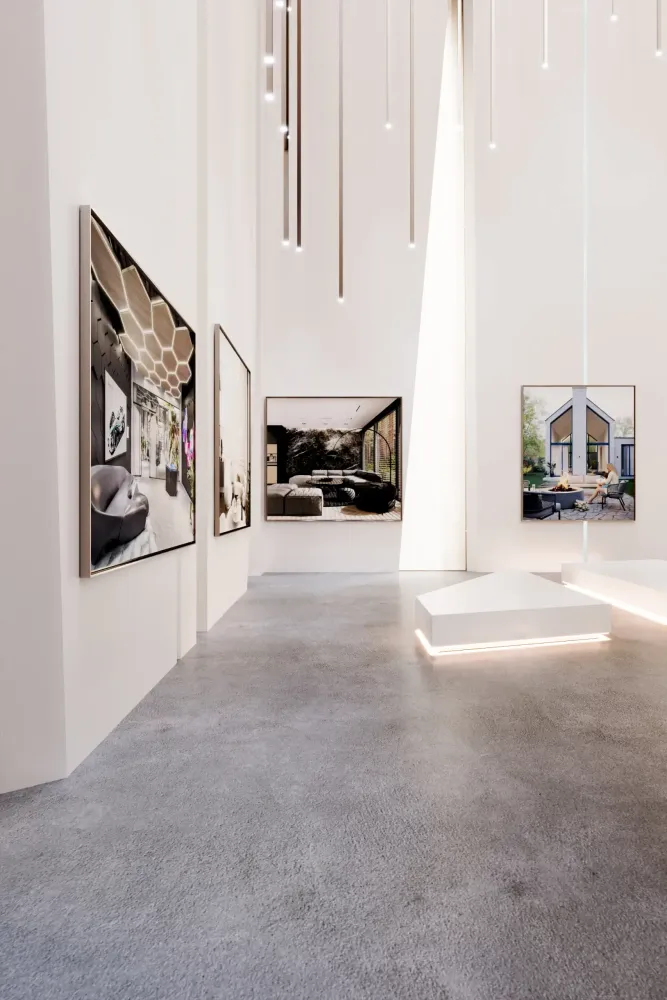
Three formats get called 3D rendering and they are not interchangeable. A still is one frame, and it is what goes on a tender board, in a brochure and into a planning pack. It is the cheapest asset per unit and the one a client actually forwards to a colleague, which is why most fit-out projects start and often end here.
A walkthrough is a film, and it earns its cost when the argument is the flow between spaces rather than any single room: reception into open plan into the breakout, at eye level, at walking pace. A 360 tour is the one where the viewer chooses where to look, so it suits a remote audience deciding on their own time, which is usually a letting or an off-plan sale.
And the case that is not us at all: if the space is already built and you need a record of it, a scan is the right tool. We render what does not exist yet. If you are weighing the two, the honest comparison is in CGI virtual tour vs Matterport.
Four kinds of client, wanting different things out of the same model. Design and Build contractors need a set that wins a fit-out tender, which means the images have to read as a finished floor to someone who cannot read a plan. Developers need planning and off-plan sales material, where the building has to sit believably in the street it will actually stand on. Letting agents need a shell to look like a workplace before a tenant will walk it. Retail and cultural clients need a space people move through rather than look at.
Workplace fit-out is where our judgement is strongest, and it is also where we will tell you that a render is the wrong spend. If the floor is already built and you only need a record of it, a scan is cheaper and faster than anything we would model.
Stills arrive as high-resolution files sized for print and for screen, handed over as the set builds rather than in one drop at the end. A walkthrough arrives as a 4K master in MP4 or MOV with voiceover and sound design already in the edit, plus vertical and square cuts for LinkedIn, Instagram and TikTok, plus hero frames pulled from the animation for brochures and boards. A 360 tour arrives as a browser link you can sit behind your own domain. A free-roam interactive build is an add-on, and we suggest it only when a project genuinely calls for one.
First drafts land 3 to 4 days after the order. A full package runs from two weeks upward with the size of the floor, and we hold the final 48 hours before your deadline for the last render and post. A late change to the finish schedule is the one thing that genuinely moves the date.
Revisions while the project is running are free and do not restart the clock. After final handover, changes are 350 pounds a day. For animation length there is a rule we trust: roughly 60 seconds per 500 square metres of floor area, set exactly against your plan.
Flat prices, not a range you have to negotiate down from. Volume brings the rate down: a package of stills for a whole floor is priced per still, and a tour or a walkthrough costs less when it runs alongside a render package for the same space, because the 3D scene is already built.
| Small space still WC, small meeting room, focus room | 550 pounds |
| Medium space still Meeting room, tea point, breakout, reception | 700 pounds |
| Large or open-plan still Open-plan floor, multi-zone scenes | 800 pounds |
| Exterior CGI Building and context views, aerial perspectives | from 1,000 pounds |
| 3D walkthrough Setup and the first 60 seconds, 4K | 2,500 pounds |
| 3D virtual tour Setup with 5,000 sqft included | 1,500 pounds |
The full model, including the volume discount and the retainer, is on the price list. Send a floor plan and your estimate lands within 1 hour.
The studio is in London, on Paul Street in Shoreditch, and most of the work comes from here. The pipeline travels without us: projects have shipped to the Gulf, to Florida and to Ireland, and each city has a page with the work we have done there.
Discover everything about our studio, from our creative process and workflow to what we deliver. Learn how we bring your vision to life with exceptional quality and clear communication.
See our processA studio builds a 3D model of your space from your drawings, applies real materials and lighting to it, and renders images or film of how it will look when it is finished. You send a floor plan, a CAD or Revit file and a finish schedule. You get photoreal stills, an animation or a browser tour of a space nobody has built yet.
A single interior still runs 550 to 800 pounds depending on how much of the floor is in shot. Exteriors start at 1,000 pounds. A walkthrough is 2,500 pounds for setup and the first 60 seconds of 4K, then 1,000 pounds per 30 seconds after that. Volume brings the rate down, and your estimate lands within 1 hour.
First drafts land 3 to 4 days after the order on a typical package. Revisions during the project are free and do not restart the clock. What moves the date is the quality of the input: a coordinated model and a settled finish schedule are worth more to the timeline than anything we do at our end.
A floor plan is enough for a first estimate. To build, we want the CAD or Revit model, a finish schedule or mood board, and any brand material that has to appear in the space. If the model is messy we will say so before we start rather than halfway through.
3ds Max with V-Ray and Corona for the model and the photoreal render, Chaos Vantage for real-time look development and fast camera iteration, DaVinci Resolve for the edit and the grade. We do not build these in a game engine, because the look that survives a 4K screen in a pitch room comes from the offline renderer.
The studio is in London, on Paul Street in Shoreditch, and most of our clients are here. The work itself travels: we have delivered projects in Dubai, Abu Dhabi, Riyadh, Miami and Dublin. Nothing about the pipeline needs us to be in the building.