

Project

Virtual Solutions
Virtual Showroom
A virtual showroom is a branded 3D space your customers walk through in a browser, the same idea Amazon is testing with Amazon Beyond for LEGO, Samsung and Star Wars. We build bespoke ones on Babylon.js: a storefront you own and shape around your brand, not a rented template. No headset, no app, just a link. Call it a virtual showroom, an online showroom or a digital showroom; the job is the same, a place your buyers can walk, not scroll.
Overview
Bespoke Virtual Storefronts, the Amazon Beyond Category
Amazon, Walmart and Shopify are all building 3D virtual stores. Amazon Beyond alone runs more than ten, for brands like LEGO, Samsung and Star Wars. So the category is real, and the big players have proved the demand. The room left for everyone else is to do it with character. We build bespoke virtual storefronts on Babylon.js, a branded space designed around how your customer should discover your products, rather than a template dropped over a catalogue. It runs in any browser, on a phone or a laptop, with no headset and no download. You commission the build and you own it, rather than renting a slot on someone else's platform. The space can be a digital twin of a showroom you already run, or a flagship that could never exist physically; the browser does not care which.







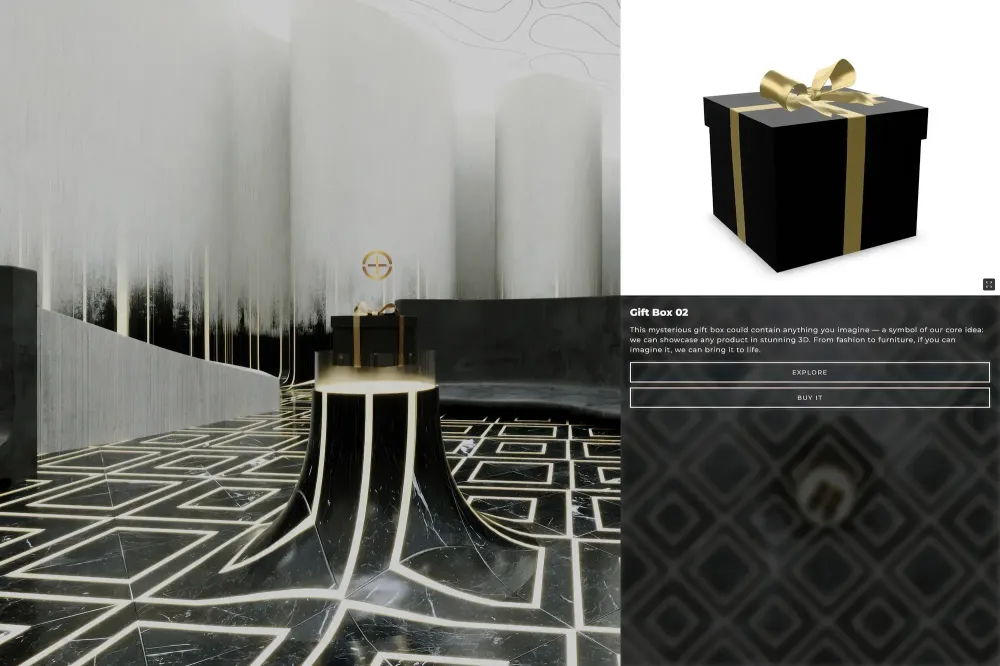
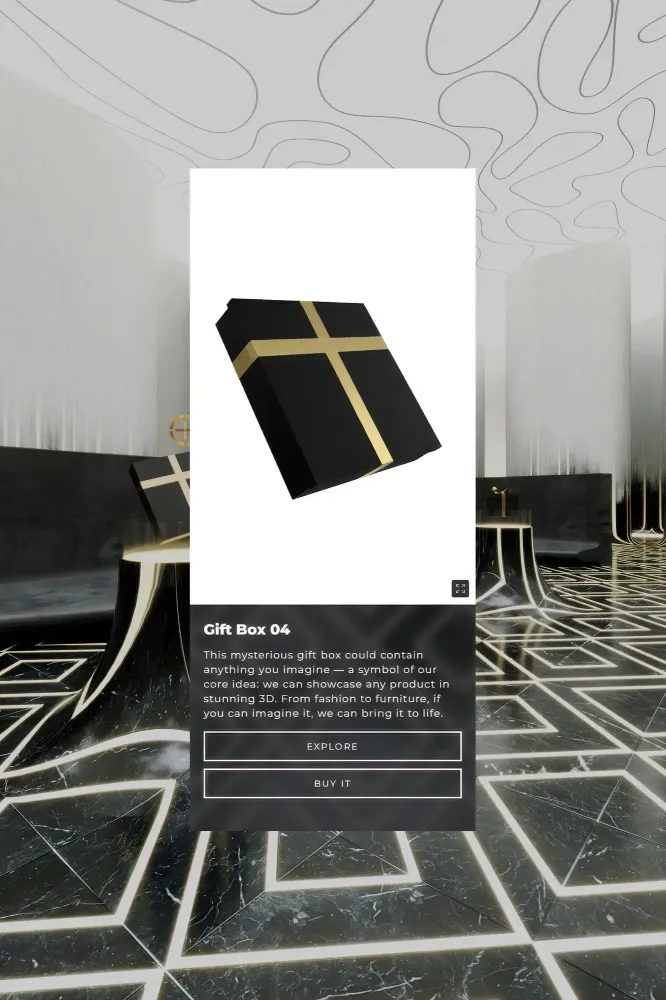
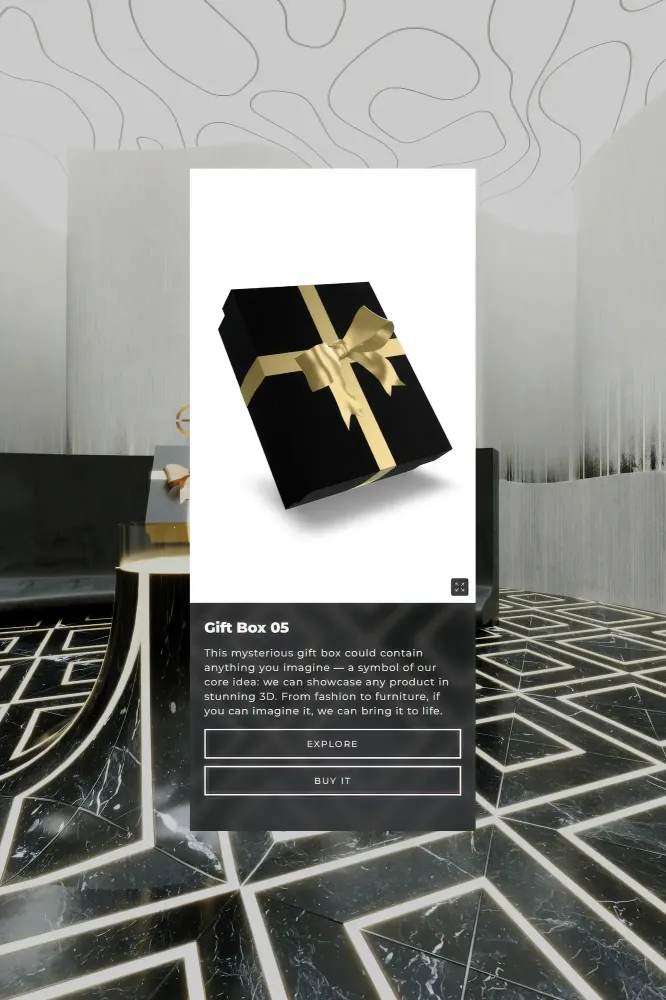
01 / 10
See the renders above? Walk the finished store yourself, in your browser, no headset.
Walk the live 3D showroom500+
Projects
1h
Estimate
5K
Stills
4K
Animation
See what your project would cost.
Our process
How We Work
Discover everything about our studio, from our creative process and workflow to what we deliver. Learn how we bring your vision to life with exceptional quality and clear communication.
See our processVirtual Showroom in detail
- The category: proved by the biggest names in retail
- The tech: why we build on Babylon.js
- The model: you own it, you do not rent it
- Where we are, honestly
The big players already validated this
Virtual storefronts stopped being a concept the moment Amazon, Walmart and Shopify started shipping them. Amazon Beyond runs more than ten 3D stores, for brands including LEGO, Samsung, Star Wars and Nespresso. Walmart has Realm. Shopify partnered with Roblox. When that many incumbents invest in the same idea at once, the demand question is answered.
The room left to compete on is character. A virtual storefront works when it is a branded place worth exploring, designed around your products and your story, rather than a generic template. That is the kind we build, and it is where a focused brand can stand out instead of blending into a one-size-fits-all rollout.
If you are still working out the terms, our explainer on what a virtual showroom is covers the basics.
For the full picture of the category (what an online showroom is, platform versus custom build, and what each route costs) see our online showroom guide.
A custom stack, not a rented template
We build our storefronts on Babylon.js, the open-source WebGL and WebGPU engine that powers real-time 3D in the browser. It is the same class of technology behind the best web 3D experiences, and it runs on any modern browser without a plugin, an app or a headset.
- Browser-native: a customer opens your storefront from a link, on the phone in their hand. No install, no friction.
- Optimised assets: products are delivered as glTF/GLB, compressed and level-of-detail managed, so the space loads fast even on mobile data.
- Bespoke, not boxed: because we build the stack rather than rent a platform, the environment is shaped around your brand, not squeezed into a template.
This pairs naturally with our other immersive work: a 360 virtual tour for a built or unbuilt space, and virtual culture experiences for museums and galleries.
Build plus traffic, not a subscription
The pricing tells you what kind of thing you are buying. SaaS virtual-store platforms charge a monthly subscription for a template, and the storefront is theirs, not yours. We work differently. You pay for the bespoke build, which starts from around 20,000 pounds depending on size and interactivity, and then a monthly fee that covers traffic and hosting. The build is yours.
That suits a brand that wants a storefront as a real marketing asset, designed once and owned, rather than a disposable template. It is the same logic we apply across our work: own the thing that represents you, do not rent it. For the full picture of how we scope and run projects, see how we work.
An emerging service, stated plainly
We would rather be straight with you than oversell. The virtual storefront category is proven by the biggest names in retail. Our bespoke version is a service we are actively building: we have produced several demo storefronts and a virtual furniture showroom, and the deeper e-commerce integration, live pricing and checkout from inside the 3D space, is in active development now.
What that means for you is opportunity and honesty in the same breath. Almost nobody in your sector has a genuine bespoke 3D storefront yet, so being early is cheap and visible. If you want to explore one, start with the angles that fit your business: a virtual furniture showroom, a virtual showroom for retailers, or simply how to build a virtual showroom. Then start a conversation on our contact page.
FAQ
It is a branded 3D space your customers explore in a browser, the same idea behind Amazon Beyond, where brands like LEGO and Samsung have 3D stores. Instead of a grid of photos, a shopper moves through a designed environment and interacts with products. We build bespoke versions rather than template ones.
Our own stack on Babylon.js, the open-source WebGL and WebGPU engine. It runs in any modern browser on desktop or mobile, with no app and no headset. Products are delivered as optimised glTF/GLB 3D assets so the space stays fast.
No. It opens from a link in a normal browser on a phone or laptop. VR is possible, but the point is reach, and reach lives on the phone in someone's hand.
Live e-commerce integration, such as pulling real-time pricing and add-to-cart from inside the 3D space, is in active development. Today the storefront drives discovery and routes shoppers to your existing checkout. We will tell you plainly what is ready now and what is on the roadmap rather than overselling it.
It is priced per project. A bespoke build starts from around 20,000 pounds depending on the size of the space and the level of interaction, plus a monthly fee for traffic and hosting. You own the build outright, which is the difference from a SaaS platform you rent month to month.
SaaS platforms are quick and cheap, and for some brands that is the right call. The trade-off is that you get a template everyone else uses and you stop having it the day you stop paying. A bespoke build on Babylon.js is a branded world you own. Different budgets, different outcomes.
Honestly, both. The category is proven by Amazon, Walmart and Shopify. Our own bespoke version is an emerging service: we have built several demo storefronts and a virtual furniture showroom, and we are developing the deeper e-commerce integration now. If you want to be early in your sector, this is the moment.
Yes. Online showroom, virtual showroom and virtual storefront describe the same product from different angles, and digital showroom often means a digital twin of a physical space. Whatever you call it, the test is the same: a branded 3D space in a browser that your buyers can actually walk.
Ready to get started?
Talk through your virtual showroom project on WhatsApp, or see exactly what it costs.
Where we work
Further reading
Online Showroom: What It Is, Platform vs Custom Build, and Costs
What an online showroom is, what it changes for a brand, when to rent a SaaS platform versus commission a custom build you own, and what each route costs.
Read the guideWhat a Virtual Showroom Is: CGI-Built vs Platform-Hosted
A virtual showroom is a branded 3D space customers explore in a browser. How it differs from a virtual tour, and why CGI-built beats a SaaS template.
Read the guideThe Virtual Furniture Showroom, and What It Is Really For
A virtual furniture showroom is a branded 3D space buyers explore in a browser. What it costs, how it is built on Babylon.js, and the job it actually does.
Read the guideA 3D Virtual Showroom for Retailers: When It Pays, When It Does Not
The conversion case for a 3D virtual showroom in retail, which products suit it, what it costs, and the honest limits, from a studio that builds them.
Read the guideHow to Build a Virtual Showroom: The Real Production Steps
How a virtual showroom is actually built, from 3D assets to a browser-ready space on Babylon.js, and how to decide between a DIY tool and a commissioned build.
Read the guide