Architectural Visualization
Turn blueprints into pre-sold properties. We create photorealistic exterior CGI that helps developers secure planning pe...

Luxury Hospitality / Corporate Lounge — One Za'abeel, Dubai, UAE
An interior architecture practice asked us to visualise an ultra-exclusive lounge and bar inside One Za'abeel, the Dubai development best known for the world's longest cantilevered skybridge. The space is aimed at international business travellers and VIP guests, and the renders had a job to do before fit-out: prove a very ambitious interior to the developer's board and get a fast sign-off.


An interior architecture practice asked us to visualise an ultra-exclusive lounge and bar inside One Za'abeel, the Dubai development best known for the world's longest cantilevered skybridge. The space is aimed at international business travellers and VIP guests, and the renders had a job to do before fit-out: prove a very ambitious interior to the developer's board and get a fast sign-off.
I'll set my own boundary early. Hospitality is a space I've only touched, not my core office work, so I'm not going to lecture anyone on bar flow or guest dwell time. Where my studio earned its place was the technical fight, which on this scheme was reflections.
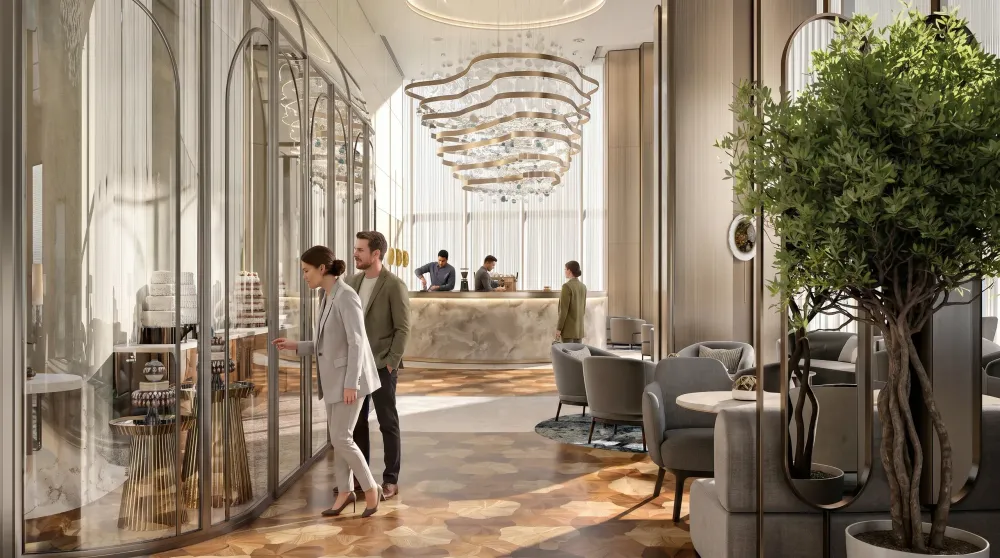
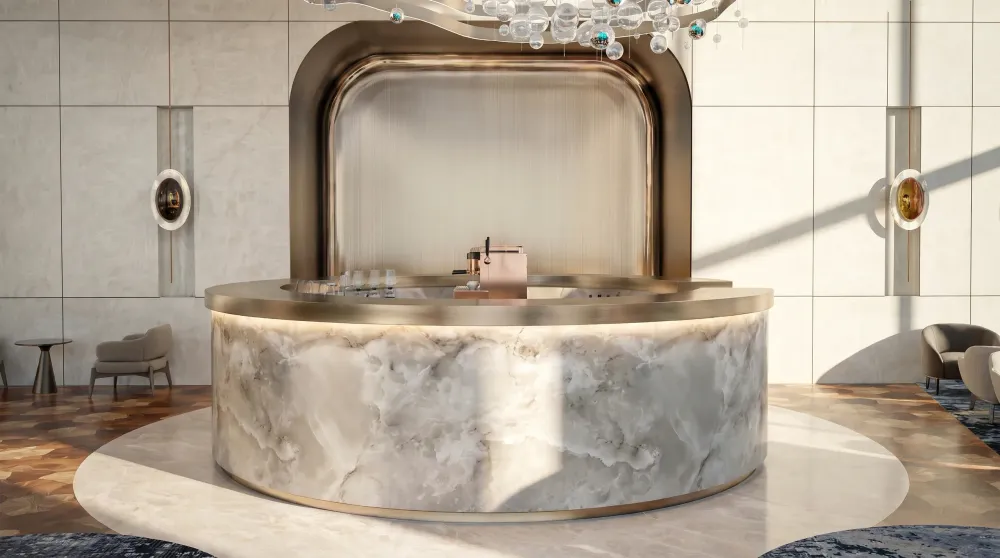
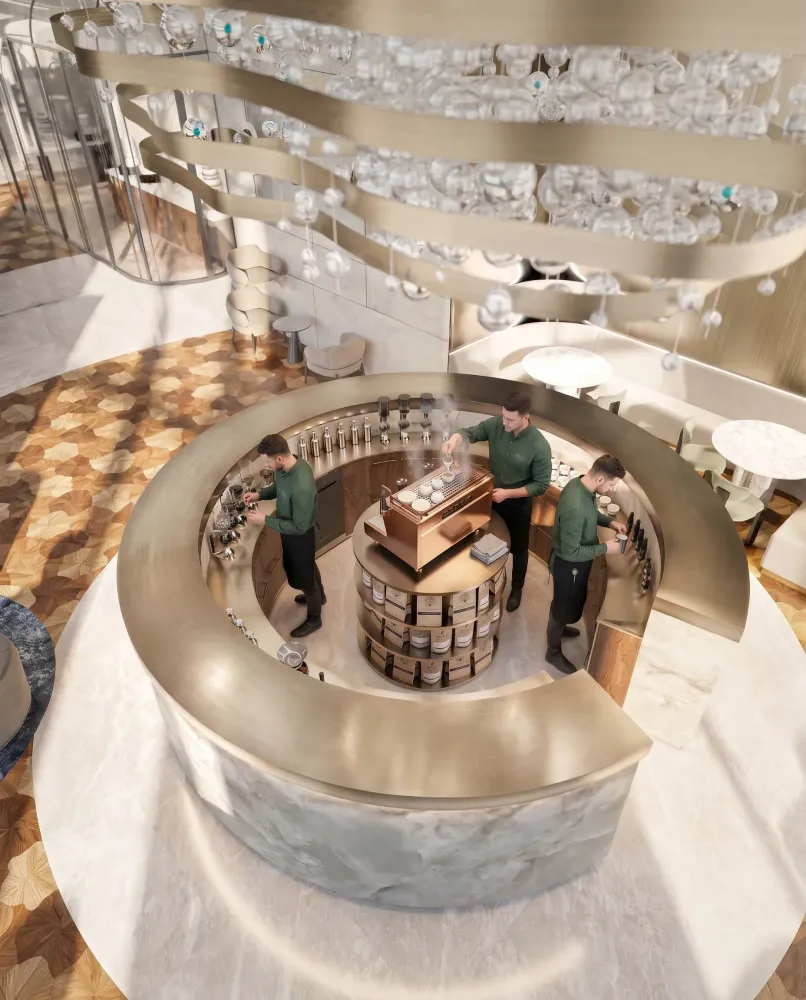
This interior is a worst case for a render engine. Brushed champagne-gold wall panels, polished calacatta marble floor, glass-walled display pavilions, a circular bar in white onyx, all under floor-to-ceiling Dubai daylight. Every one of those surfaces throws light somewhere, and if you get it wrong they go one of two ugly ways: a flat artificial mirror, or a noisy mess of blown highlights.
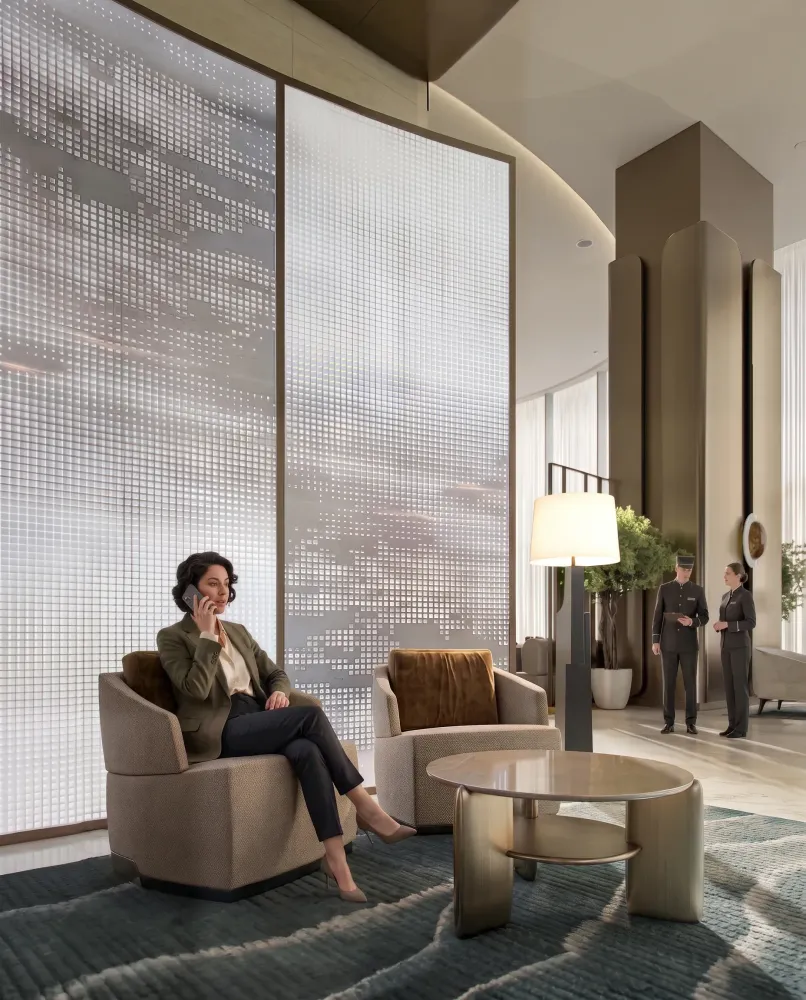
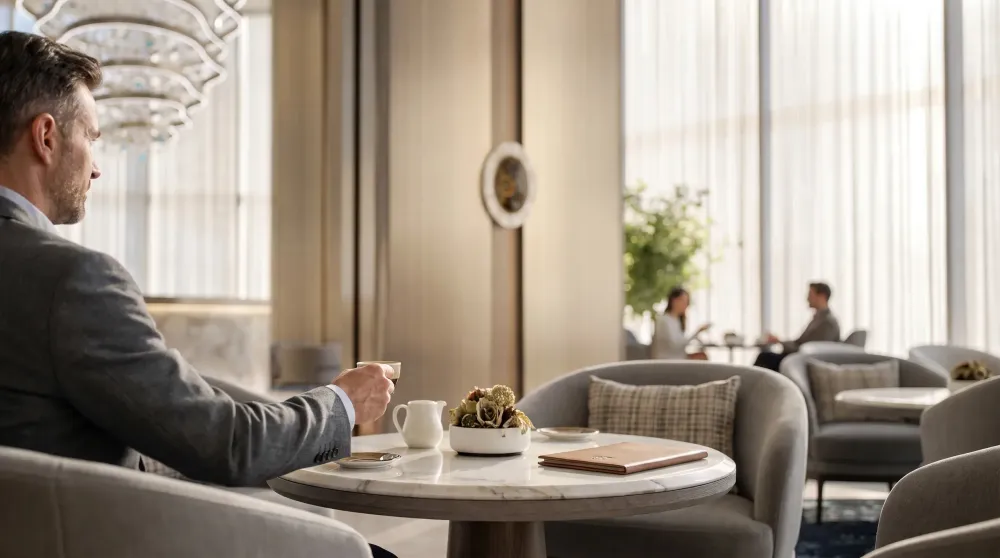
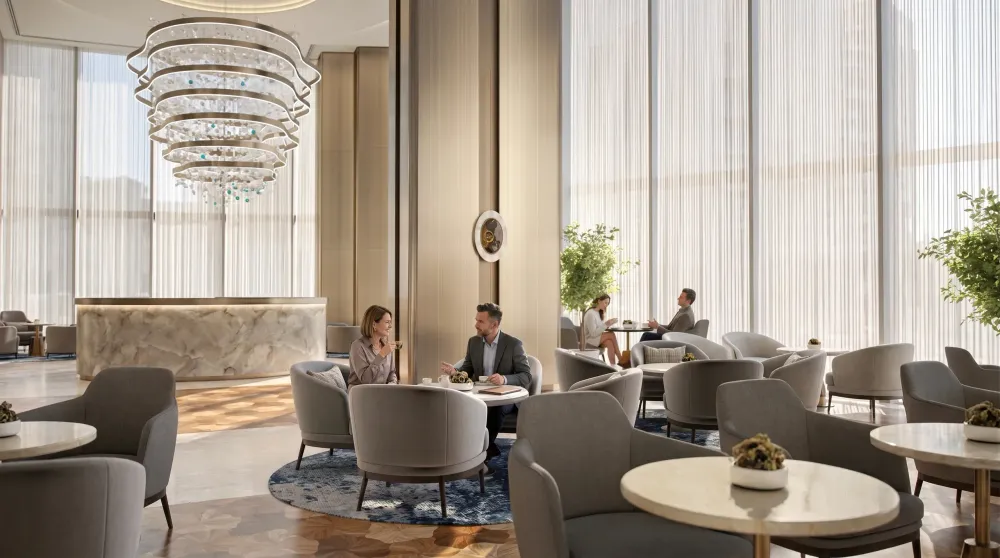
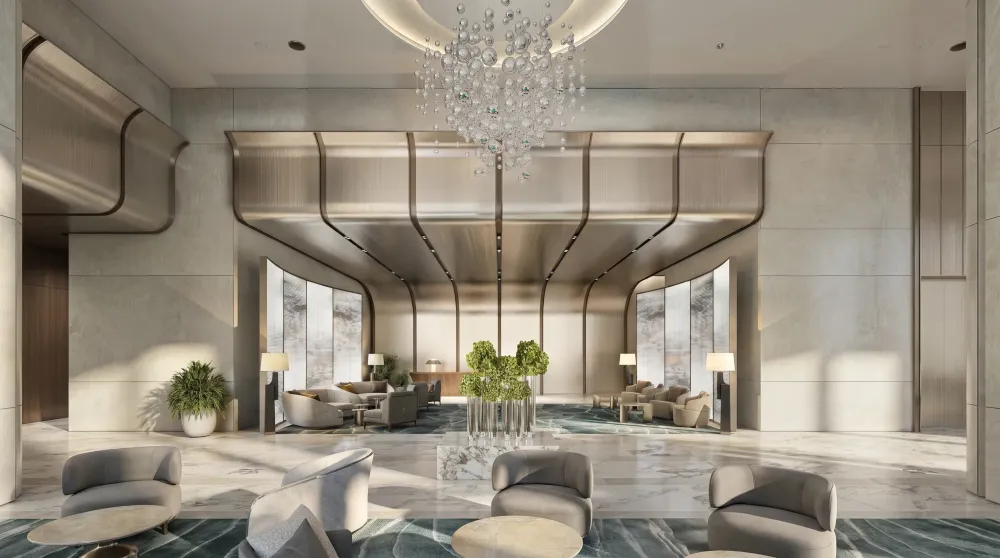
We built the geometry from scratch, including the curved metallic canopy and the glass display structures, then custom-built physical shaders rather than pulling from a library. Book-matched calacatta on the floor, brushed champagne-gold on the walls, curved seating velvets, all calibrated so each marble vein and wood grain answered the light honestly. I spent most of my time balancing two light environments at once: the hard daylight coming through sheer mesh blinds against the warm interior arrays and the sculptural glass-drop chandeliers. That balance is the difference between "expensive" and "showroom".
Arrival sets the register: a curved timber concierge desk under a vertically brushed metallic canopy with warm up-lighting. The centre of the room is the feature bar, a circular white onyx counter under a wave-like glass orbital chandelier. Around the edges sit the conversation lounges, intimate clusters of curved neutral sofas, sage-green rugs, planting and slim bronze-framed privacy panels that divide a private conversation without sealing it off.
Here's a view I'll plant a flag on: hyperrealism is overrated on a space like this. The render doesn't need to be indistinguishable from a photo. It needs to make the board feel the materials are worth the money, and a slightly styled image often sells that better than a clinical one.
The set gave the practice and the management team an asset that did one specific thing: it killed the ambiguity that stalls executive sign-off on an expensive scheme. Once the board could see how the glass, the layered ceiling and the onyx would actually sit together under real light, procurement could buy the materials and the project could move into build.
Onyx, brushed metal, marble and glass all redirect light. Handle them carelessly and they read as a flat mirror or a noisy field of blown highlights, so each needs its own calibrated shader and a controlled lighting balance.
Both, really: a luxury lounge and bar serving corporate and VIP guests inside One Za'abeel. Our role was the visualisation, not the hospitality design.
To secure fast executive sign-off and unlock material procurement before fit-out, by proving an ambitious interior to the developer's board.
Not always. For a scheme sold on material quality, a lightly styled image often communicates value more clearly than a clinically photoreal one.