Office 3D Visualization
Office 3D visualization is how a design-and-build firm shows a client the finished workplace before the strip-out even s...

Corporate Workspace / Office — Silicon Docks, Dublin, Ireland
A corporate design consultancy brought us in on The Lumina Workspace, a multi-floor office in Dublin's Silicon Docks, the tech end of the city. This was not a rows-of-desks layout. It was built to flip between heads-down focus and loose collaboration, and the consultancy needed a digital twin accurate enough to test the spatial flow, validate a complicated lighting design and clear procurement before fit-out.


A corporate design consultancy brought us in on The Lumina Workspace, a multi-floor office in Dublin's Silicon Docks, the tech end of the city. This was not a rows-of-desks layout. It was built to flip between heads-down focus and loose collaboration, and the consultancy needed a digital twin accurate enough to test the spatial flow, validate a complicated lighting design and clear procurement before fit-out.
This is exactly the work my studio does day in, day out: workplace CGI for the people who have to sell a fit-out to a stakeholder who can't read a plan.
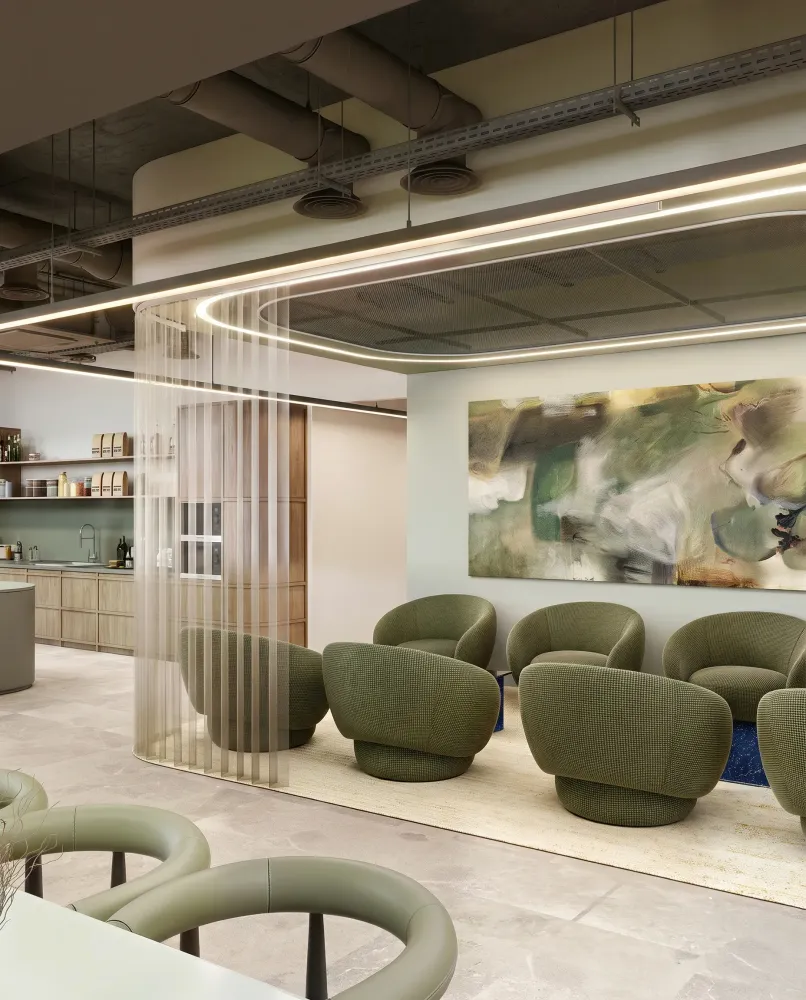
This whole scheme runs on a deliberate clash. Raw industrial bones, exposed concrete pillars and structural metal, set against warm oak and fluted glass. That tension is the design's selling point, and it is also the thing most likely to fall apart in a render if you rush it.
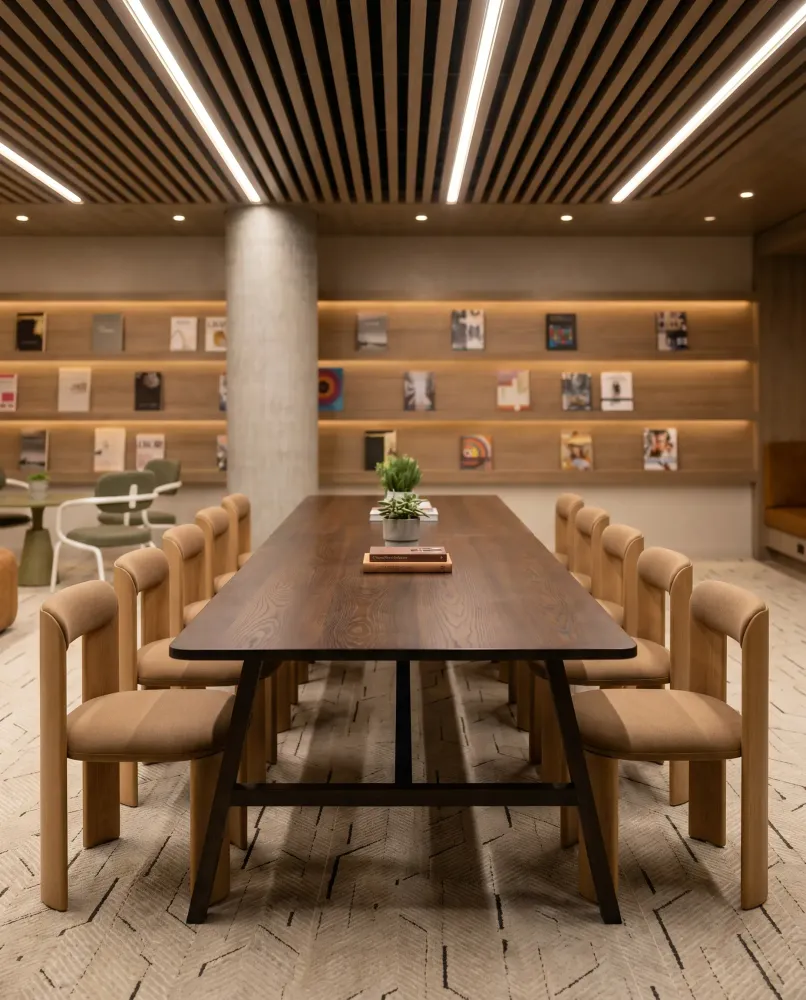
Two surfaces in particular fight you. Matte micro-cement floors swallow light, while the fluted glass partitions throw it back in streaks. Put a careless light rig in that room and the cement goes muddy and noisy while the glass blooms into glare. We built the space from CAD layouts and scripted physical materials for every contrasting surface: the low-sheen micro-cement, the open-grain oak, the ribbed acoustic fabric, the matte-painted metal. Each one had to read as itself.
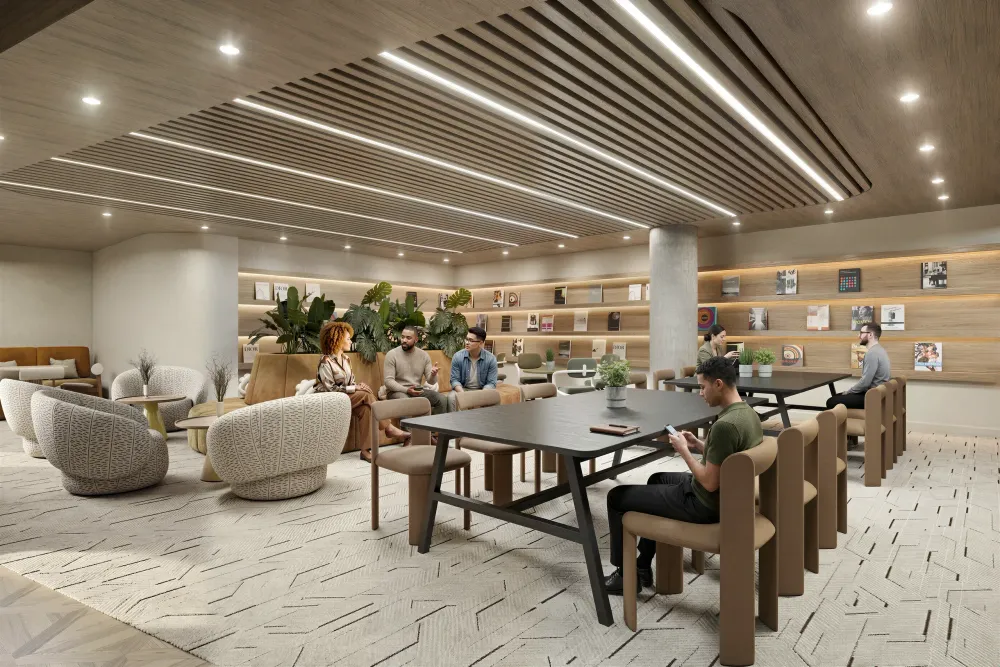
This interior depends on at least three light sources stacked together: linear LED tracks, soft backlit fabric ceilings and sharp industrial spots. We calibrated them as a single matrix rather than switching them on one at a time, so the diffuse glow from the stretched ceiling membranes sits under the directional track spots that trace the structural ceiling lines. That layering is the difference between a workspace that looks designed and one that looks lit by whatever the contractor had in the van.
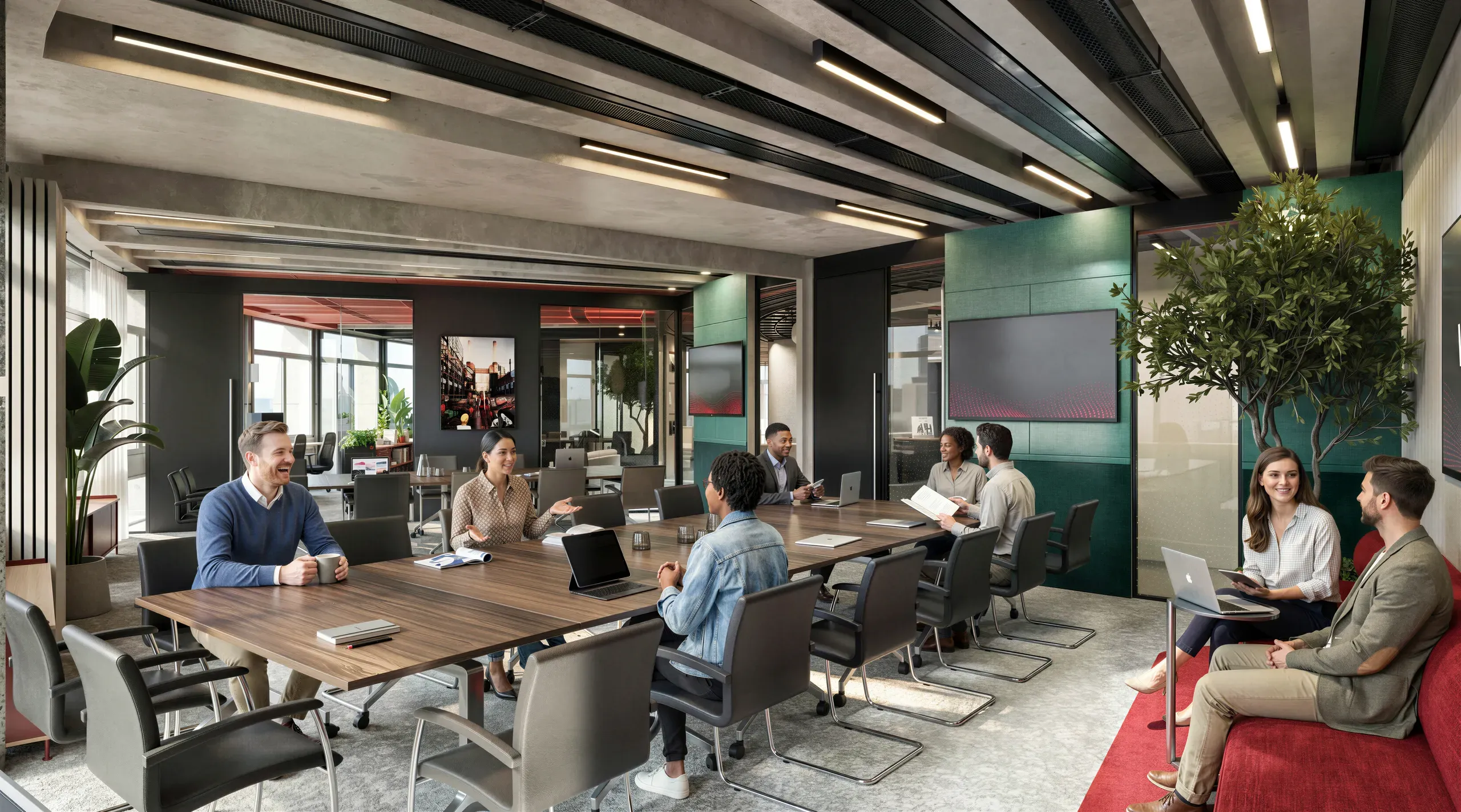
I'll admit one judgement call. On the green accent panels I held the saturation back slightly, because strong colour on a backlit wall reads hotter on screen than it does built. Better to undersell a colour in the render than have a client feel mis-sold on site.
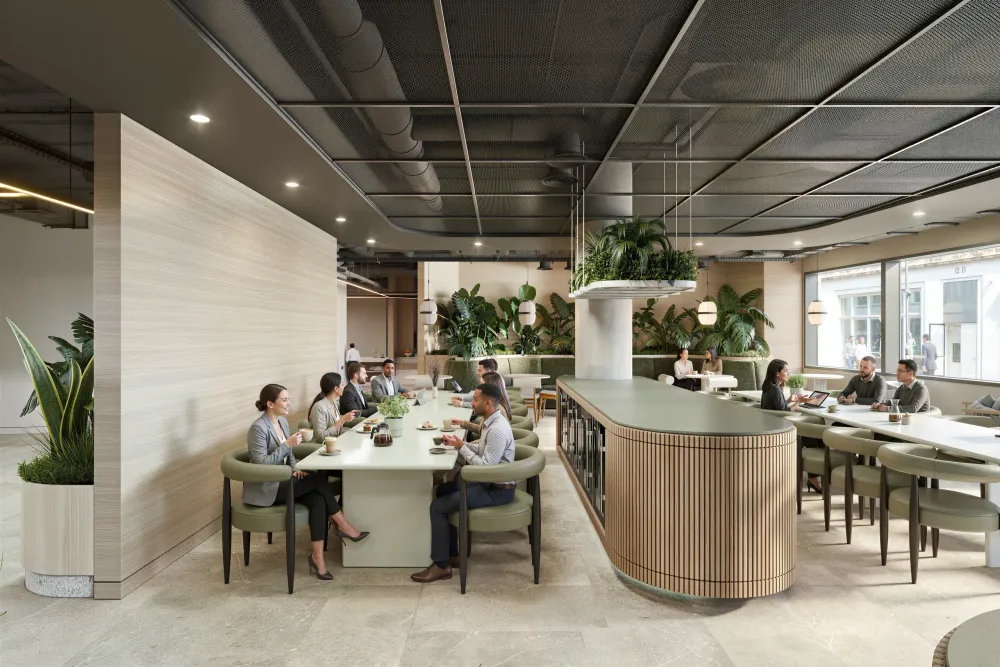
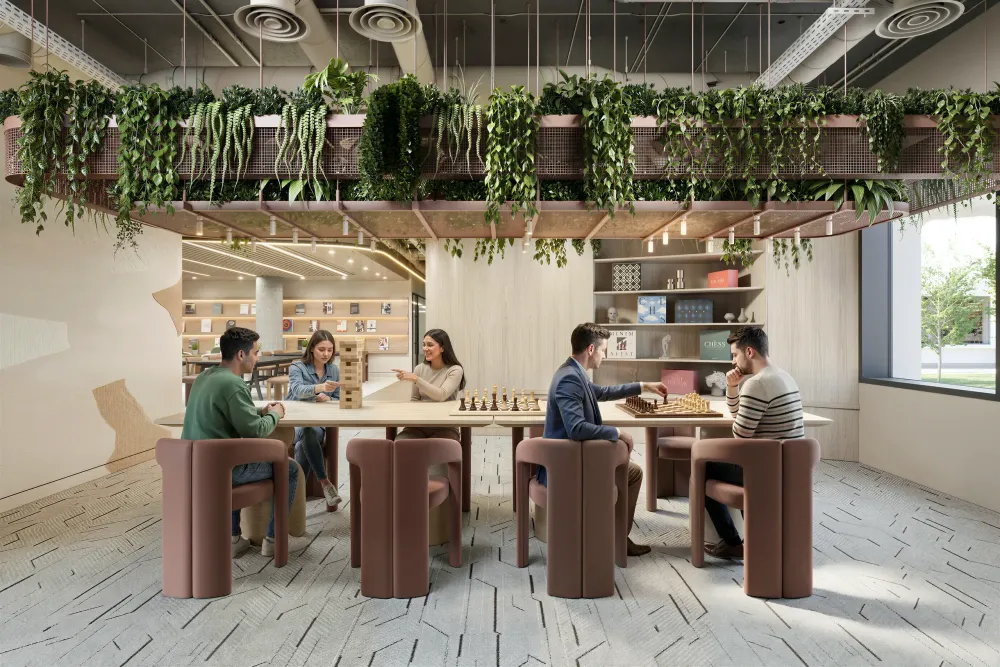
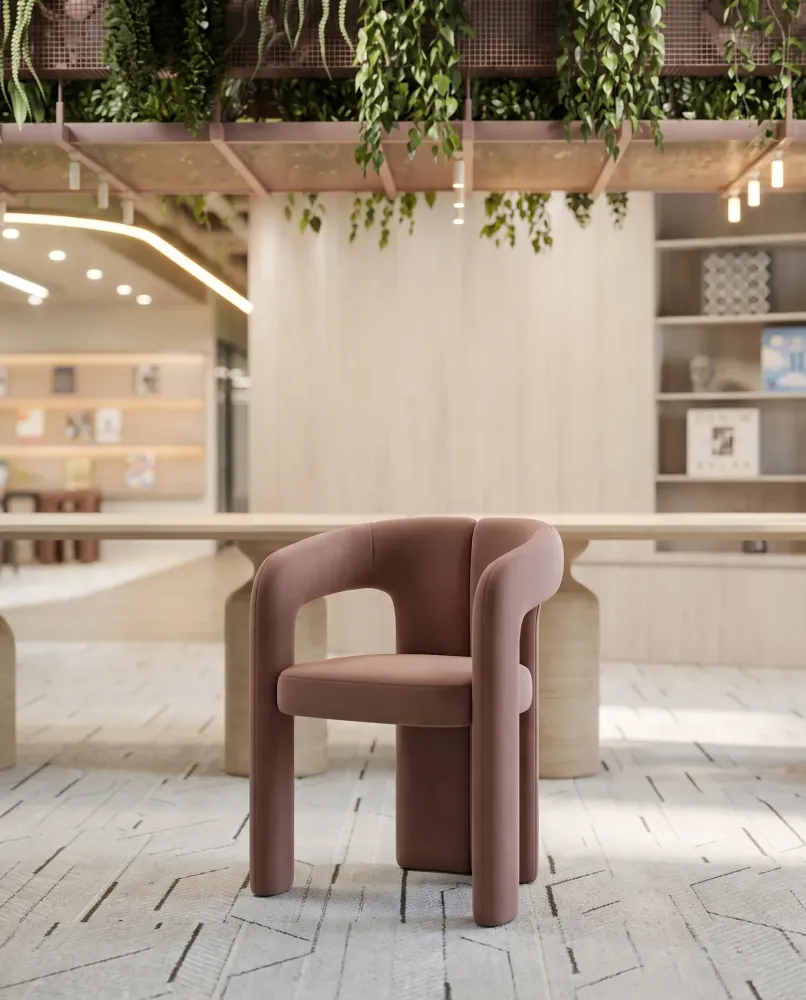
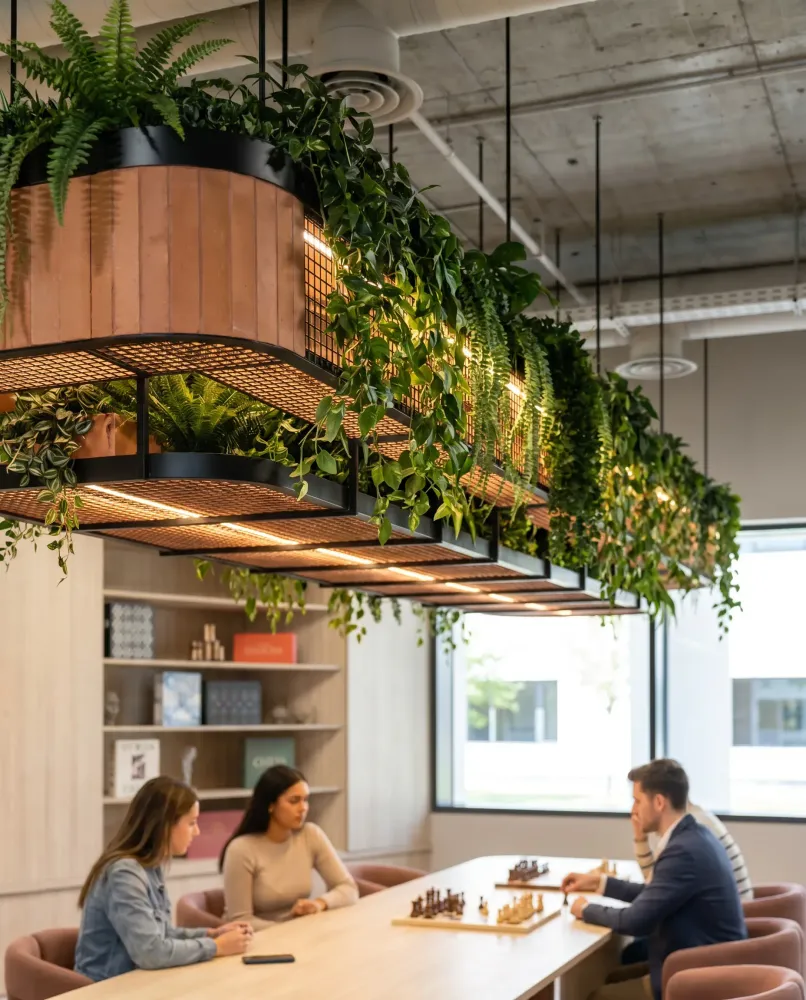
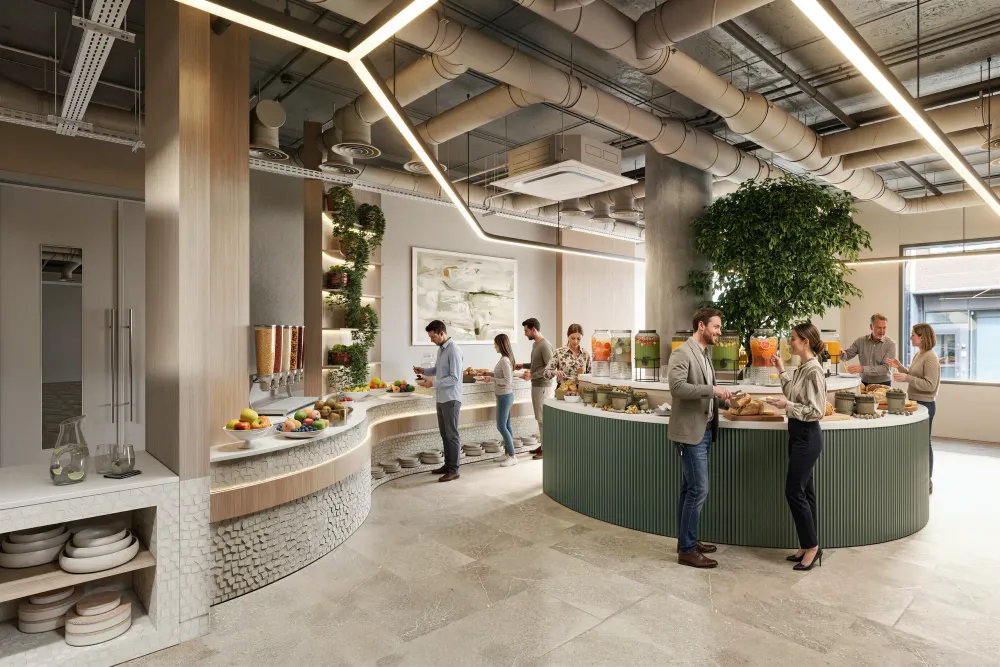
This floor splits into clear roles. A high-density collaborative hub runs on long light-oak hot-desking tables with task lighting and timber screens framing each zone. Felt-lined acoustic pods and ribbed breakout booths drop in for quick focus or spontaneous catch-ups. Black metal-framed fluted-glass workshop studios handle the dynamic meetings, with central tables and circular acoustic pendants. And a central social commons anchors the lot, a hospitality-style lounge with curved velvet seating, floating timber shelving and a refreshment bar wrapped in emerald-green tiling.
Here's where I'll pick a side: hot-desking only works in CGI if you render it busy with intent, not empty. An empty agile floor looks like a furniture catalogue. The version that sells shows how a real team would actually colonise it.
The set gave the consultancy one decisive thing: a way to show stakeholders how the furniture, acoustics and lighting tracks behave in real conditions, not in their imagination. That cleared confident procurement, cut spatial errors, and smoothed the jump from design to build.
A look that keeps raw industrial elements like exposed concrete and metal on show, then softens them with warm timber and planting. The contrast is the point.
Its matte surface absorbs light and turns muddy or noisy if the lighting isn't calibrated for it, so it needs its own physical shader and a controlled light rig.
To test spatial flow, validate a multi-source lighting design and clear material procurement before fit-out commenced.
Yes, and we render them in use rather than empty, because an unoccupied agile floor reads as a furniture catalogue instead of a workplace.