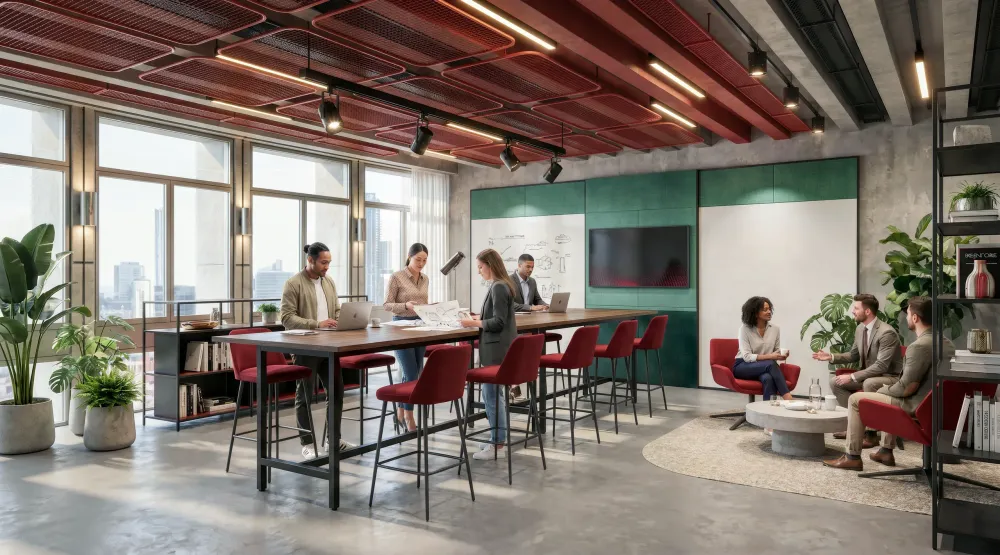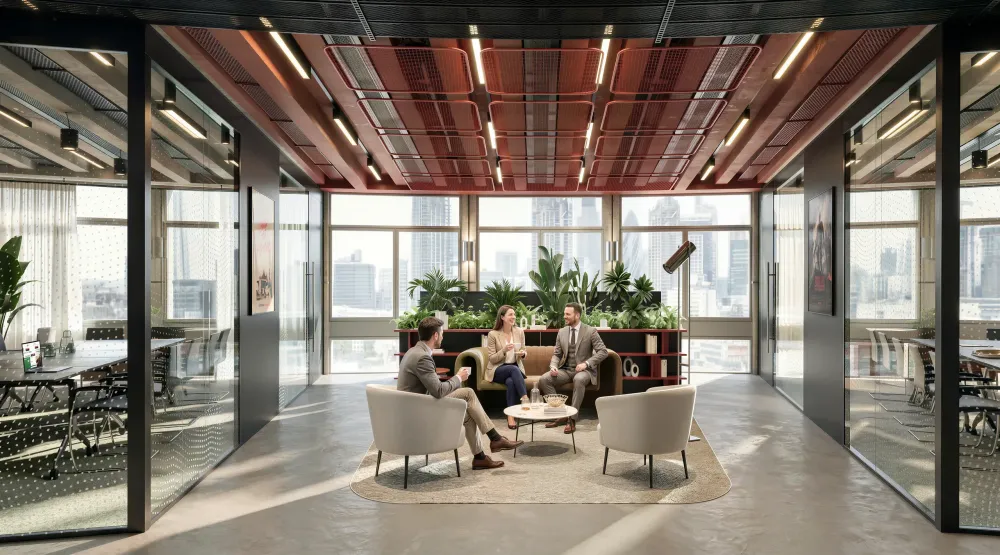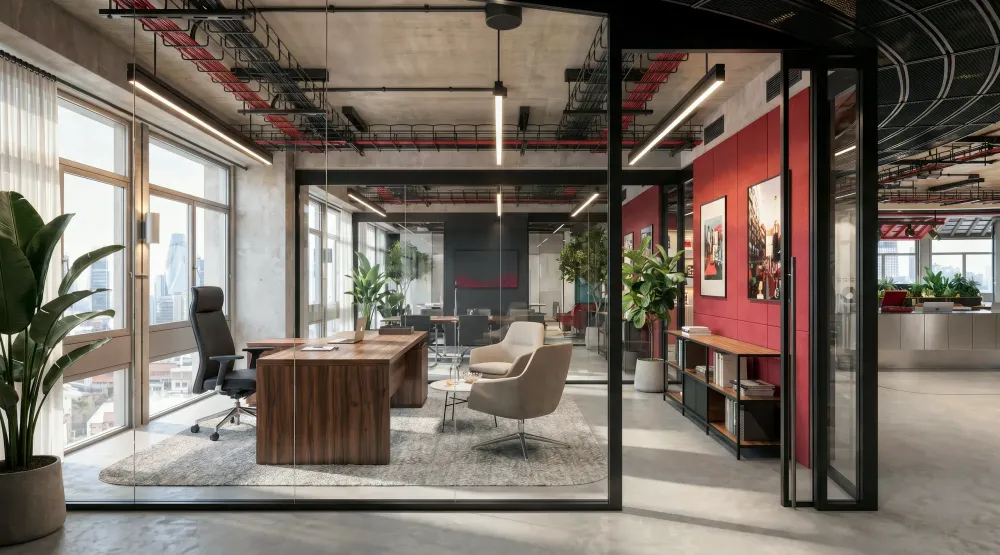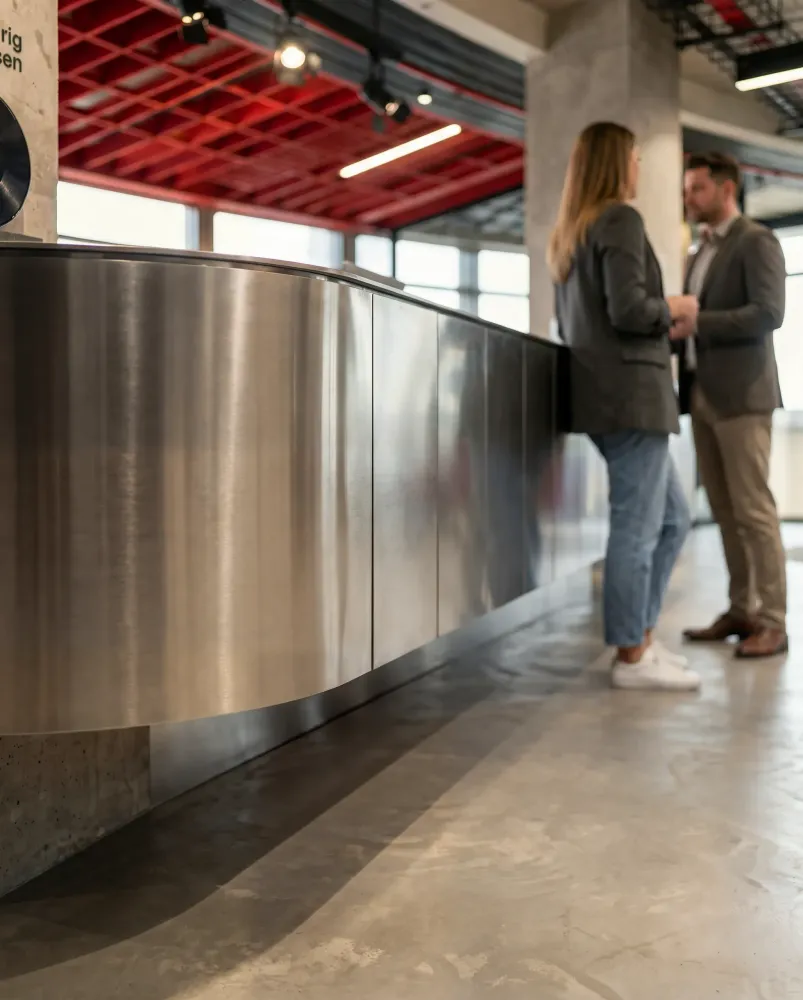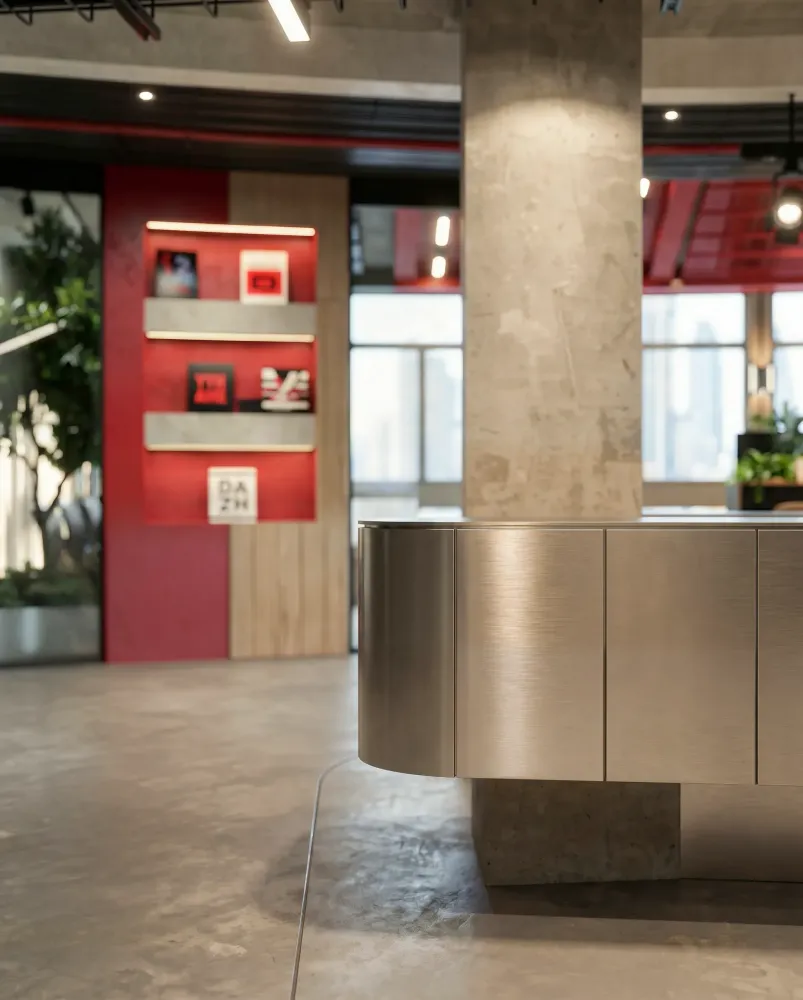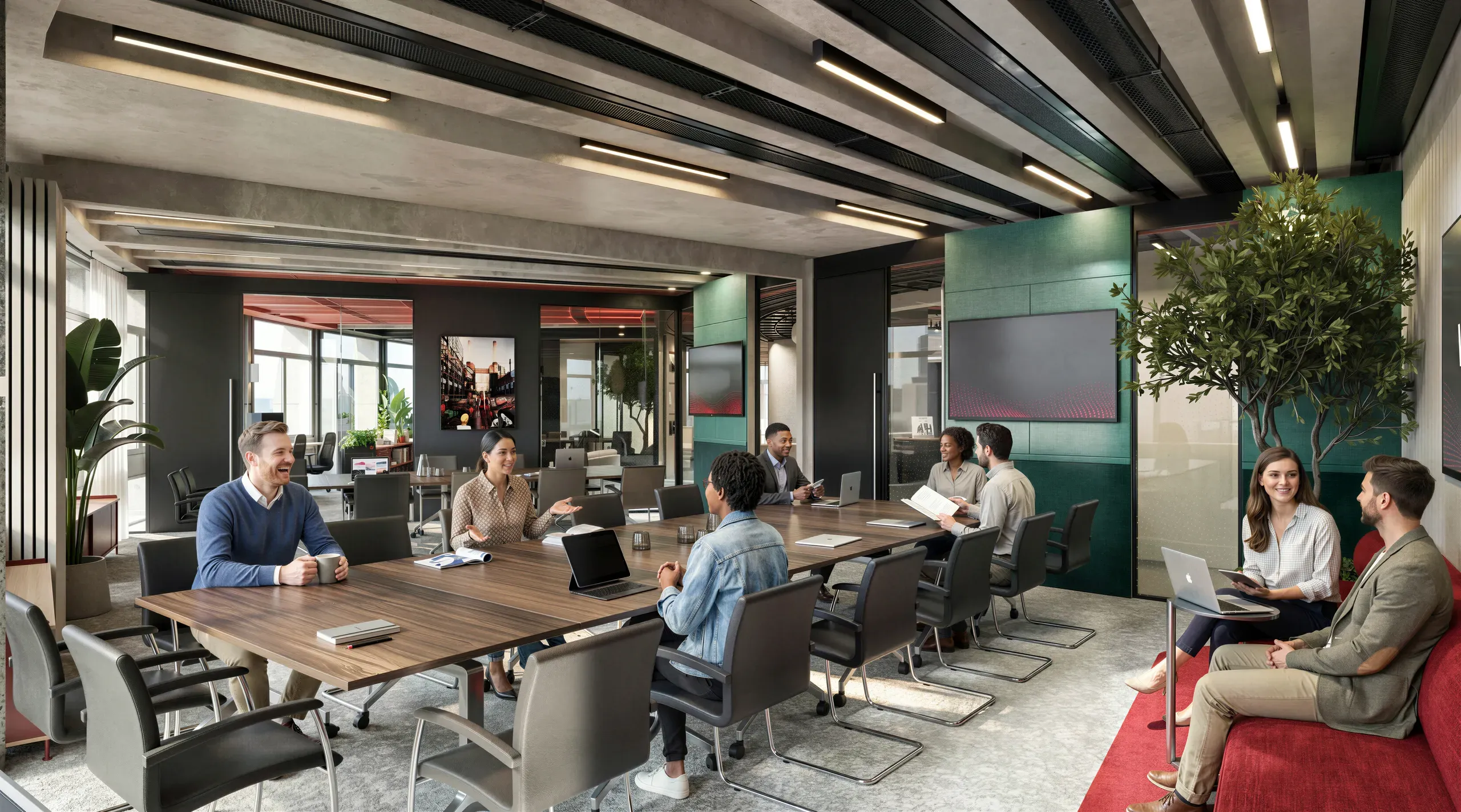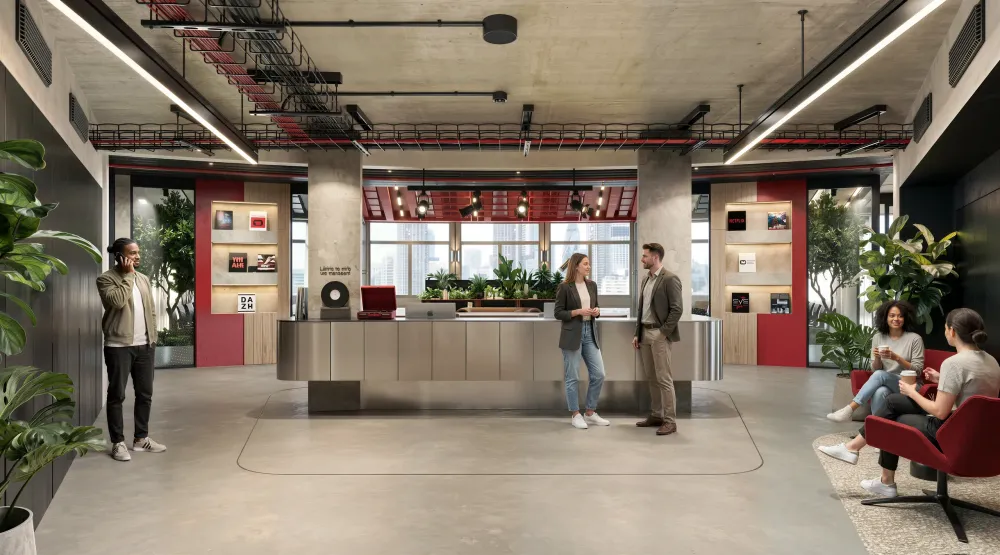
The Al Maryah Pavilion Premium Corporate / Commercial Office CGI by 100CGI Studio, view 1

The Al Maryah Pavilion: Selling a Financial-District Office Before Fit-Out

Premium Corporate / Commercial Office — Al Maryah Island, Abu Dhabi, UAE

The Al Maryah Pavilion

An international interior architecture practice came to us with a premium corporate interior on Al Maryah Island, Abu Dhabi's financial free zone, aimed squarely at law firms, sovereign wealth funds and the kind of tenant who reads a finish schedule for sport. The brief was not "show the office". It was to build a digital twin good enough that the design could lock material procurement and start pulling pre-leasing commitments before a single panel went up.

Software

3ds Max, Corona Renderer

Year

2024

Location

Al Maryah Island, Abu Dhabi, UAE

About This Project

Project Overview

An international interior architecture practice came to us with a premium corporate interior on Al Maryah Island, Abu Dhabi's financial free zone, aimed squarely at law firms, sovereign wealth funds and the kind of tenant who reads a finish schedule for sport. The brief was not "show the office". It was to build a digital twin good enough that the design could lock material procurement and start pulling pre-leasing commitments before a single panel went up. That distinction matters. When the tenants are this discerning, the render is doing the landlord's first pitch for them, and on a deal this size the cost of getting it wrong runs into months.
Project Overview
Selling a Financial-District Office Before Fit-Out
The project

Selling a Financial-District Office Before Fit-Out

An international interior architecture practice came to us with a premium corporate interior on Al Maryah Island, Abu Dhabi's financial free zone, aimed squarely at law firms, sovereign wealth funds and the kind of tenant who reads a finish schedule for sport. The brief was not "show the office". It was to build a digital twin good enough that the design could lock material procurement and start pulling pre-leasing commitments before a single panel went up.

That distinction matters. When the tenants are this discerning, the render is doing the landlord's first pitch for them, and on a deal this size the cost of getting it wrong runs into months.

The hard part was the materials, not the geometry

Drawing the volume was the easy bit. We built the whole interior from CAD layouts in 3ds Max, modelling every partition and piece of millwork rather than dropping in library furniture.

What made it demanding was the finish palette. This scheme runs on contrast: matte charcoal acoustic panels next to high-gloss stone floor, warm oak screening against fine pale stone. Get the shaders slightly wrong and one of two things happens. The gloss floor goes to a flat mirror and you lose the stone entirely, or the charcoal panels flatten into a black hole with no texture. Both kill the sense of quality, which is the one thing a tenant at this level is paying for.

So we calibrated physical shaders for each surface: the sound-absorbing matte of the charcoal walls, the exact grain of the vertical oak slats, the soft sheen on the large-format floor tiling. In 16 years of office work, stone reflectance is still where I spend more time than almost anything else on a job like this, because clients read "expensive" through how light sits on a surface long before they read the spec.

Lighting for coastal daylight

Abu Dhabi's coastal light is diffuse and bright, and it had to play across all those finishes without flattening them. We engineered the lighting in layers rather than one flat fill: natural daylight through the perimeter, recessed linear LED coves, hidden accent strips under the reception plinths, and a handful of architectural downlights. That layering is what stops a corporate interior reading like an airport lounge.

Three rooms that carry the pitch

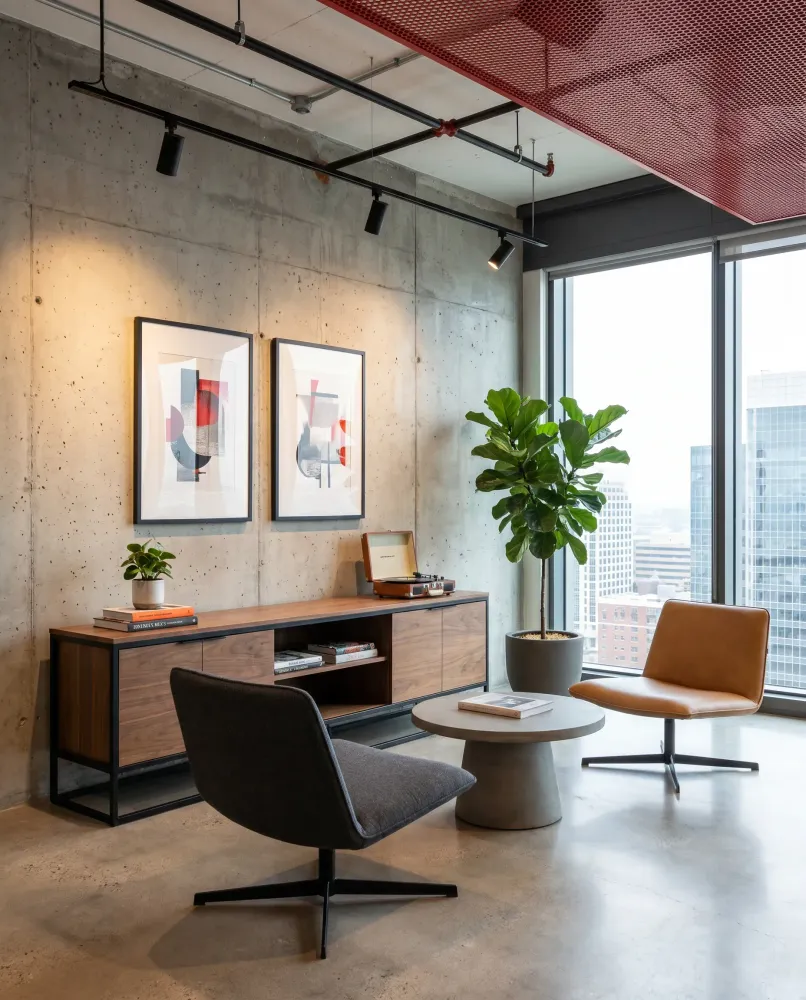
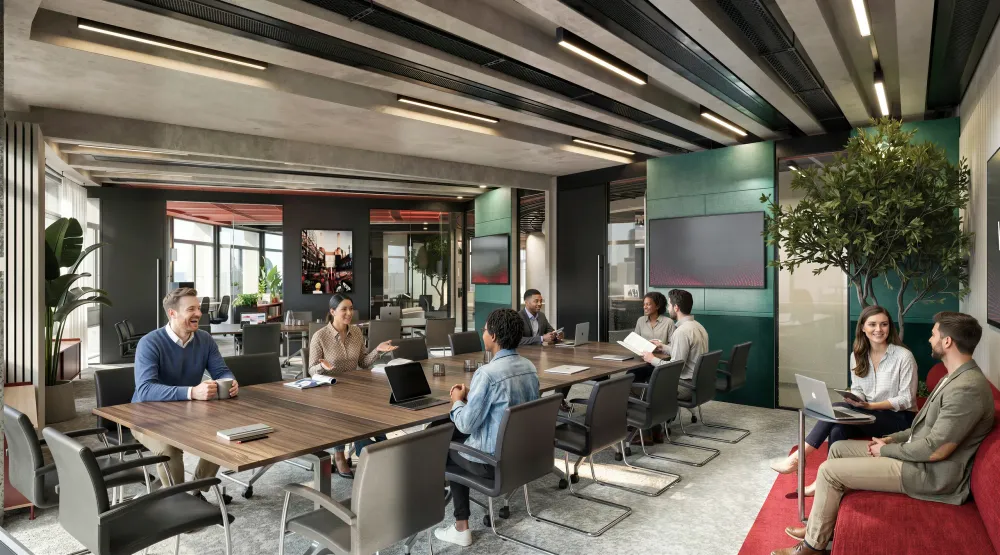
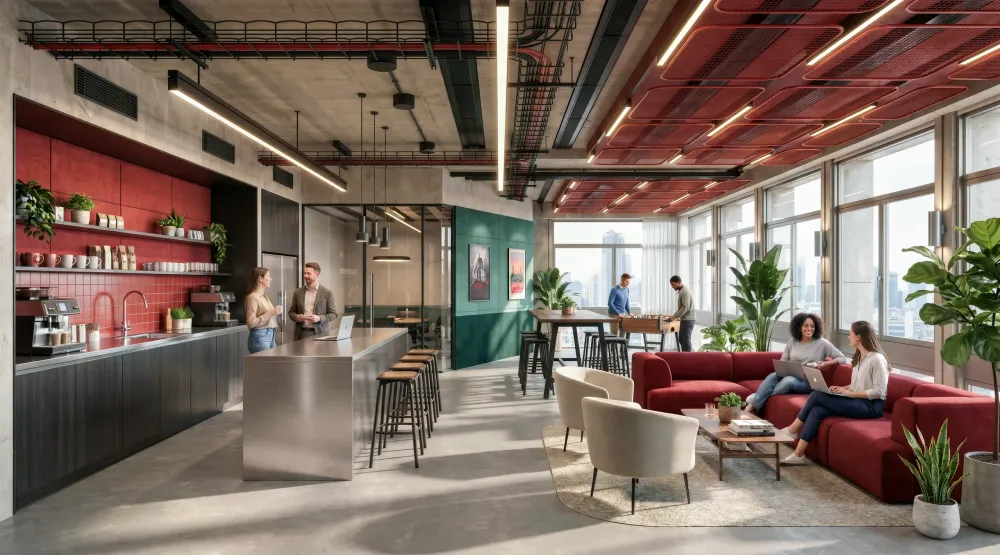
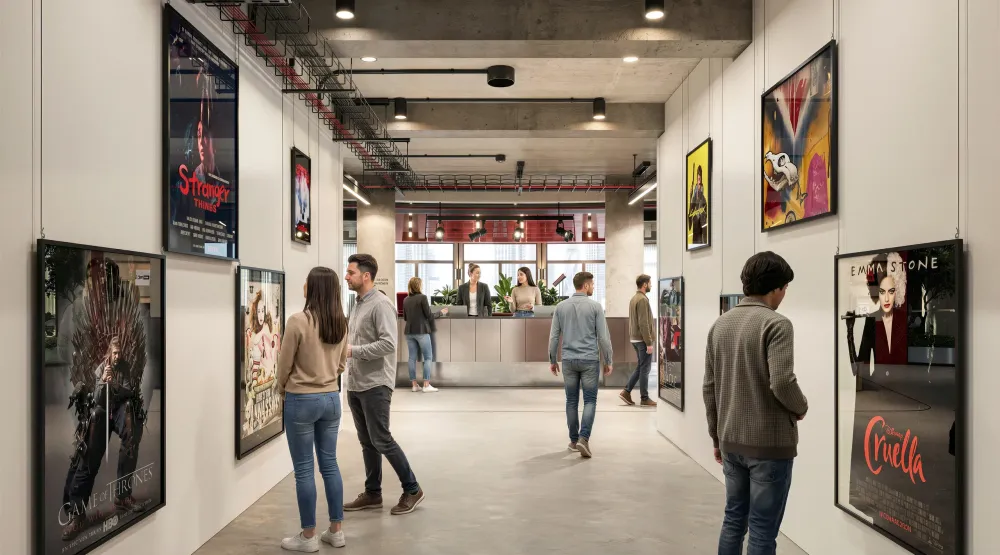
The set leans on three spaces. Reception is the handshake: a monolithic white-stone desk set against a dark wall, columns clad in vertical oak slats, a recessed acoustic ceiling with linear track lighting. The boardroom is the proof of seriousness, a glass-fronted suite with a long oak table and a wall of staggered timber slats over deep charcoal backing. And the client lounge is where the building stops being institutional, softening into low cream armchairs, stone coffee tables and open timber screens that divide the space without closing it.

I'll be honest about the limit of my read here. I work with Design & Build and office-design clients, not on the inside of how a sovereign wealth fund picks its premises, so I can tell you the renders won tenants over but I can't claim to know the politics of the room they were shown in.

Why it earned its fee

The finished CGI gave the practice and the landlord a single asset that did real commercial work. By showing exactly how the joinery, the texture shifts and the integrated lighting would behave under real coastal light, it took the spatial guesswork off the table. That is what shortens a tenancy negotiation: not a prettier picture, but one a cautious tenant can actually trust.

Frequently Asked Questions

What was the goal of the Al Maryah Pavilion renders?

To act as a pre-leasing and procurement tool, letting the landlord secure tenant commitments and lock material orders before fit-out started.

Frequently Asked Questions