

Project

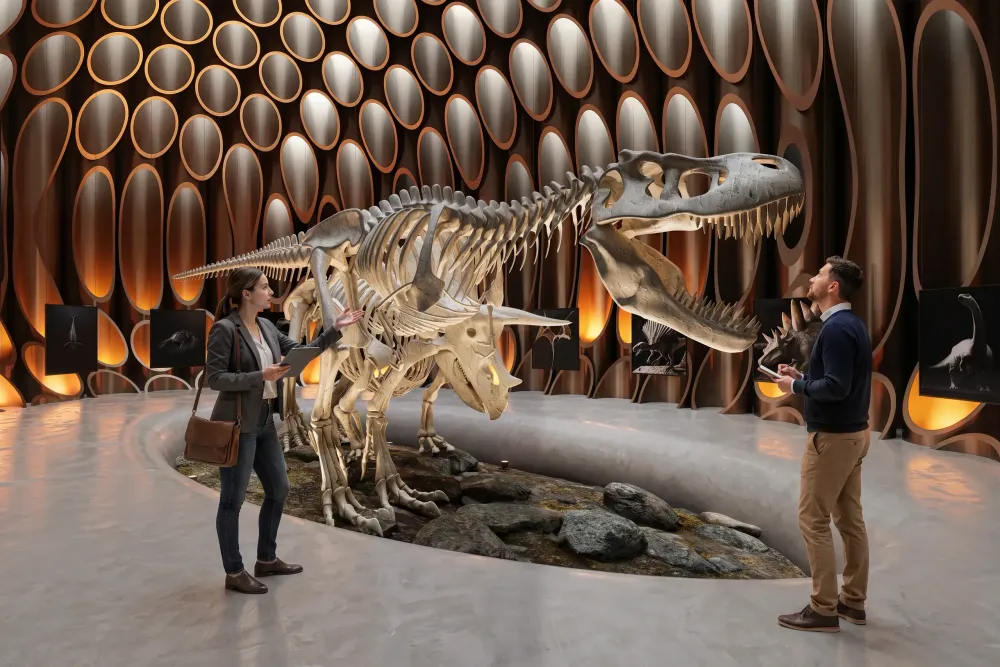
Virtual Solution · London, UK
Virtual natural history museum: 104 browser viewpoints
Our own concept for museums and galleries: a hall you walk through with no app and no headset, with exhibits you step up to.
Overview
The Brief
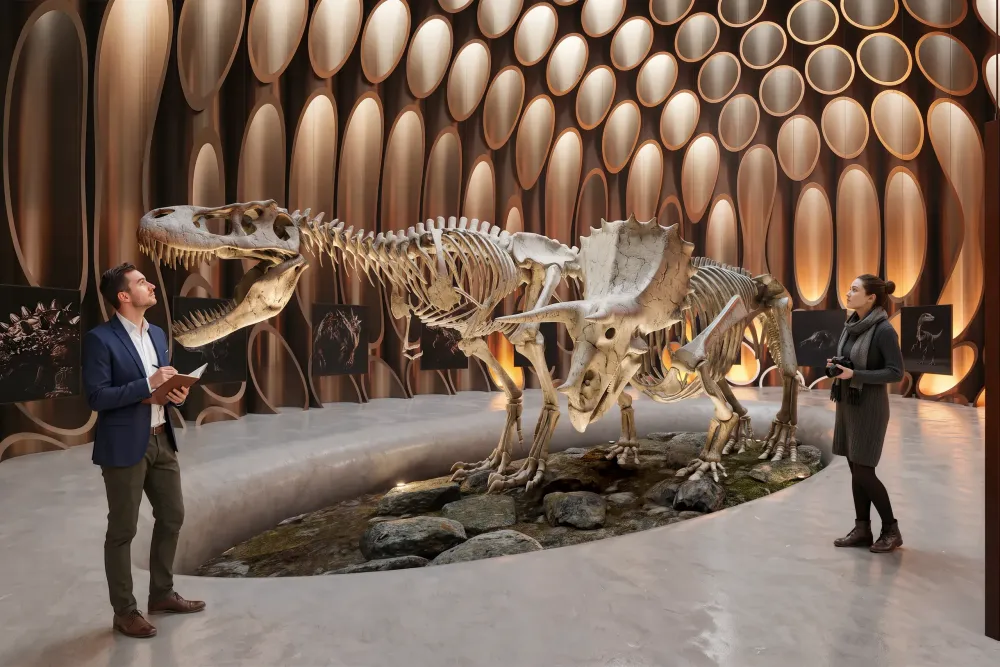
A museum runs out of floor space long before it runs out of collection, and the pieces that pull the crowds are the ones that need the most room. So we built a hall around two of them, sized so a visitor walks between the legs of a Titanosaur and gets close enough to read a bone. It runs in a browser, no app and no headset. The format is what we sell as virtual culture.
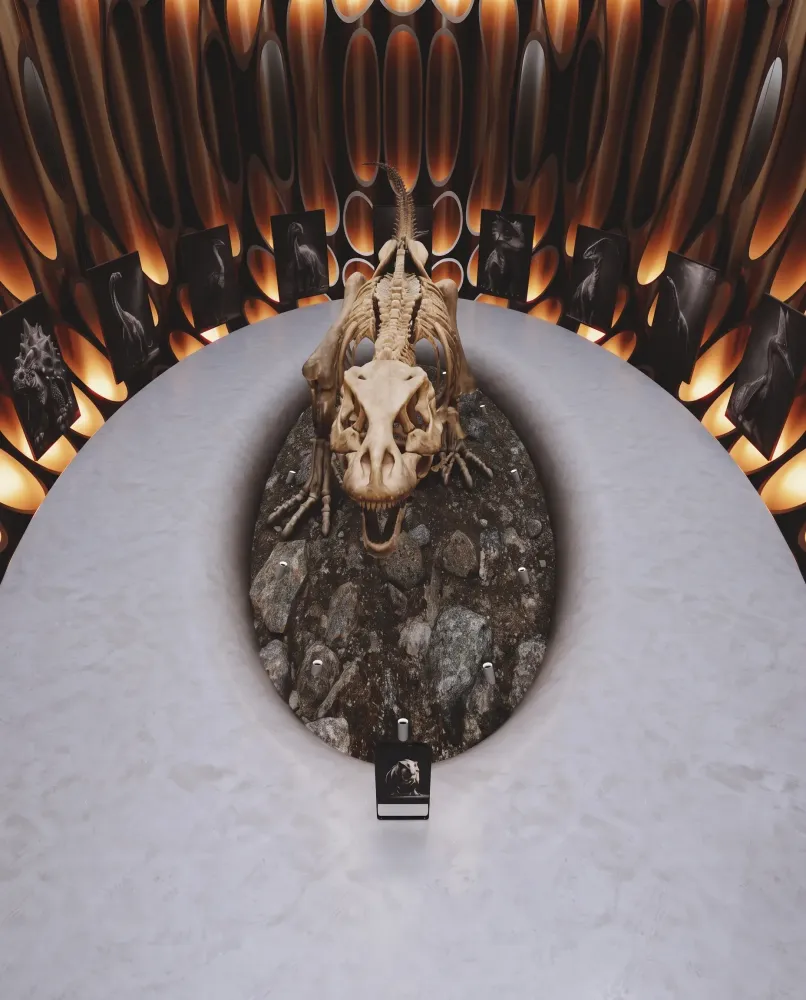
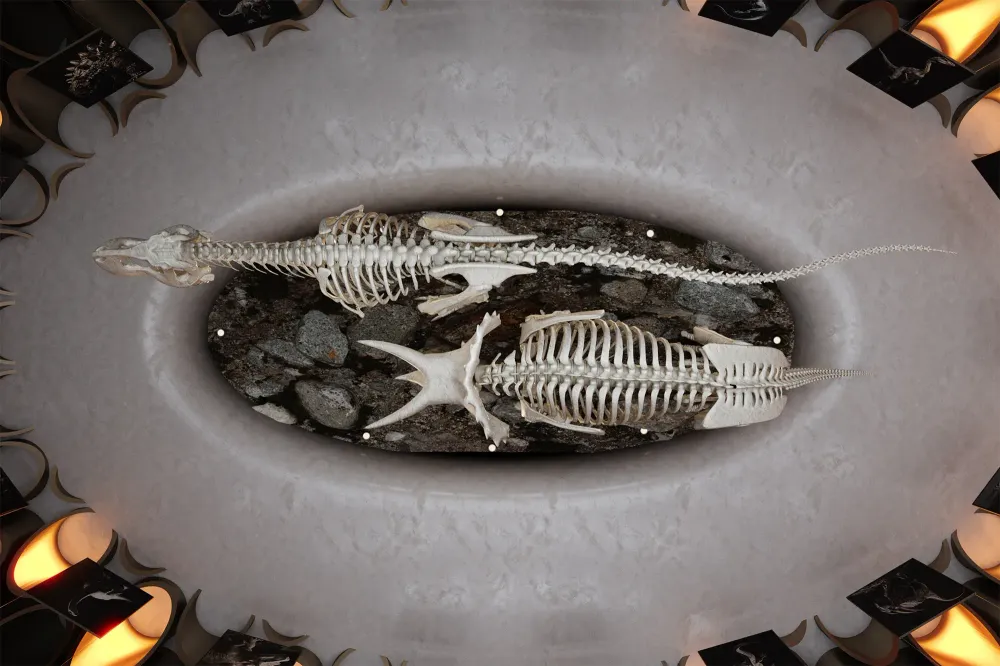
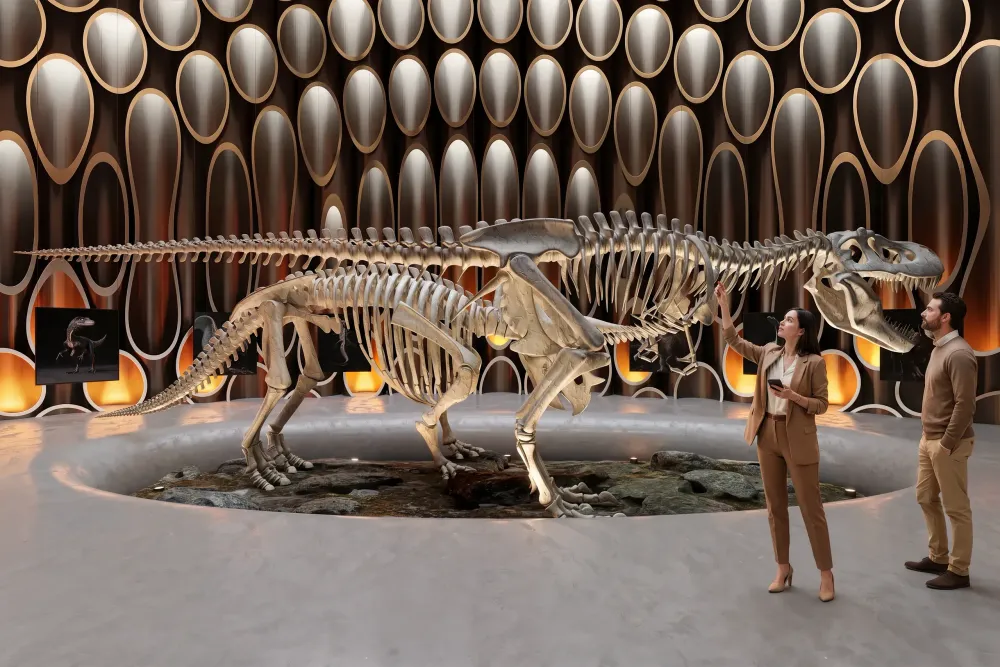
01 / 04
The craft
Scale is the whole exhibit
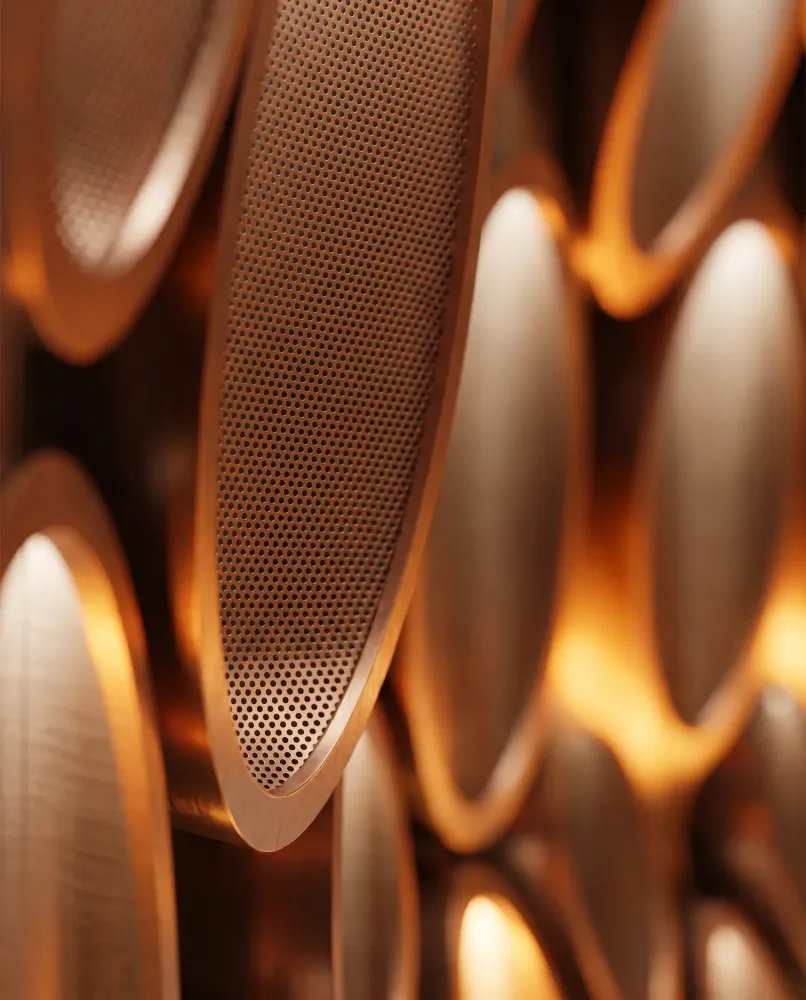
At this size the model is not the hard part, the reference points are. A skeleton only reads as enormous if something human stands next to it, at the right distance and in the right light, so that is where the eight weeks went, along with the optimisation that keeps a 5,000 sq ft hall moving on a laptop. More on the format in CGI virtual tours for museums and galleries.
104
Camera Positions
4
Renders Delivered
56
Days Turnaround


















Your project next
Ready to visualize yours?
Talk through your project on WhatsApp, or see exactly what it costs below.
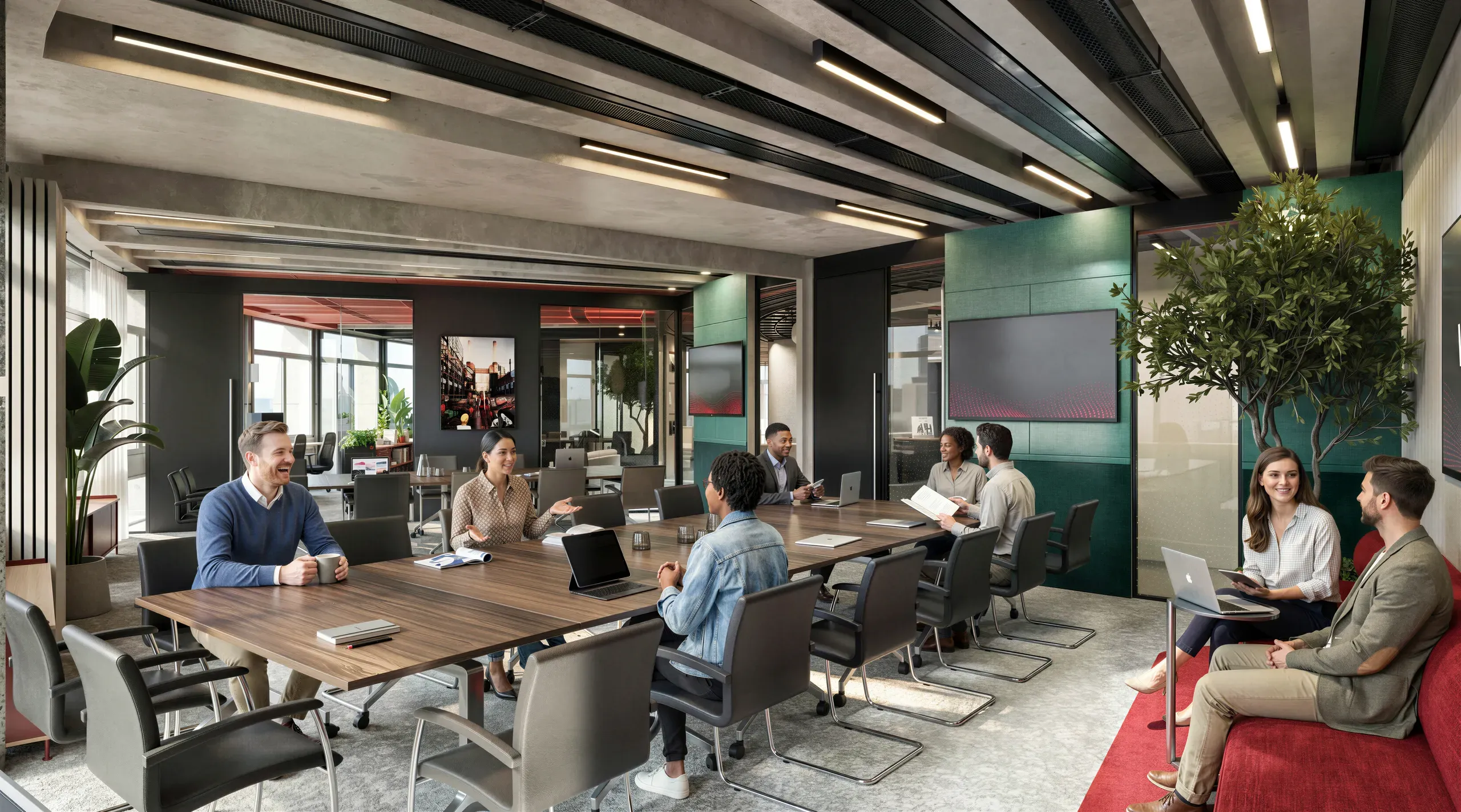
Drag to compare. Same scene, before and after our upgrade.


