Office 3D Visualization
Office 3D visualization is how a design-and-build firm shows a client the finished workplace before the strip-out even s...

Corporate Office / Speculative Workspace — Al-Narjis, Riyadh, Saudi Arabia
As global corporations set up regional headquarters in Saudi Arabia, an institutional developer asked us to visualise the potential of The Tuwaiq Hub, a premium property in Riyadh's Al-Narjis district. The task was speculative office work: show how a massive, raw floor plate can become a modern, high-density corporate HQ, so the developer could let it faster.


As global corporations set up regional headquarters in Saudi Arabia, an institutional developer asked us to visualise the potential of The Tuwaiq Hub, a premium property in Riyadh's Al-Narjis district. The task was speculative office work: show how a massive, raw floor plate can become a modern, high-density corporate HQ, so the developer could let it faster.
Speculative pre-leasing is one of my favourite problems. You're not rendering a finished design so much as making an argument about what a bare plate could become, and the argument has to be specific enough to sign against.
A bare structural shell and a tenant's operational needs are a long way apart. A corporate occupier looking at a deep floor plate struggles to picture how it absorbs everything they need at once: individual focus stations, a large company town hall, private executive lounges, all while still pulling daylight from the outer glass envelope. That uncertainty is what keeps speculative space empty.
So we treated the project as an architectural puzzle about zoning and utility, not a styling exercise. The developer's note was to drop the generic-office template, and we did. The renders had to demonstrate structural adaptability without sacrificing the premium look the Riyadh market expects.
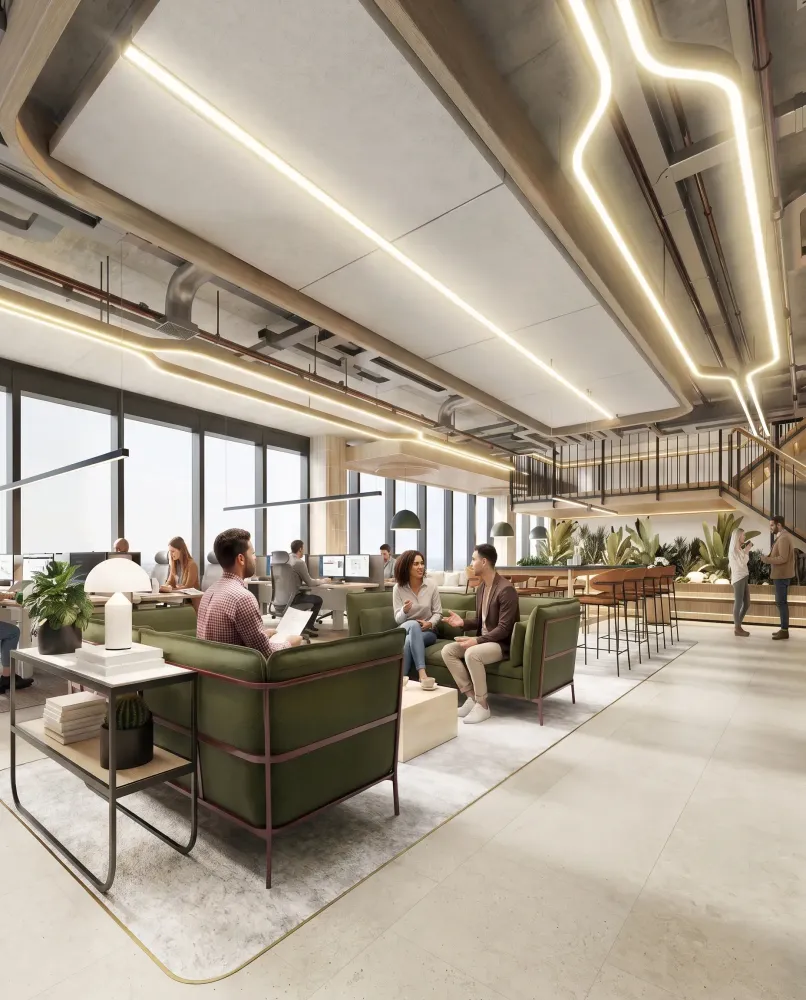
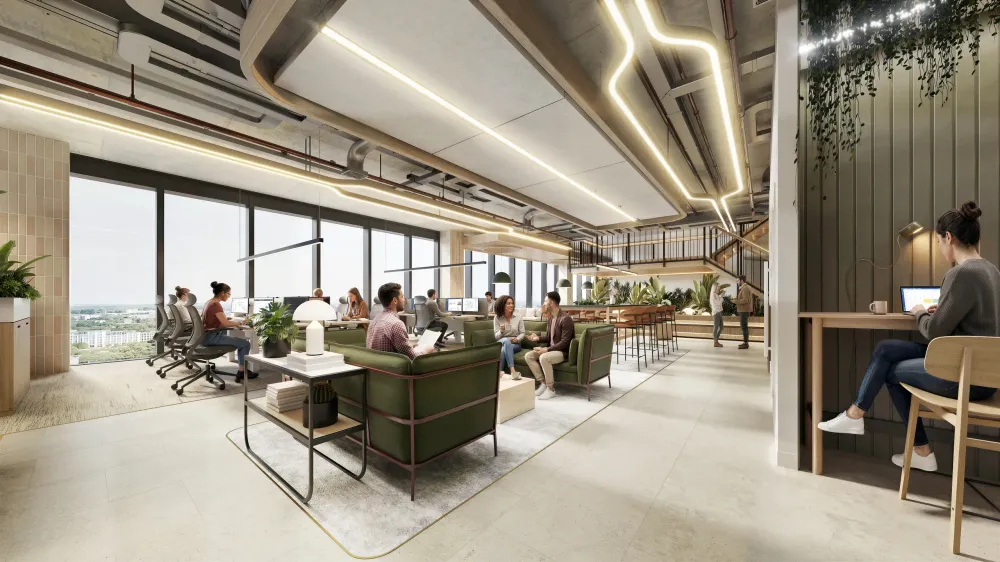
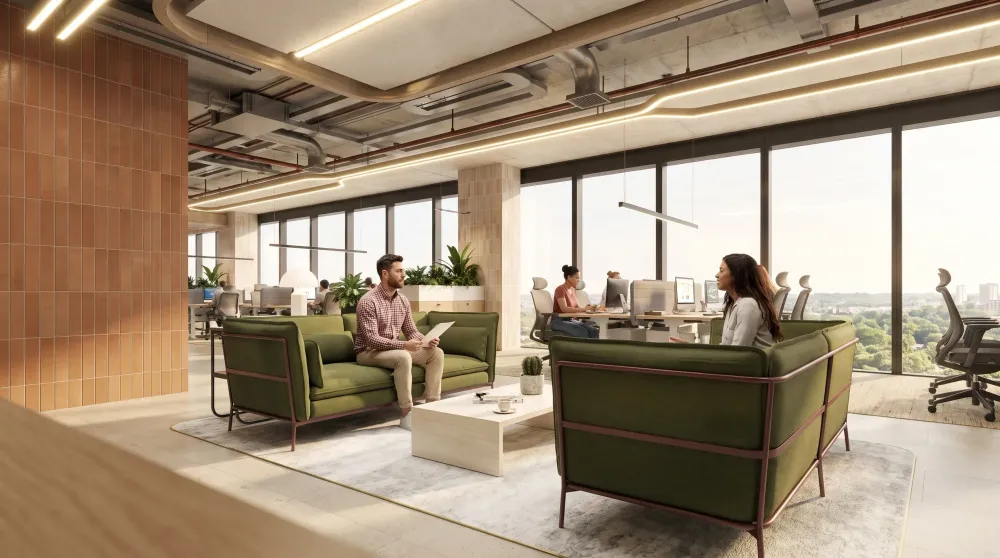
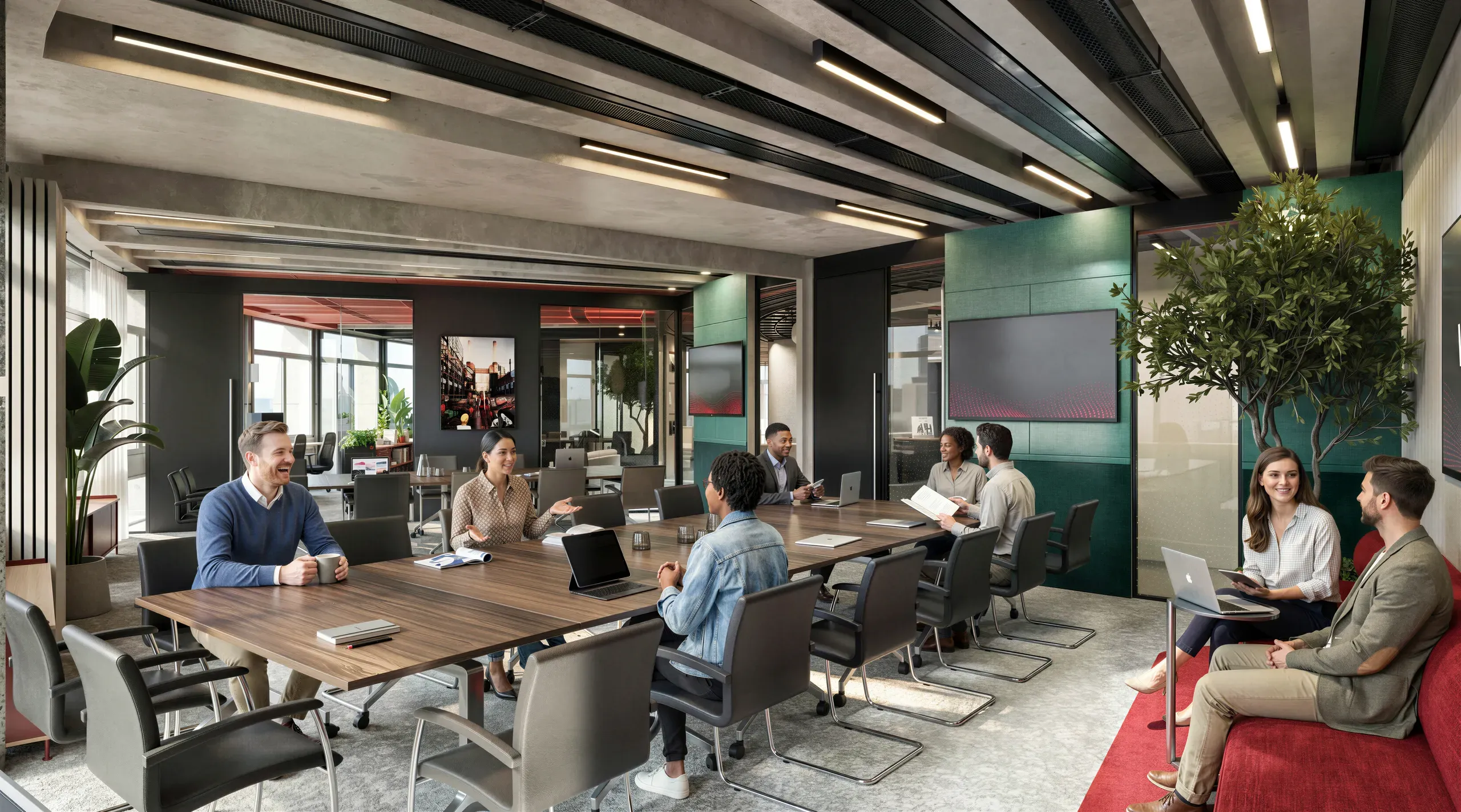
One decision drives the whole set: we exposed the ceiling instead of hiding it. Acoustic panels, linear HVAC diffusers and copper piping loops, modelled at true scale and shown integrating cleanly into a working ceiling. That's a deliberate honesty. A corporate real estate director reading these images wants proof the services actually fit the proposed density, and a boxed-in ceiling hides exactly the information they need.
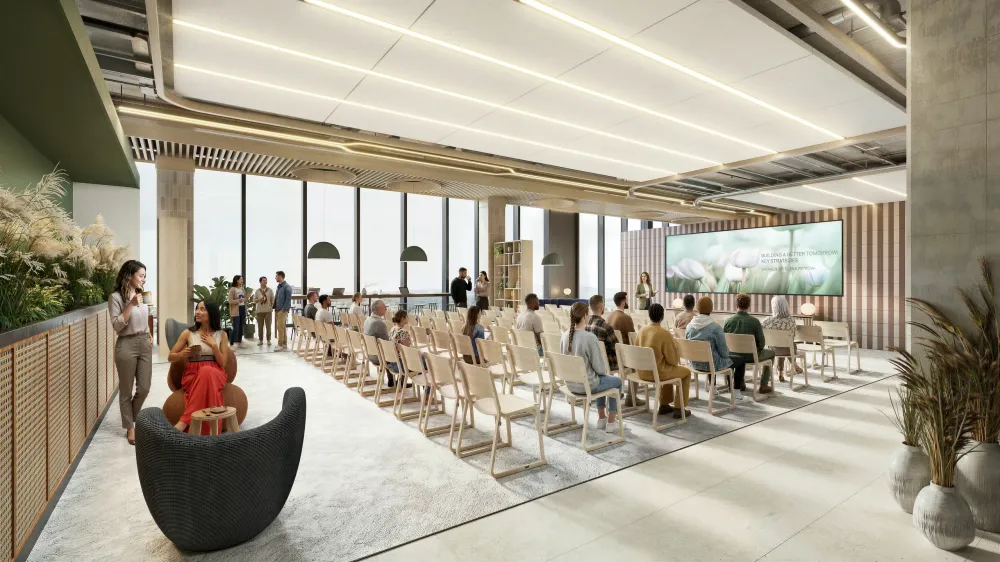
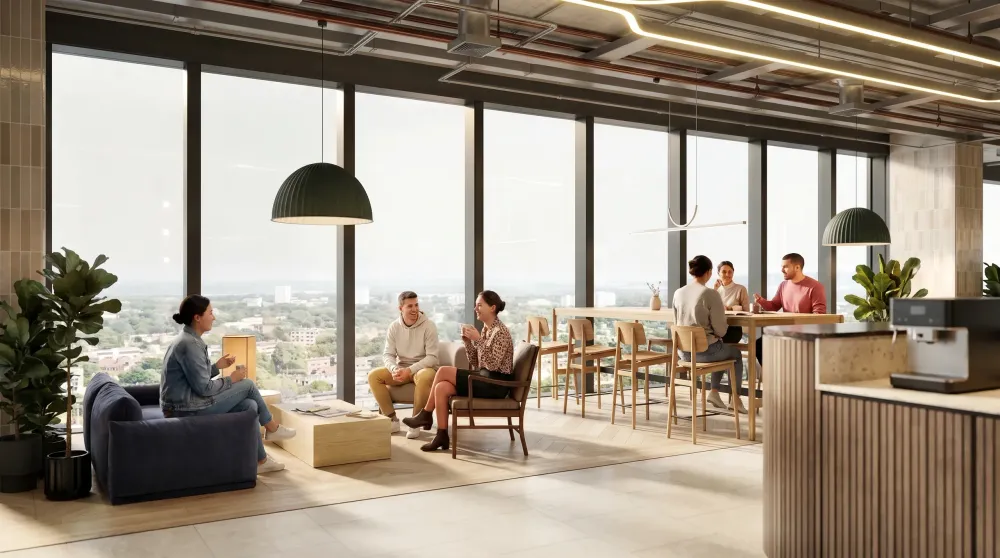
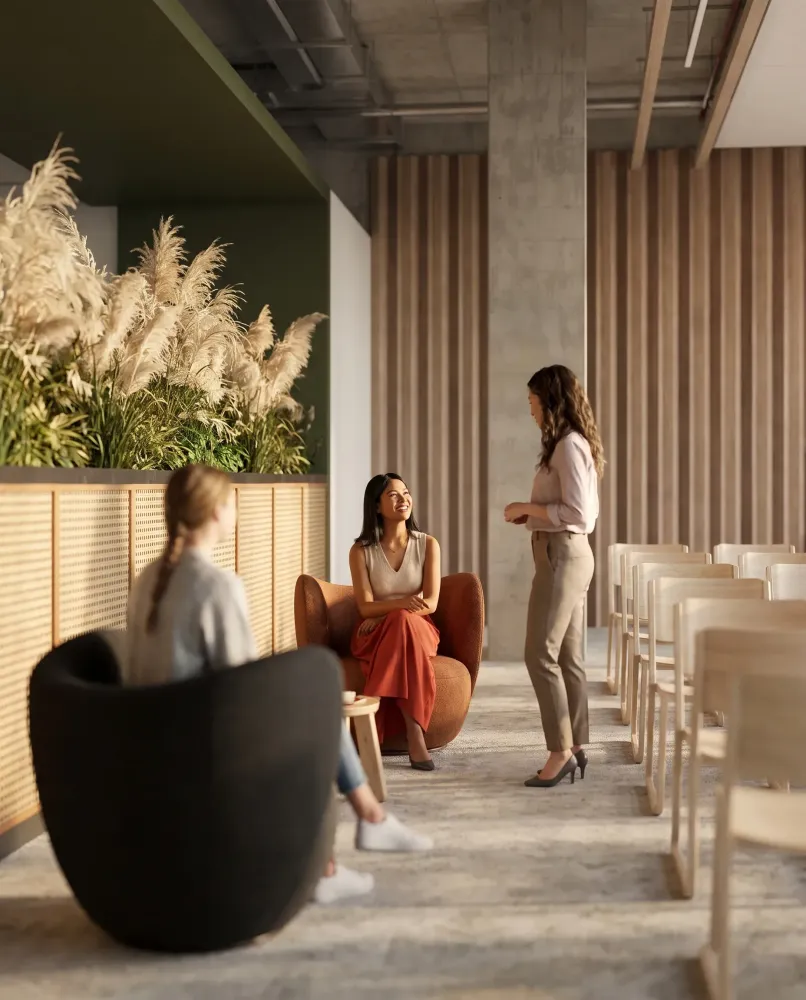
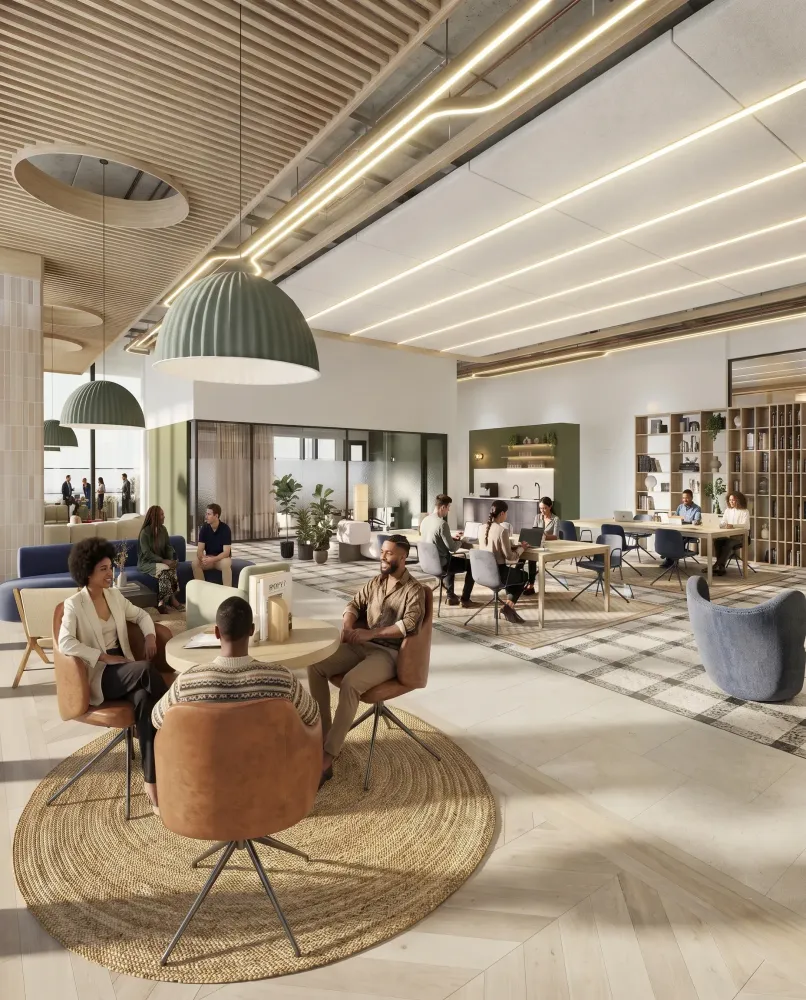
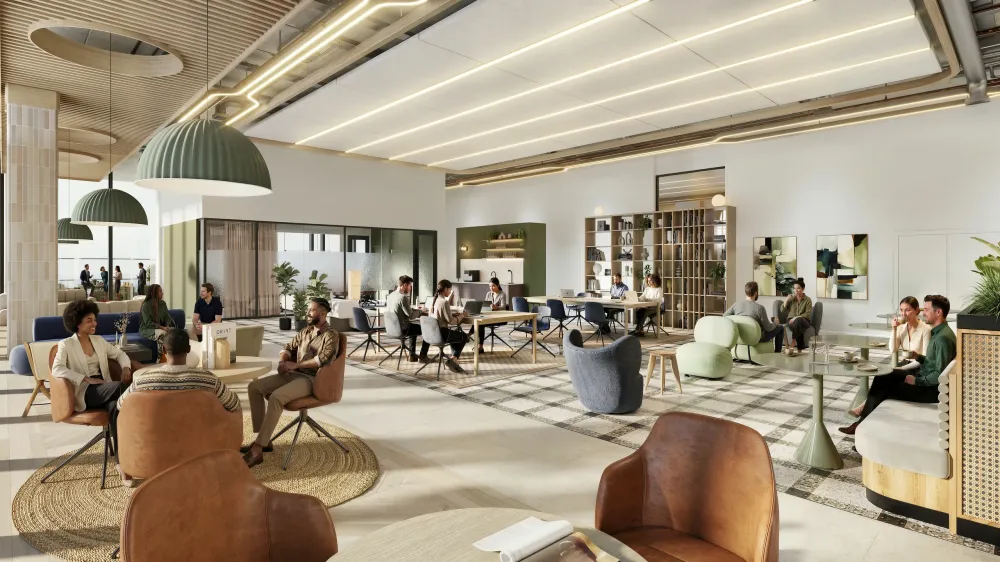
For zoning we leaned on materials rather than walls, to keep the plate airy. Concrete pillars and micro-cement floors mark the active walkways; acoustic slatted timber lines the presentation areas. Lighting went in as two layers: continuous geometric LED bands for uniform task light across the dense desk zones, grounded by low-hung green-domed pendants over the meeting islands. I'll back that exposed-ceiling call as the right one. It looks more honest and it sells better, because it answers the question the tenant was actually going to ask.
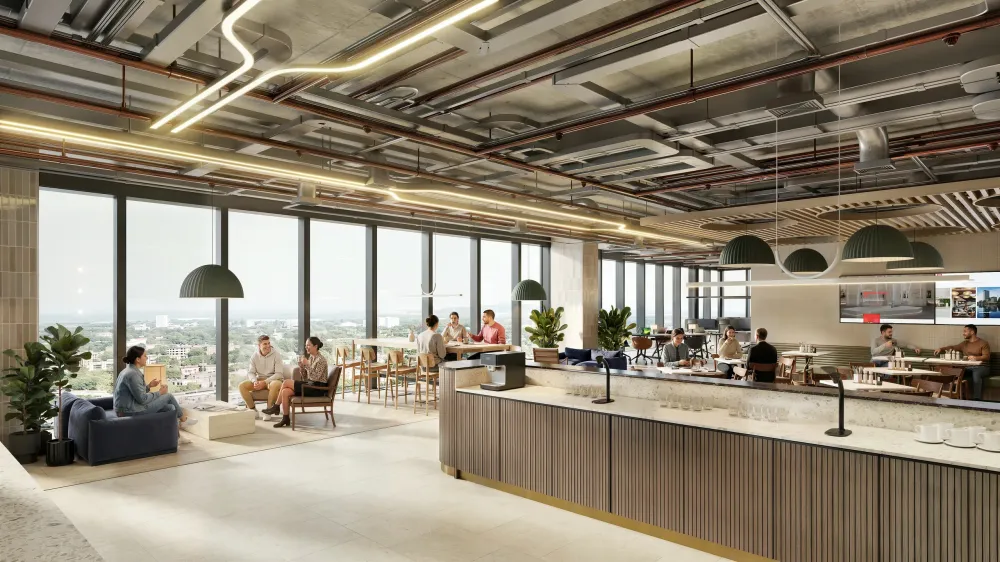
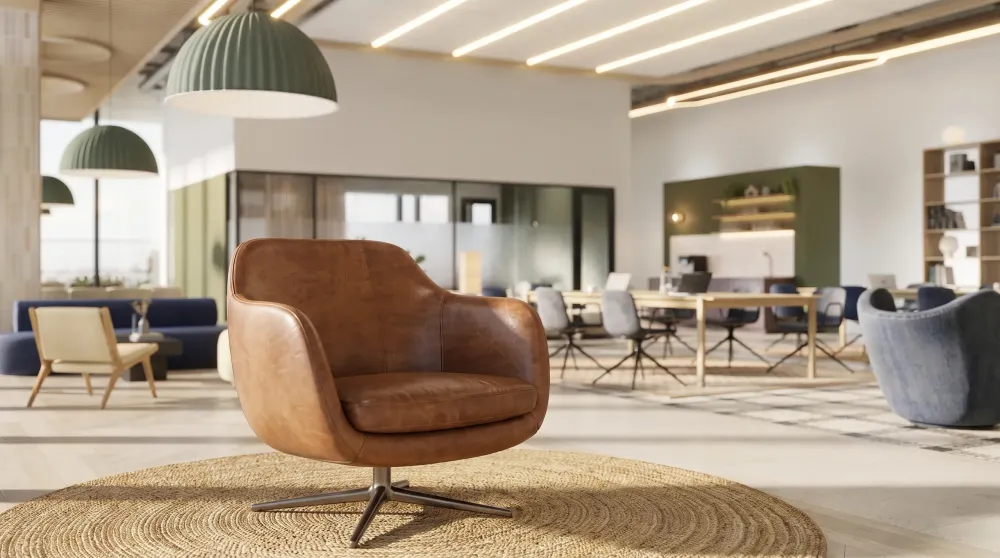
The plate reads in four moves. A high-density desk and collaboration floor runs rows of white task desks with ergonomic seating along the perimeter glazing, next to casual breakout lounges in low olive sofas. A keynote assembly hall handles town halls and training with a tiered amphitheatre of light oak chairs facing a large media display. A front-of-house hospitality bar in fluted timber and stone supports networking and breaks. And a quiet executive lounge and modular library, floor-to-ceiling oak shelving, mid-century leather armchairs and acoustic carpet, gives the floor its calm end.
I can show the layout is efficient, adaptable and premium, and that the services fit the density. What I can't tell you is how the Riyadh corporate-leasing market reads a speculative HQ or which occupier it lands. We supplied the proof of concept; the leasing campaign and market call were the developer's.
The imagery gave the developer a precise cross-border leasing tool. Rather than generic office concepts, it handed corporate real estate directors concrete visual proof of layout efficiency, mechanical scalability and premium finish, which is what accelerates negotiations and cuts the time a speculative floor sits empty.
Renders that show what a bare, unlet floor plate could become as a finished workspace, built to help a developer market and let the space before a tenant or fit-out is confirmed.
Because a corporate tenant needs proof the HVAC, acoustics and services actually fit the proposed density. Showing the ceiling answers that question; boxing it in hides it.
Through materials and lighting: concrete and micro-cement for active routes, slatted timber for presentation areas, and layered LED and pendant lighting to mark each zone.
Yes. Marketing and letting workspace before fit-out, across markets, is core to what we do.