The Ormond Foundry Tech Headquarters & Workspace CGI by 100CGI Studio, view 1

The Ormond Foundry: Rendering a Historic Dublin Building Into a Modern HQ

Tech Headquarters & Workspace — Dublin, Ireland

The Ormond Foundry

The Ormond Foundry is an adaptive reuse job: a historic industrial building in Dublin turned into a multi-floor corporate HQ. We were commissioned to produce the marketing renders, and the brief sat right on the seam that makes conversions interesting. Old, coarse, weathered fabric on one side; sleek modern furniture on the other. Sell the contrast, don't smooth it away.

Software

3ds Max, Corona Renderer

Year

2024

Location

Dublin, Ireland

About This Project

Project Overview

The Ormond Foundry is an adaptive reuse job: a historic industrial building in Dublin turned into a multi-floor corporate HQ. We were commissioned to produce the marketing renders, and the brief sat right on the seam that makes conversions interesting. Old, coarse, weathered fabric on one side; sleek modern furniture on the other. Sell the contrast, don't smooth it away. Conversions are some of my favourite workplace briefs precisely because of that tension. A new-build office can hide behind a clean palette. A 100-year-old building has character you have to earn the right to keep.
Project Overview
Rendering a Historic Dublin Building Into a Modern HQ
The project

Rendering a Historic Dublin Building Into a Modern HQ

The Ormond Foundry is an adaptive reuse job: a historic industrial building in Dublin turned into a multi-floor corporate HQ. We were commissioned to produce the marketing renders, and the brief sat right on the seam that makes conversions interesting. Old, coarse, weathered fabric on one side; sleek modern furniture on the other. Sell the contrast, don't smooth it away.

Conversions are some of my favourite workplace briefs precisely because of that tension. A new-build office can hide behind a clean palette. A 100-year-old building has character you have to earn the right to keep.

The defining surface is the brick

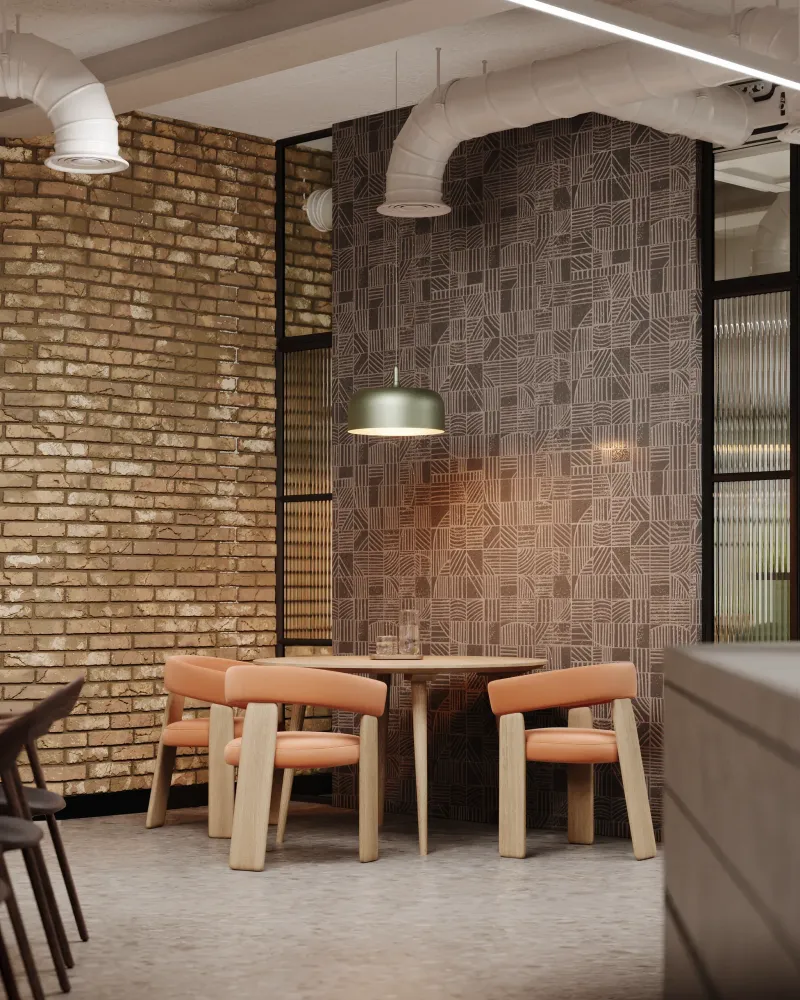
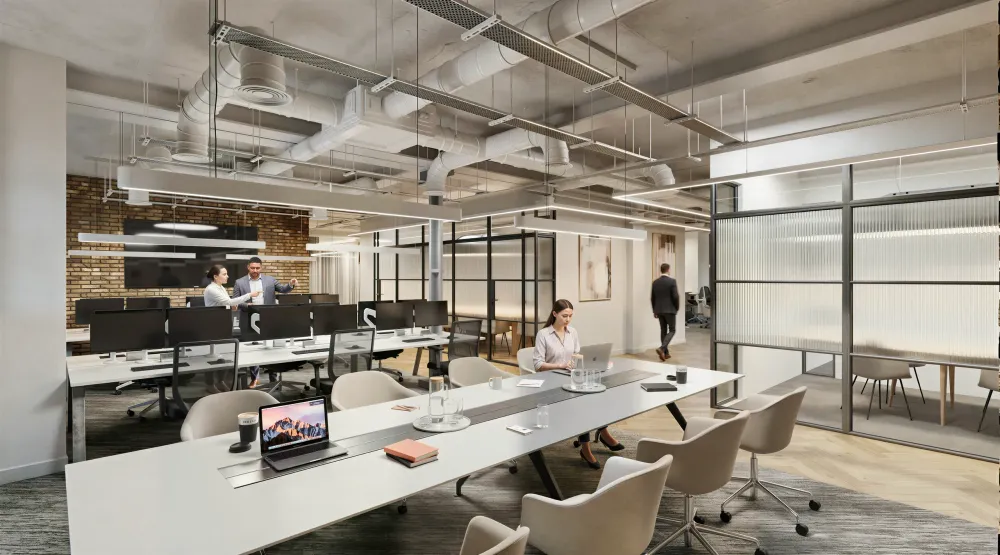
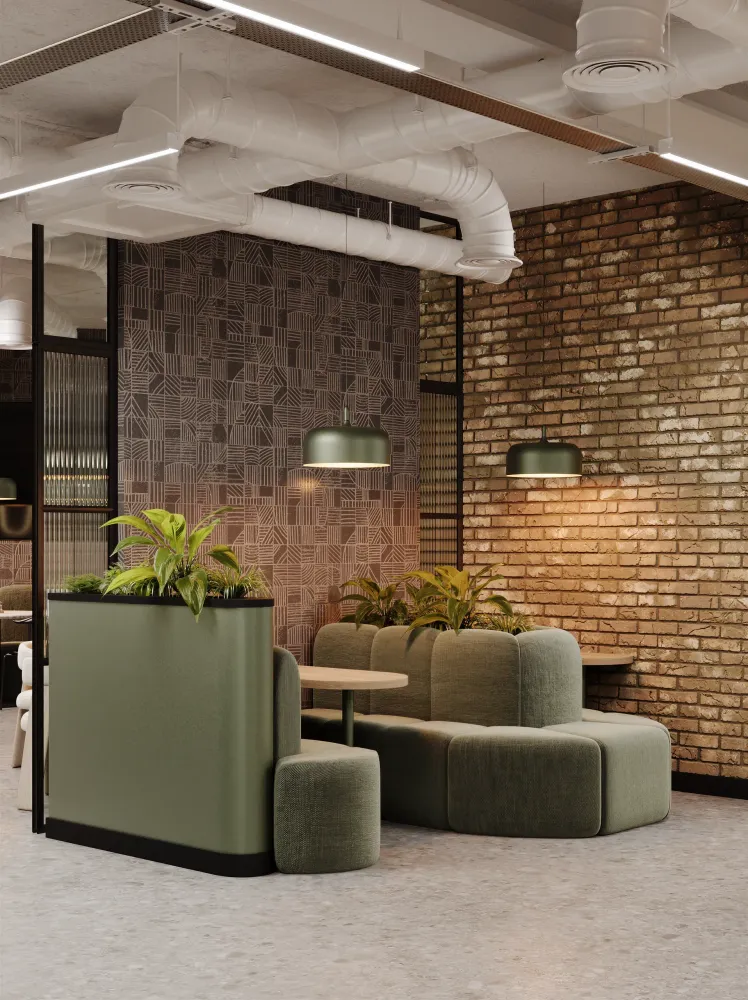
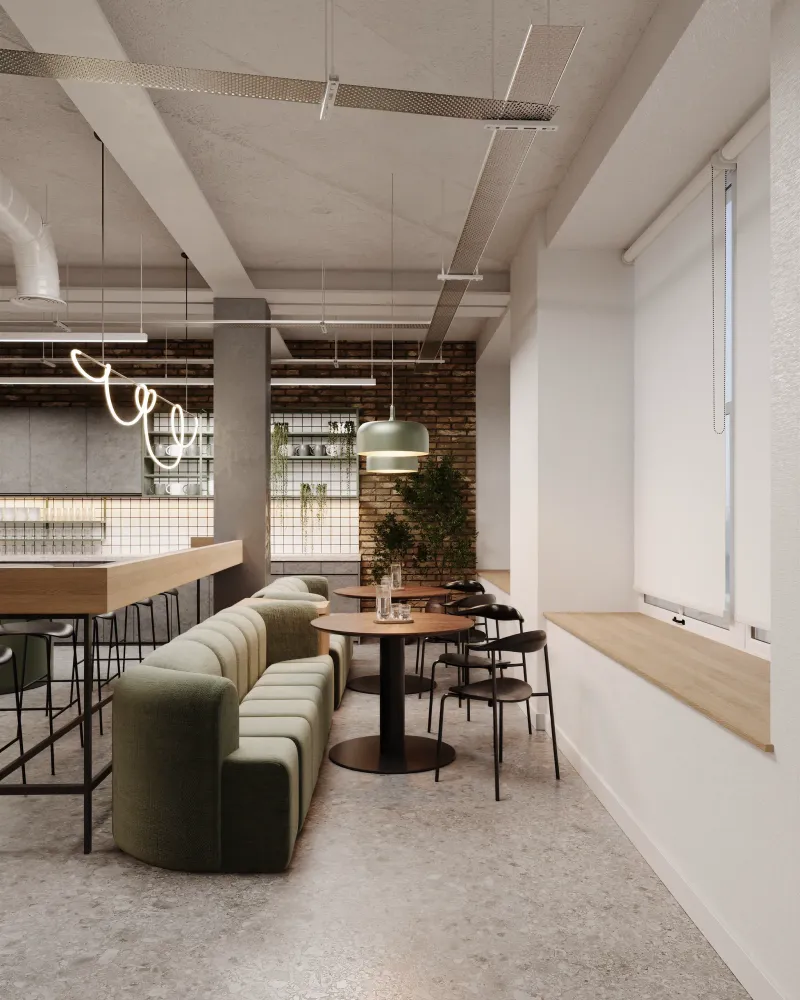
Everything in this scheme answers to the exposed red brick. Uneven texture, earthy tones, the odd century of wear left visible, it grounds the whole floor plate and it is the hardest thing in the room to render well. Old Dublin brick is rough and light-absorbing, the opposite of the crisp glass partitions sitting in front of it.

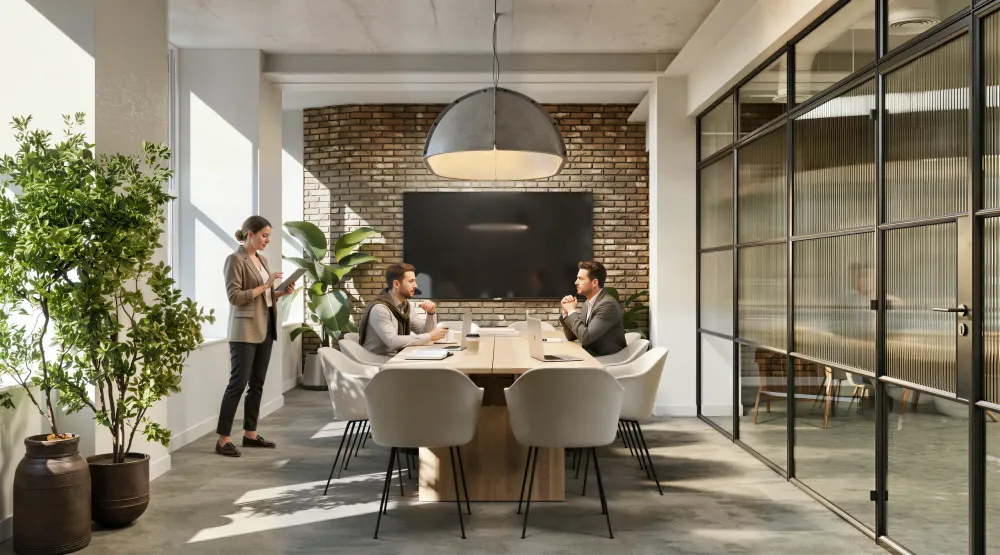
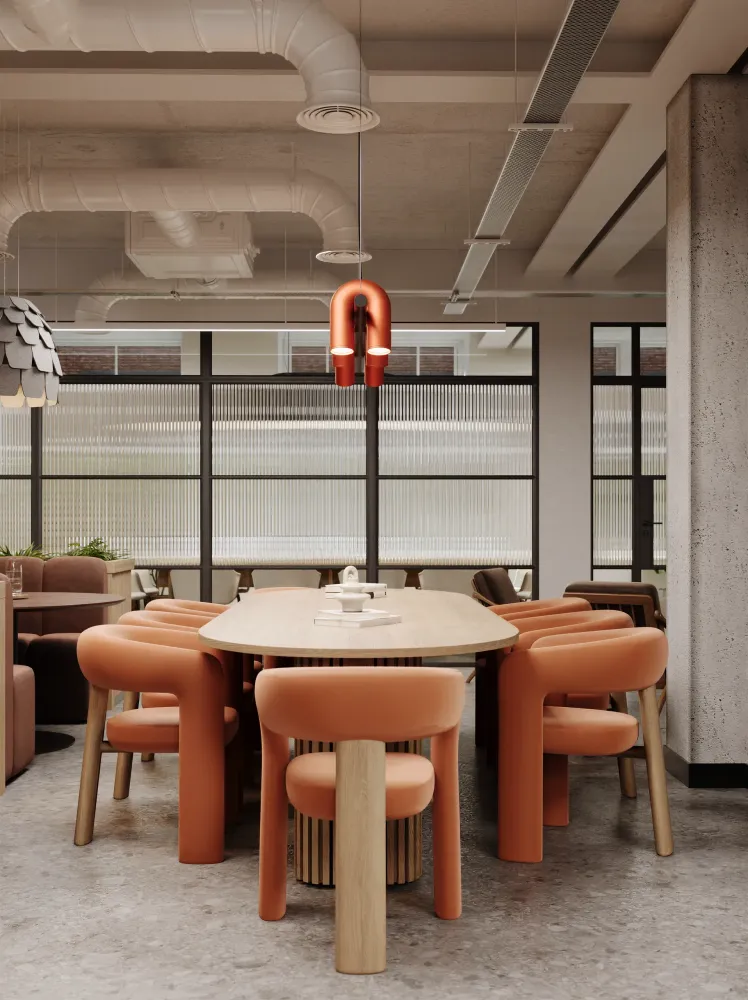
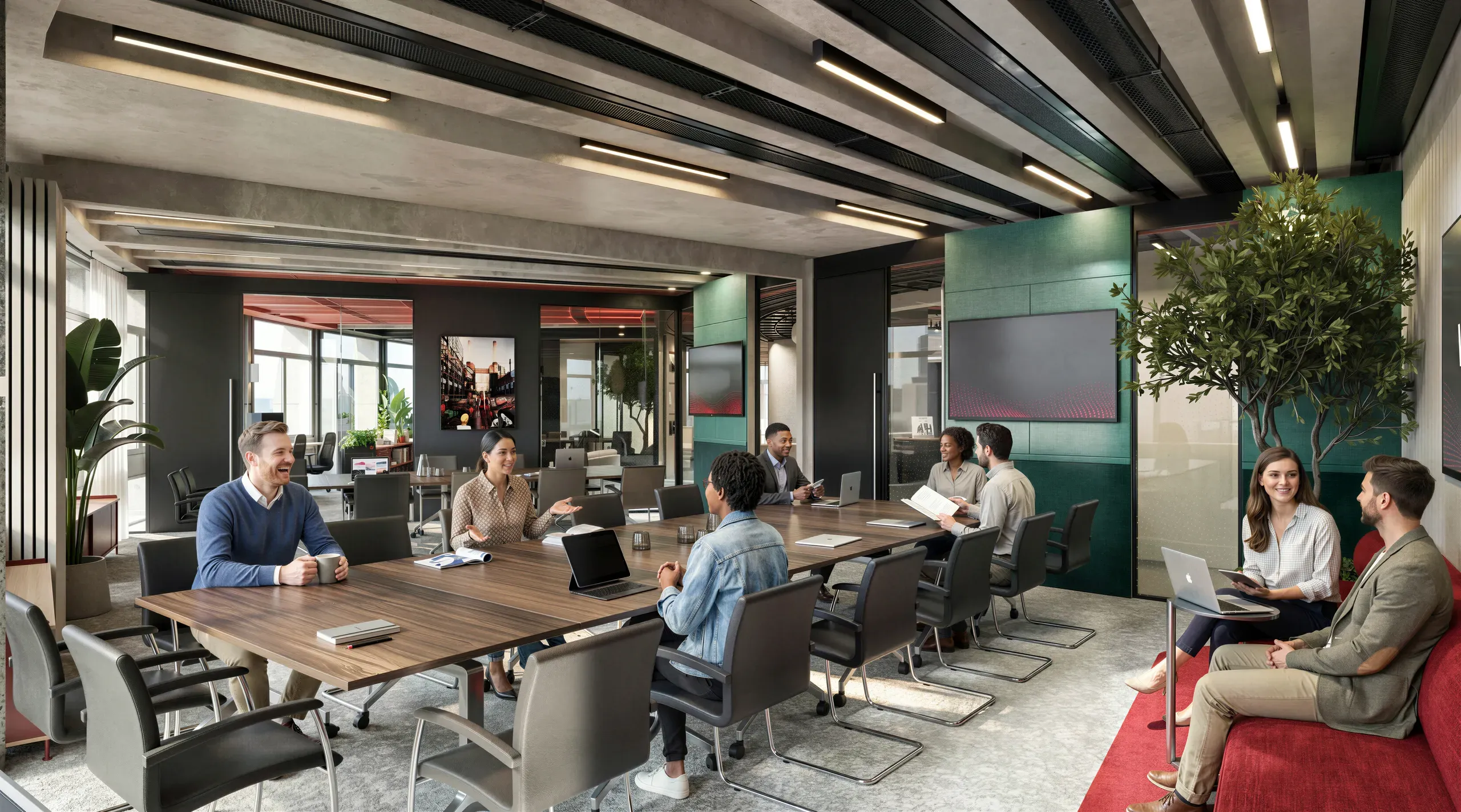
That contrast was the technical heart of the job. We focused on how light hits three surfaces at once: the matte, broken texture of the brick, the sharp reflections on the black-framed glass partition walls, and the soft diffuse nap of the fabric sofas. Get any one wrong and the illusion drops. Brick that looks like wallpaper, glass that looks like a flat grey plane, fabric that looks like plastic, any of those and a sharp client stops believing the rest.

We set the virtual cameras for a bright but soft overcast day. That choice was deliberate: hard sun would have over-dramatised the brick and crushed the shadows in the meeting rooms. Soft northern light let every material read true. I'd rather render an honest grey-sky Dublin afternoon than fake a Mediterranean one and have the client wonder why their actual office looks flatter.

How the floor reads

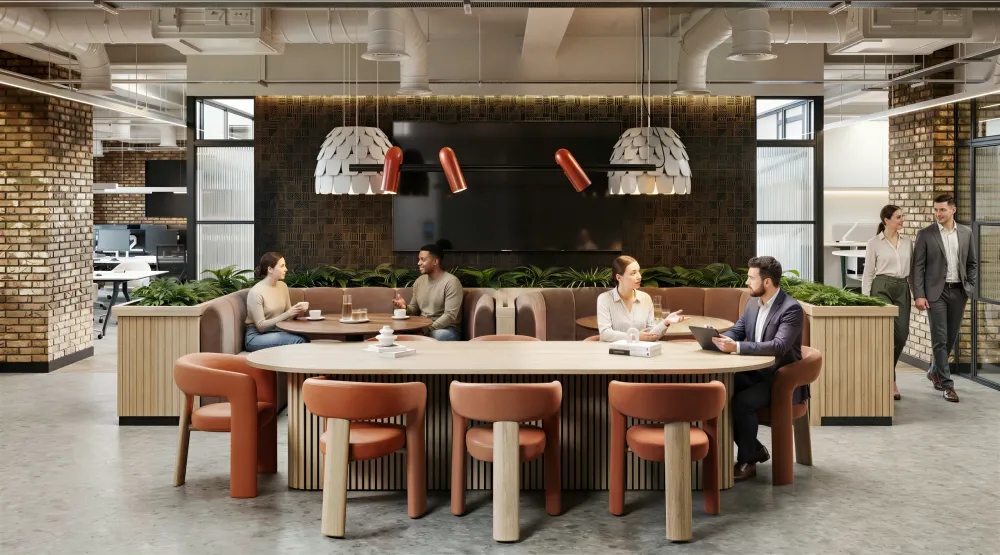
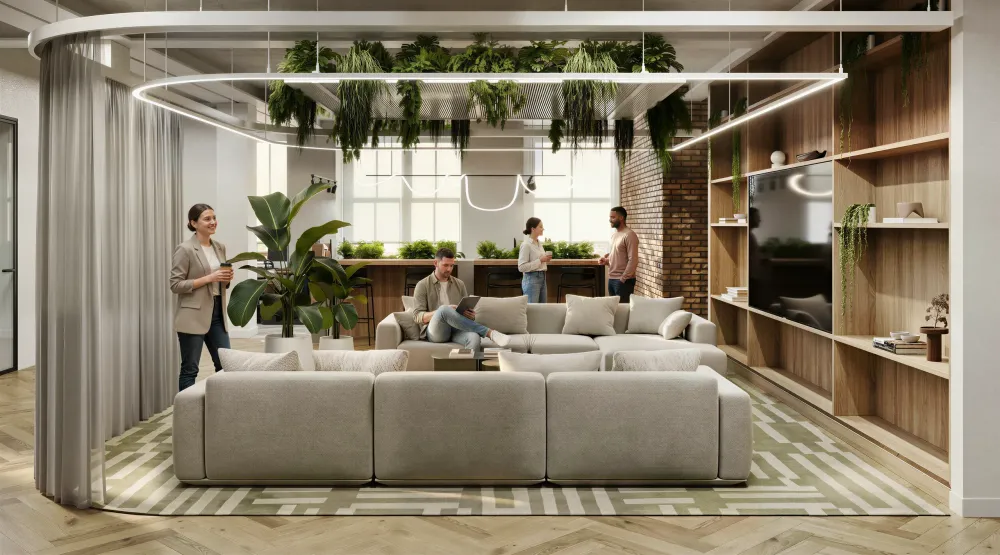
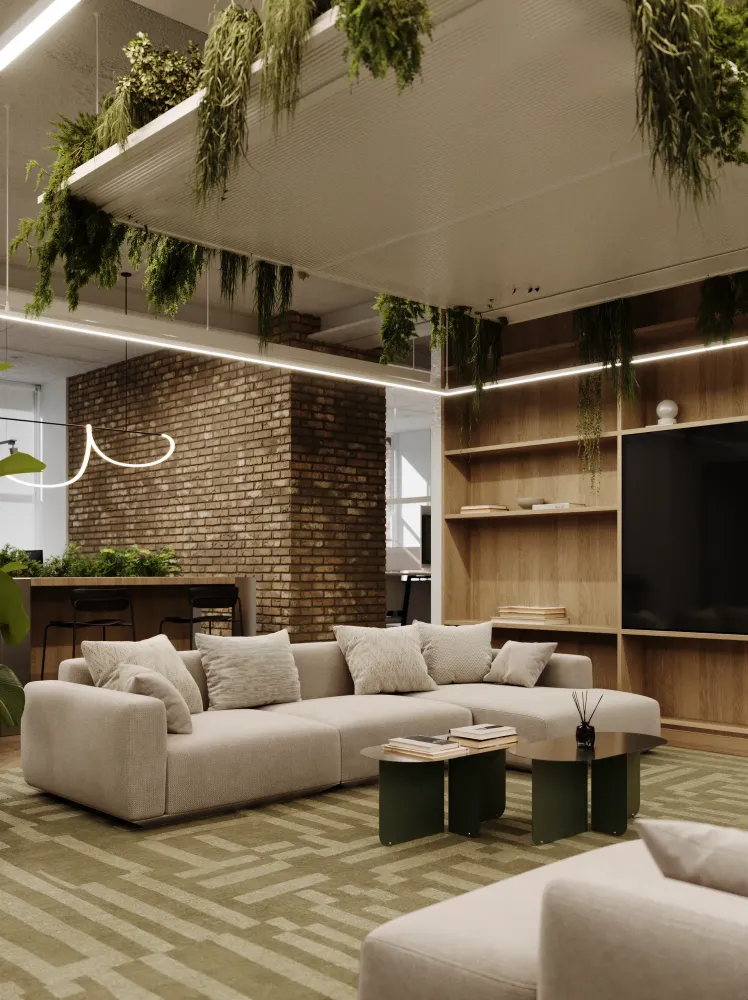
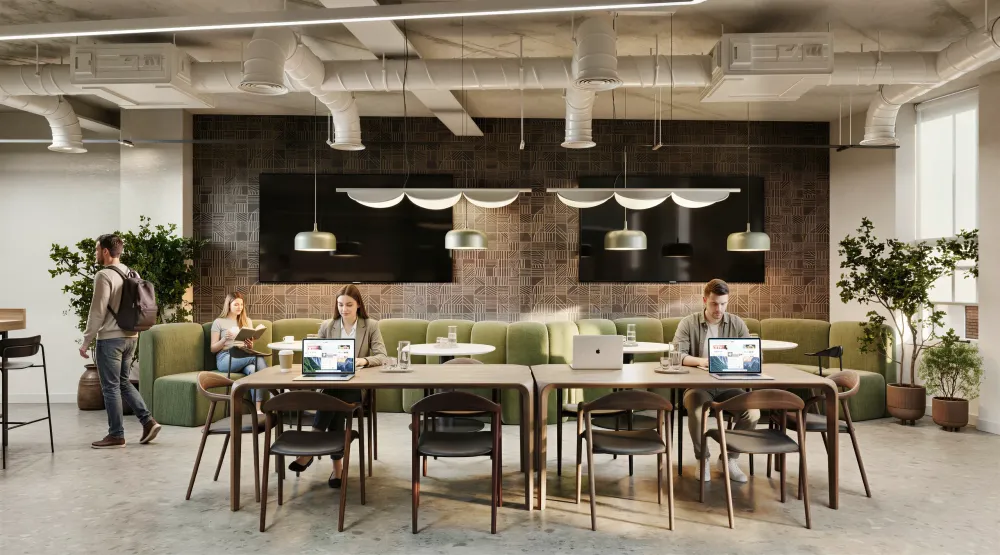
Its communal heart feels like a hospitality lounge: a deep oatmeal L-shaped sofa on a textured rug, low stone coffee tables, and an oak-slat accent wall holding a flush screen, softened by fiddle-leaf figs and snake plants in the corners. Right beside it, the glass-enclosed meeting rooms keep the red brick visible on their back walls, so you read the old building straight through the new glass grid. That single move, brick behind glass, is what ties the heritage and the modern together in one shot.

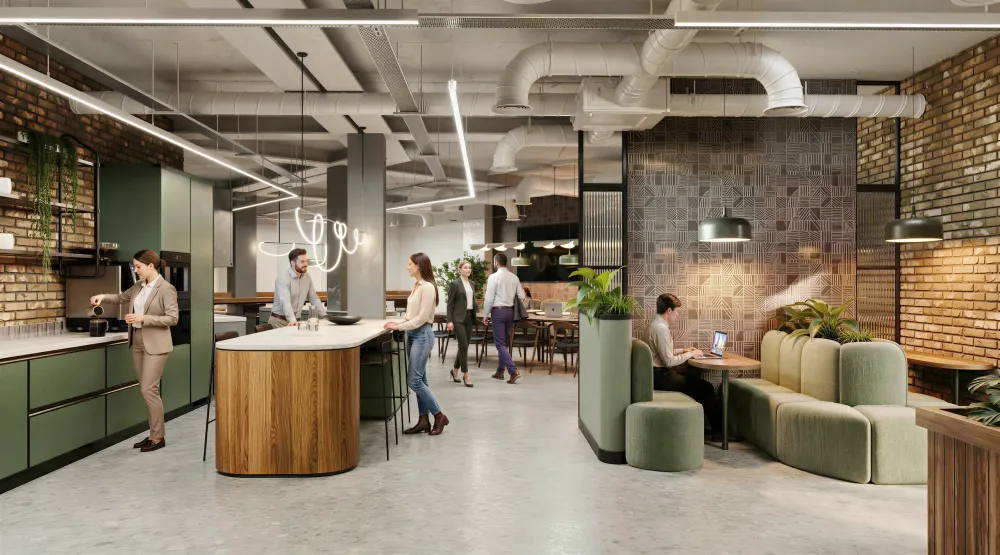
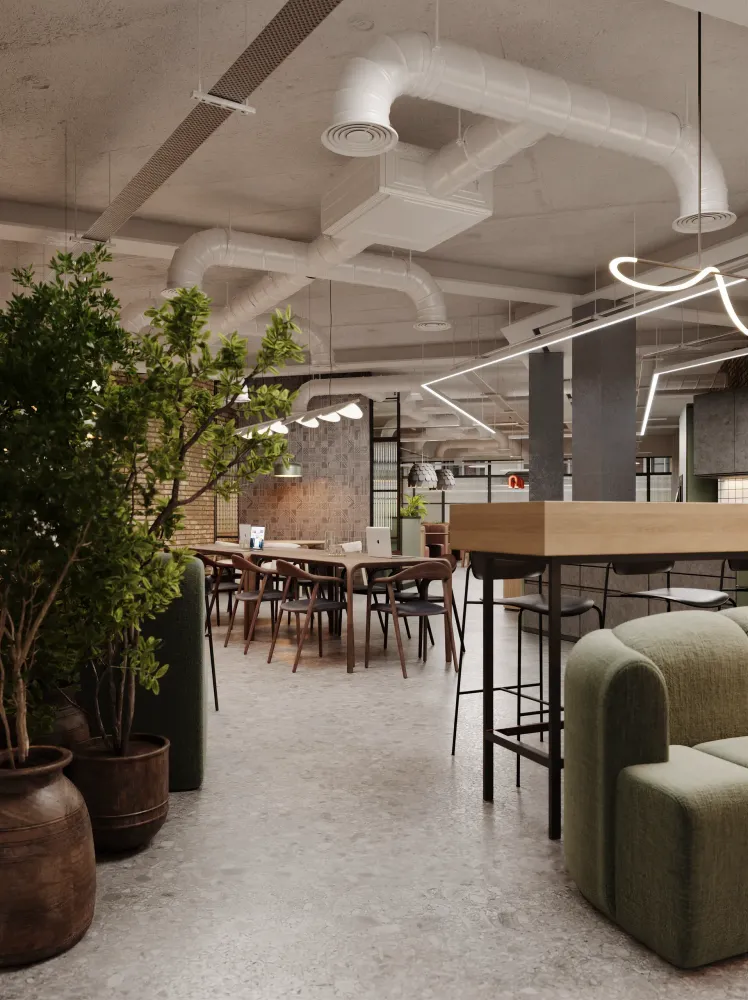
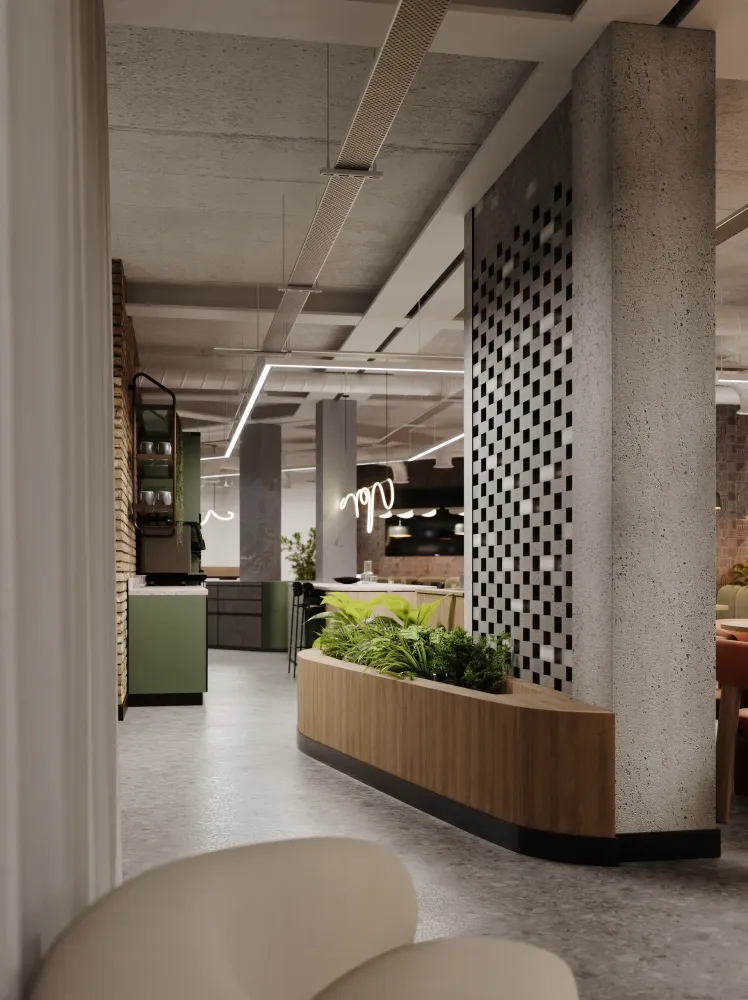
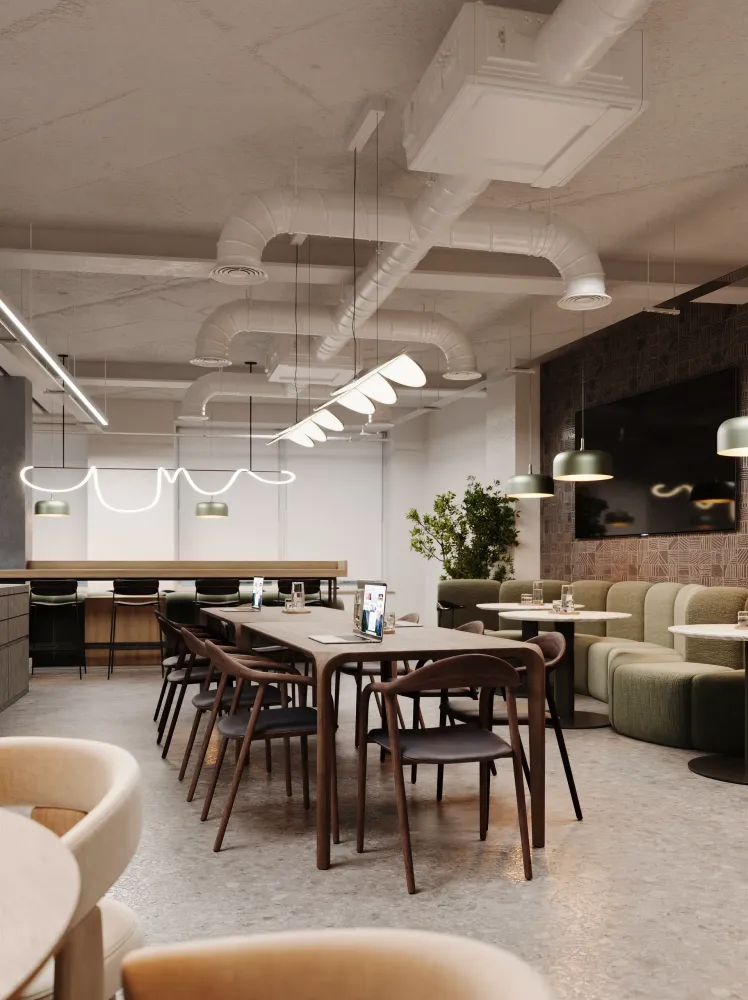
A café island carries the social side: a long counter in dark, cloud-like stone, minimalist barstools, and spherical glass pendants on thin black cords throwing a warm pool onto the polished concrete.

A view I'll stand behind: exposed brick is overused as a shortcut to "characterful office", and most renders flatten it into a texture map. The ones that work treat it as the light-eating, irregular thing it actually is. That's where the warmth comes from.

What it delivered

Our renders gave the project a marketing set that holds the building's two identities in tension instead of resolving one into the other. Historic and modern, in the same frame, believable under real Dublin light.

Frequently Asked Questions

What makes converting a historic building hard to render?

The clash of old and new materials. Rough heritage brick and crisp modern glass behave in opposite ways under light, and both have to read true in the same frame.

Frequently Asked Questions