Architectural Visualization
Turn blueprints into pre-sold properties. We create photorealistic exterior CGI that helps developers secure planning pe...

High-End Residential / Private Estate — Arabian Hills, Dubai, UAE
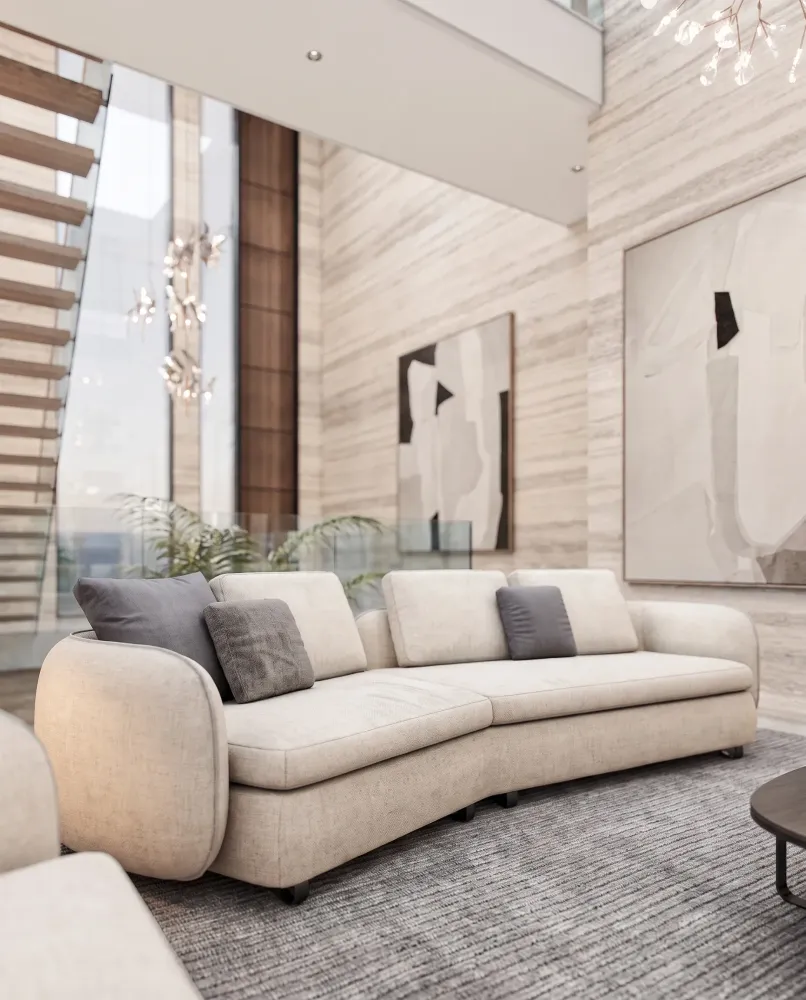
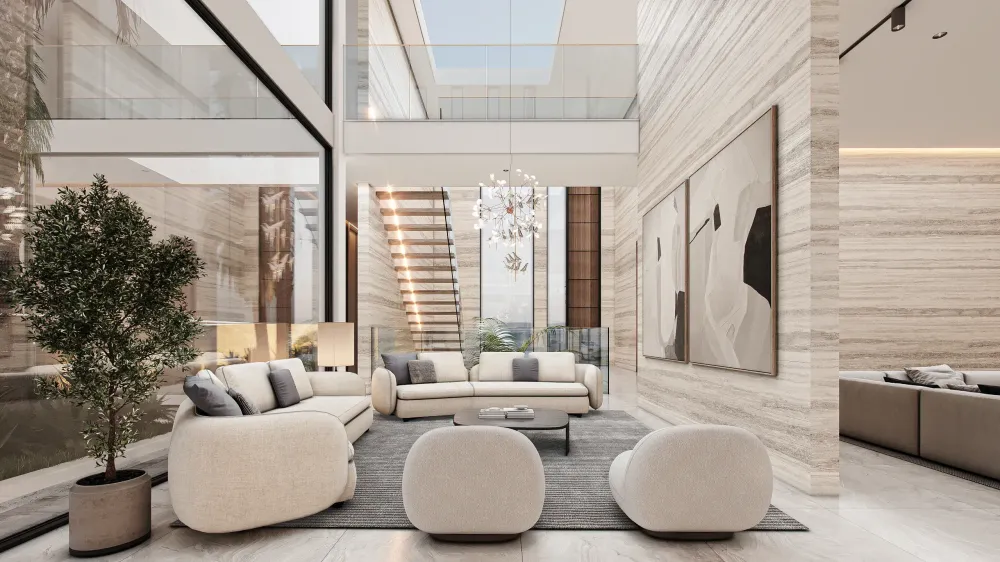
A luxury developer commissioned us to visualise The Nafoura Pavilion, a bespoke private estate in the Arabian Hills belt of Dubai, out near the dunes of the Al Marmoom reserve. The job was a digital prototype of the villa's interior before ground was broken, so the developer, the interior specialists and the private owner could agree on proportion and material before anyone spent on stone.


A luxury developer commissioned us to visualise The Nafoura Pavilion, a bespoke private estate in the Arabian Hills belt of Dubai, out near the dunes of the Al Marmoom reserve. The job was a digital prototype of the villa's interior before ground was broken, so the developer, the interior specialists and the private owner could agree on proportion and material before anyone spent on stone.
I'll be straight up front: residential isn't my home turf. My studio's day-to-day is office and workplace work for Design & Build firms, not private homes. What carries across is the part that is identical on any premium interior, which is how you make real stone and timber behave under hard daylight. That was the whole technical brief here.
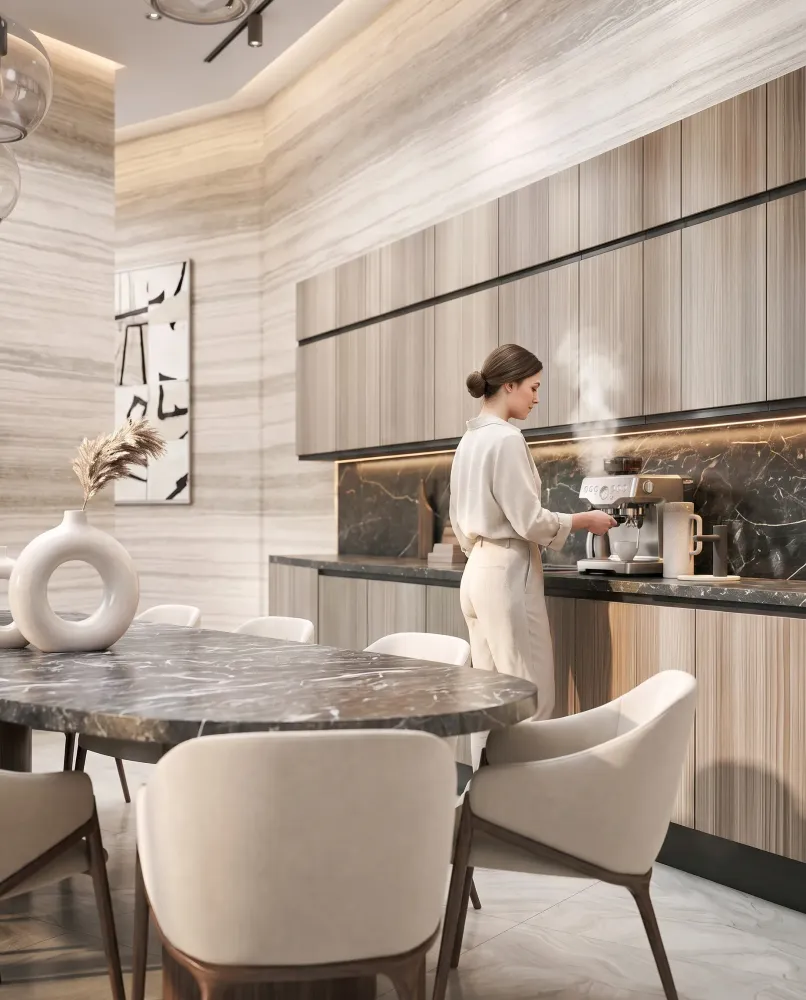
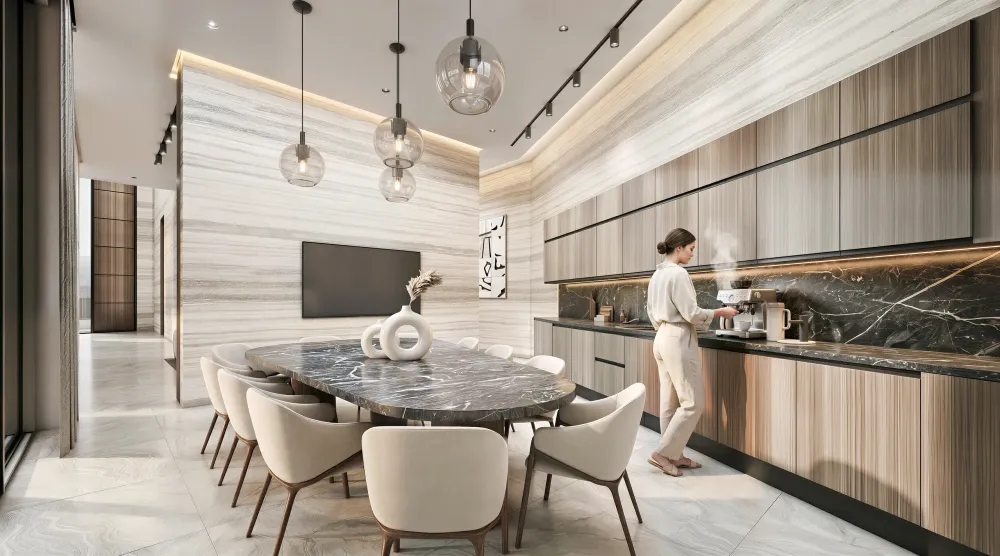
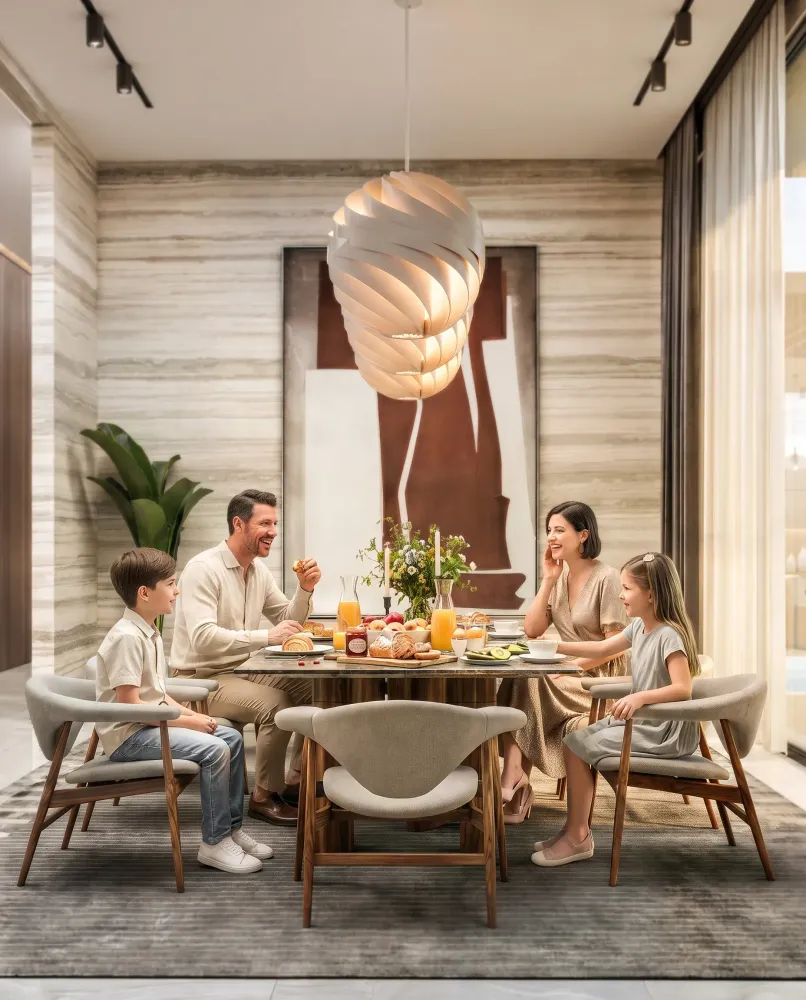
This design leans on three materials that are unforgiving in CGI: heavily striated cream travertine running the length of the walls, dark veined marble on counters and tables, and smooth walnut joinery. Dubai daylight is harsh and high-contrast, and it pours through deep glass facades straight onto those surfaces.
The trap is overexposure. Push the daylight for drama and the travertine blows out to a flat cream wall, the marble loses its veining, the walnut goes orange. We built the volumes from CAD and DWG data, then spent the real effort on shader calibration: mapping the organic striations of the travertine and the high-gloss veining of the dark marble so each one held its depth instead of washing out. I tuned the daylight to sit just under the point where the stone clips, which on a sun-driven scheme like this is a fine line to walk.
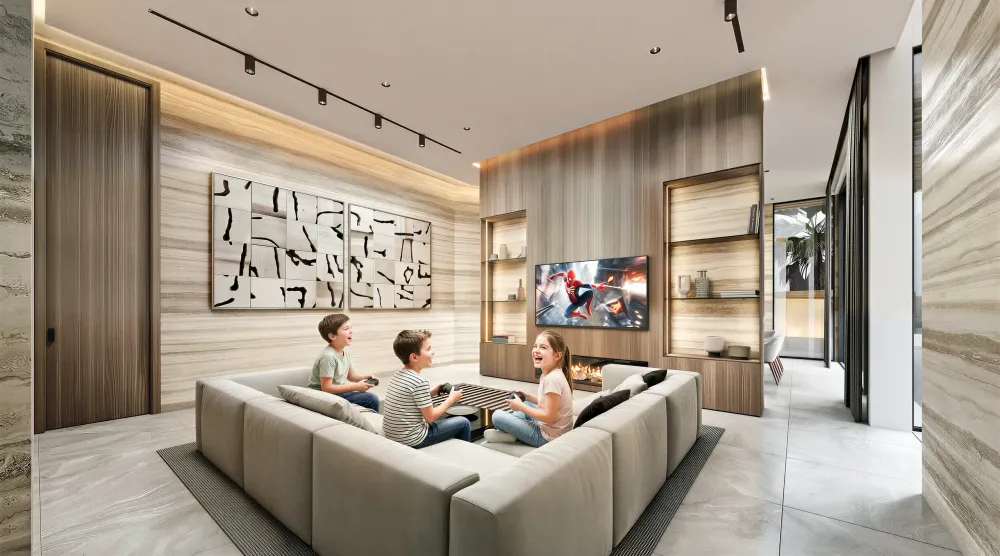
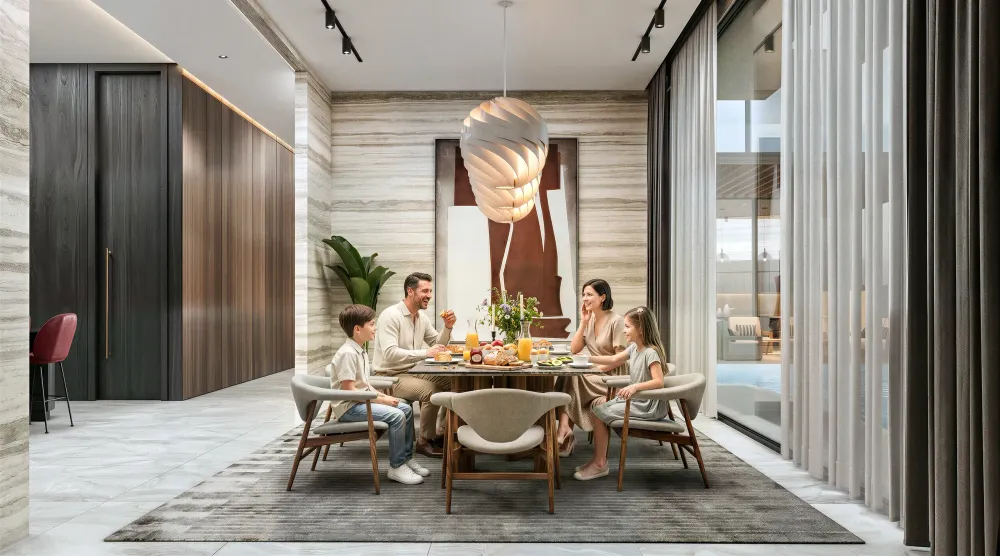
A double-height atrium anchors the house, with a floating stair, glass balustrades and curved seating grounding the volume. From there the plan opens into a formal dining area wrapped in continuous travertine around a dark stone table, a sunken family media lounge with a built-in fireplace and warm recessed shelving, and a secondary kitchen and bar in walnut cabinetry set against a dark marble island for casual hosting.
Across all of it the palette stays disciplined: sandy warm tones, deep charcoals, rich wood. That restraint is what stops a big villa reading as a showroom.
The renders gave the team a marketing and procurement asset in one. By showing exactly how daylight behaves against travertine and walnut, they let the developer brief stone and timber suppliers early with confidence, which is where the time and money leak out of a custom build. For the buyer, it turned a set of plans into a place they could picture living in.
One honest caveat on my side. I can speak to how we made the materials read true, but I won't pretend to the instincts of a dedicated residential studio on things like how a family actually lives through these rooms. That was the interior designer's call, and a good one.
Yes. Every image of The Nafoura Pavilion was built from CAD and DWG data before ground was broken, which is exactly when material decisions are cheapest to change.
Its organic striations and matte surface clip easily under strong daylight. Without careful shader and exposure work, it blows out to a flat cream wall and loses the depth that makes it look expensive.
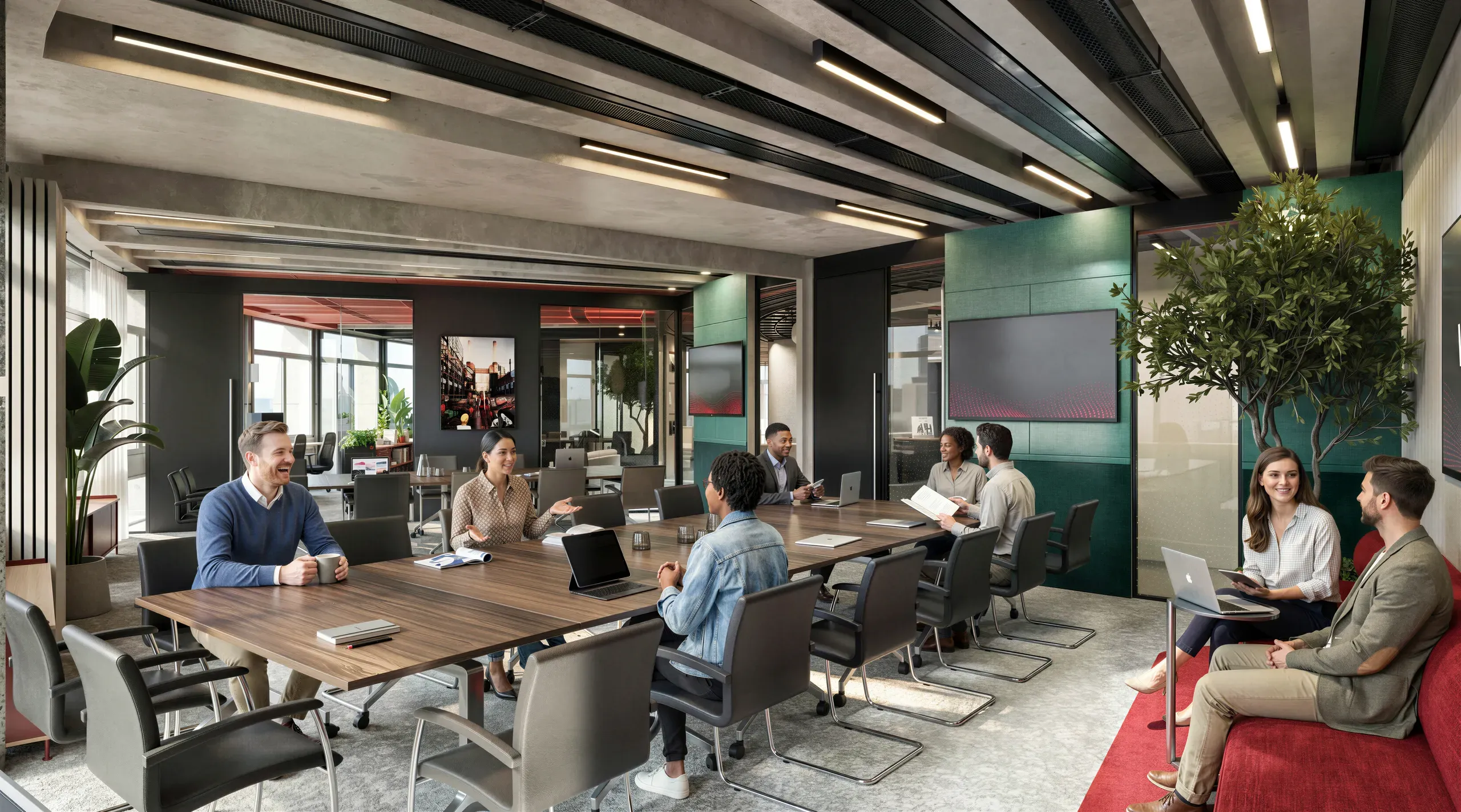
Our core is office and workplace visualisation. We take on high-end residential where the technical challenge is material and lighting realism, and we are upfront about where a dedicated residential studio's instincts would differ.
The estate was modelled in 3ds Max and rendered in Corona.