
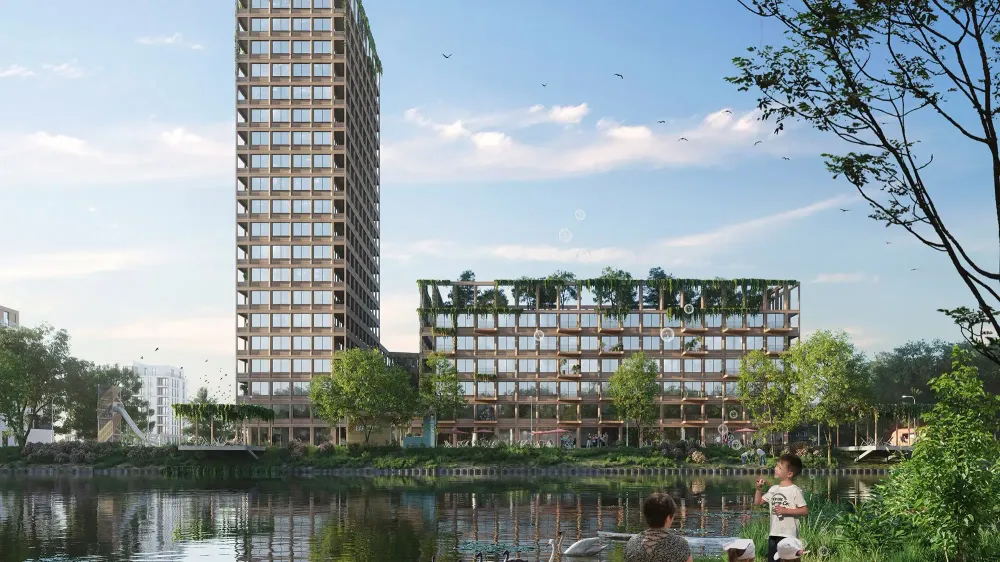
Architectural visualization of Mount Anvil sustainable residential tower with green terraces

Mount Anvil: A New Chapter for London Living

Mount Anvil Development

We partnered with Mount Anvil to create emotive, high-fidelity exterior renders. The goal was to visualize the architectural intent and landscaping integration before construction, providing the sales team with powerful assets to secure off-plan buyers.

Software

3ds Max, Corona Renderer, Forest Pack, Photoshop

Year

2024

Location

London, UK

Timeline

3 weeks

About This Project

Project Overview

This project required a meticulous balance between technical precision and artistic composition. Our team focused on recreating the complex brickwork textures and the interplay of natural light on glass surfaces. By simulating realistic London weather conditions and utilizing advanced vegetation scattering, we delivered a digital twin that accurately reflects the material quality and atmosphere of the final build.
Project Overview
Key Metrics

Project Results

35000+

Total Sq Ft

8

Marketing Renders

5000px

Pixel Resolution

21

Days Delivered

"The images look great. The lighting in the courtyard shots is exactly what we wanted, and the brick texture details came out very sharp in the high-res files. Thanks for handling the last round of camera adjustments so quickly."

Marketing Manager

Marketing Manager

Mount Anvil
Technical Workflow
Production Pipeline

Technical Workflow

Our systematic approach ensures every pixel serves a purpose. We combine architectural accuracy with photographic principles to deliver images that are not just correct, but compelling.
We began by auditing the CAD files and material schedules. We selected camera angles that emphasized the building's scale and relationship to the street level, ensuring the composition guided the viewer's eye.

Frequently Asked Questions

How did you achieve realistic vegetation?

We used Forest Pack to scatter 3D plant models. By randomizing rotation, scale, and tint, we mimicked natural growth patterns rather than uniform placement.

Frequently Asked Questions