
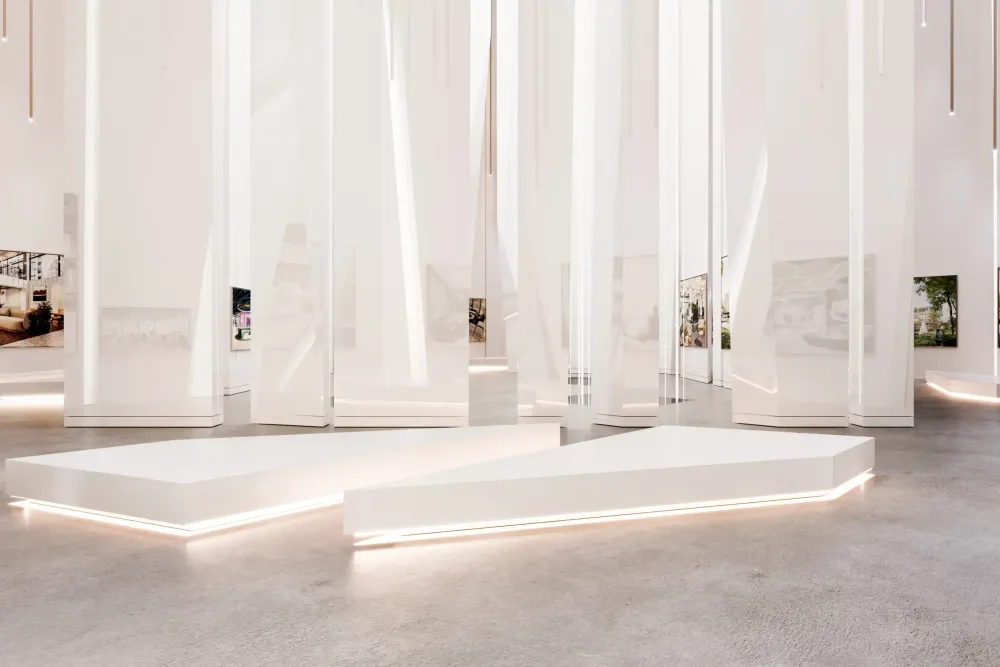
3D visualization of minimalist contemporary art gallery interior

Virtual Culture

We transform physical heritage and artistic vision into immersive digital ecosystems. Our virtual culture solutions break geographical boundaries, preserving history and showcasing art through high-fidelity, interactive 3D environments accessible on any modern device.
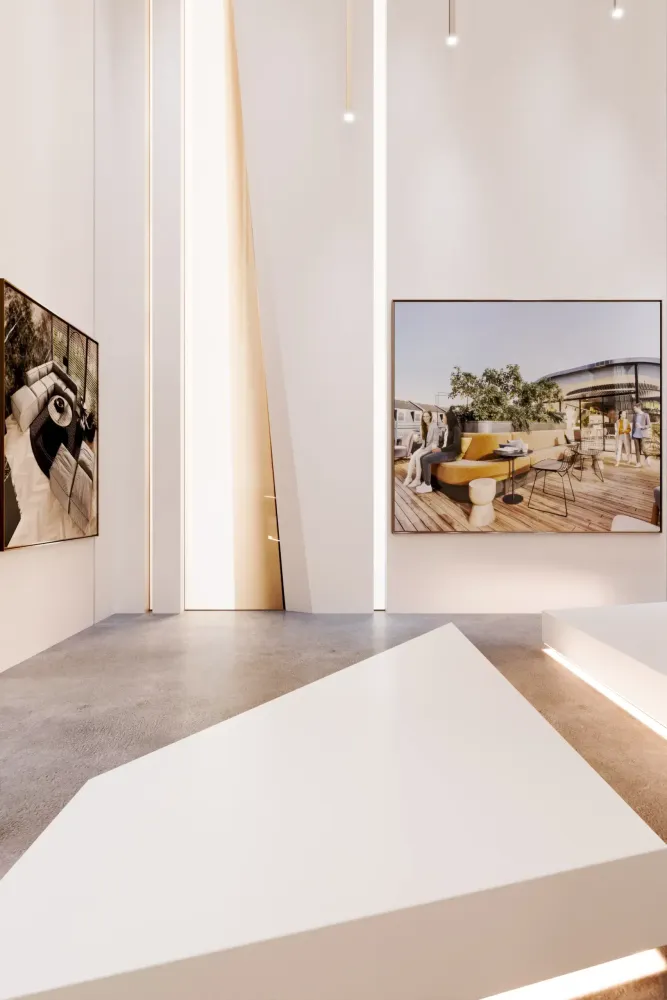
3D visualization of minimalist contemporary art gallery interior

Re-imagining Cultural Spaces

Physical barriers, limited opening hours, and travel costs no longer need to restrict the impact of your cultural mission. Whether you represent a national museum, a commercial art gallery, or a private collection, the digital realm offers an infinite canvas. We do not simply replicate rooms; we engineer accessible, narrative-driven environments that turn passive viewers into active participants, ensuring your exhibits resonate with a global, digital-native audience.

Scope: We design and build bespoke virtual venues tailored to your specific narrative. This ranges from hyper-realistic digital twins of historical sites and interactive science simulations to abstract, gravity-defying art galleries.

Methodology: We combine architectural precision with game-design psychology. Our spaces are built for intuitive navigation and emotional resonance, ensuring the technology serves the art, not the other way around.

Why Choose Us

Key Benefits

Borderless Access

Expand your audience from local foot traffic to a global user base, operating 24/7 without staffing costs.

Monetization

Integrate direct sales, ticketing, and donor systems seamlessly into the 3D environment.

Digital Preservation

Safeguard fragile artifacts by allowing visitors to handle and inspect high-fidelity digital twins.

Deep Analytics

Track visitor movement, dwell time on specific artworks, and engagement hotspots to inform curation.

How We Work

Our Process

01

1. Curatorial Brief

We define the narrative arc, target audience, and the specific emotions you want the space to evoke.

02

2. Spatial Design

Architecting the virtual volume. We decide on realistic replication vs. abstract conceptual spaces.

03

3. Asset Digitization

Converting physical objects into 3D assets using photogrammetry, lidar, or high-poly modeling.

04

4. Interaction Coding

Implementing hotspots, audio guides, gamified elements, and e-commerce integrations.

05

5. Launch & Support

Deployment to web/mobile servers, performance testing, and integration with your analytics tools.

Learn More

Full Details

The Philosophy of Virtual Culture

The digitalization of culture is often misunderstood as a threat to physical institutions. Skeptics argue that a screen cannot replace the aura of an original painting or the scale of a historical monument. At 100CGI, we agree. That is why we do not try to replace the physical experience; we create an entirely new medium that complements and expands it. Virtual culture is not about putting JPEGs on a webpage; it is about spatial storytelling.

Our approach centers on Democratization and Context. In a physical museum, a visitor might glance at a display case for three seconds. In our virtual spaces, we can let them pick up the artifact (digitally), rotate it, strip away layers to see the internal structure, or transport them back in time to see the object in its original historical context. We turn static observation into active investigation.

Designing for the Digital flâneur

We treat digital visitors as explorers. The architecture of a virtual gallery must guide without forcing. We utilize lighting cues, ambient audio, and intuitive pathing to lead visitors through a narrative arc. For art galleries, this means escaping the 'white cube' stereotype. Why display a surrealist painting on a white wall when it could be floating in a void that defies physics? We push the boundaries of imagination to create backdrops that amplify the emotional weight of the artwork.

The Business of Art & Heritage

Beyond aesthetics, we engineer these spaces for functionality. For commercial galleries, the friction between viewing and buying is removed. A collector can view a sculpture, visualize it in their own living room using AR integration, and execute a secure transaction via blockchain or traditional payment gateways instantly. For museums, we turn educational outreach into a measurable metric. We provide tools that allow teachers to lead guided tours for students on the other side of the world, creating a 'Metaverse classroom' that feels shared and alive.

We also tackle the challenge of attention economy. By integrating gamified elements—scavenger hunts within a history museum or interactive creation tools in an art gallery—we increase dwell time significantly compared to traditional websites. We build cultural hubs that people want to return to, not just visit once.

Common Questions

FAQ

How much does a virtual museum cost to develop?

Costs vary significantly based on scale. A single custom gallery room might start in the low thousands, while a full digital twin of a national museum with hundreds of interactive artifacts is a larger investment. We tailor quotes to specific scope.

Do visitors need VR headsets to view the gallery?+
Can we sell art directly inside the virtual gallery?+
How do you handle the digitization of fragile artifacts?+
Can the virtual space be updated after launch?+
What is the difference between a 360 tour and a 3D environment?+

Ready to Get Started?

Let's discuss your project and see how our virtual culture service can help bring your vision to life.