3D Walkthrough vs Flythrough: Which One Sells Your Project
People use "walkthrough" and "flythrough" as if they are the same product at different prices. They are not. They are two different cameras, made for two different jobs, and picking the wrong one is the most common way a good project ends up with an animation that does not land. We make both at 100CGI Studio, so here is the difference that actually matters, not the dictionary one.
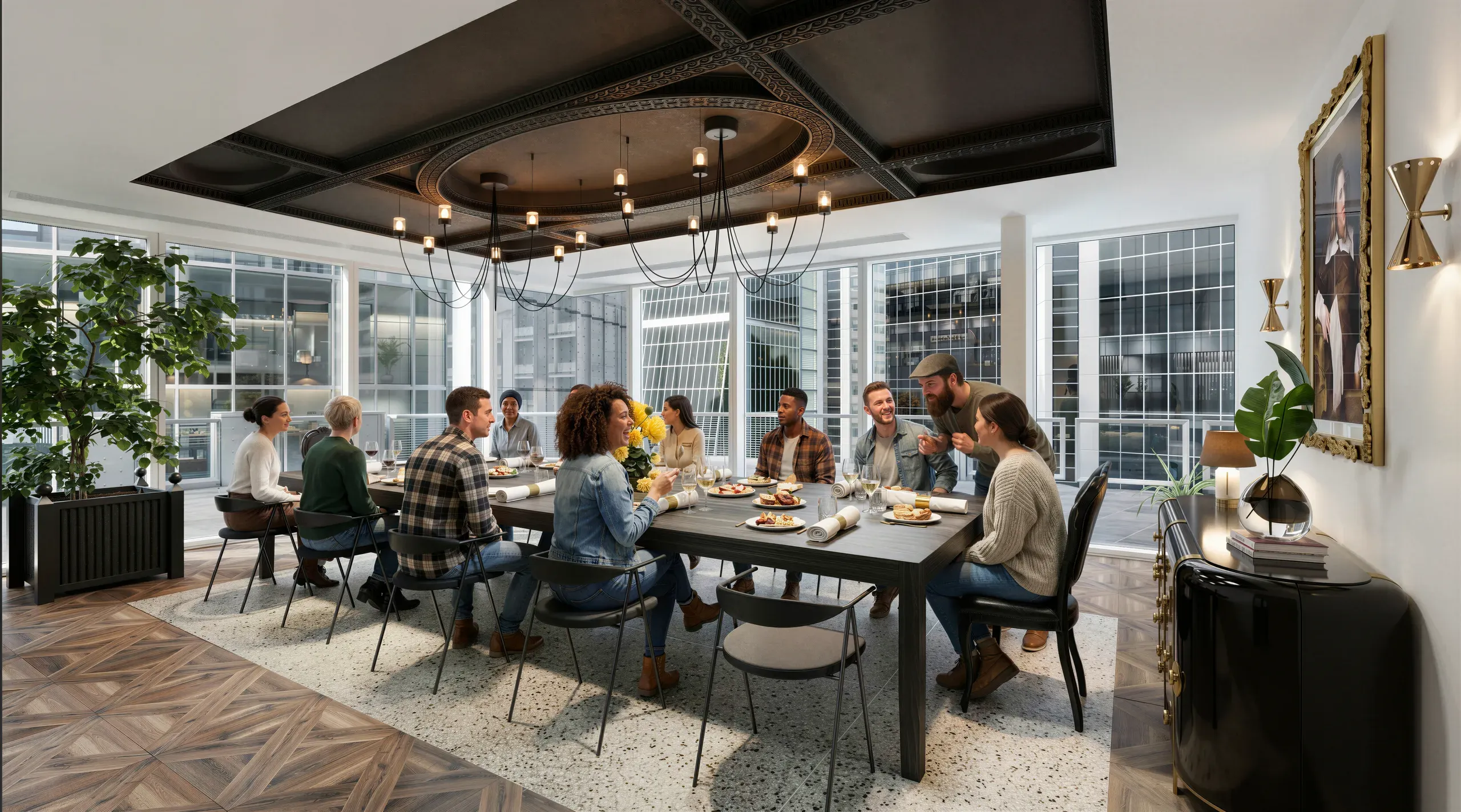
A flythrough, sometimes written fly-through, is a camera that moves where no person can go. It lifts off the ground, sweeps over the roofline, circles the building, dives toward an entrance. It is an aerial point of view, and it is brilliant for one thing: showing a project in its context, at scale, fast. A 3D walkthrough keeps the camera at human eye level and moves at human pace, in through the door and along the route someone would actually take. One shows you the object. The other puts you inside it.
Why the flythrough feels impressive and sells less
Flythroughs photograph well. They open with a hero sweep, the music swells, the building rotates against a sunset. Clients love them in the room. The problem shows up later, when the viewer tries to remember what the inside felt like and cannot, because they never went in. A camera on rails drifting past architecture has no point of view, and a film with no point of view is forgettable.
I will be blunt, because picking a side is the point of an article like this. For selling a space that people will work in or live in, the flythrough is the weaker tool. It answers "how big is it and where does it sit", which matters for a masterplan or a tower seen from across the river. It does not answer "what is it like to be here", which is the question that wins a fit-out tender or an off-plan sale. For those, the walkthrough wins, and it is not close.
When the flythrough is the right call
That does not make the flythrough useless. It makes it specific.
A masterplan with a dozen buildings needs altitude to be legible. You cannot walk a district in 90 seconds, and trying to would lose the viewer. Innovation-district work at the scale of NEOM, or a multi-block residential development like Mount Anvil, reads from the air in a way it never could from the pavement. A single landmark tower, where the selling point is the silhouette and the skyline, is a flythrough subject too. So is any project where the surroundings are the story: a riverside scheme, a campus in landscape, anything where context does more selling than the interior. We populate those exteriors with accurate neighbouring structures and landscaping, because that context is also what gets a scheme through planning and neighbour consultation.
The honest test is simple. If the value is on the outside or seen from above, fly. If the value is on the inside, at eye level, walk.
The office case, where it is not even a contest
For office and workplace projects, the work I do most, the walkthrough wins almost every time. On schemes like the Techspace London office or The Hickman in Aldgate, an office sells on flow: how reception leads to the work floor, how the boardroom sits next to the breakout space, whether the place feels open or boxed in. A flythrough cannot show flow, because flow only exists at the speed and height of a person moving through it. We size the runtime to the building, roughly 60 seconds for every 500 square metres of floor, so the viewer walks the whole story without it dragging. Sweep over an office instead and you have shown the client a roof.
There is a hybrid worth knowing about. A film can open with a short flythrough to establish the building and its setting, then drop to eye level and walk you in. Used with discipline, the establishing sweep earns its place by orienting the viewer before the human tour does the selling. Used lazily, it is just a flythrough with a walkthrough bolted on the end, and you can feel the join.
Both are made the same way, so do not pay twice
One practical point that saves money. A walkthrough and a flythrough of the same project share the same 3D scene underneath. We build the model in 3ds Max, light it with V-Ray or Corona, and develop the look in Chaos Vantage, all of it once. The camera is the only variable after that. So if you genuinely need both, an establishing flythrough for the brochure cover and a walkthrough for the pitch, commission them together and you pay for one scene, not two. On our model that means the second camera is a fraction of the first, not another £2,500 from scratch. A studio quoting you full price for each, as if they were unrelated builds, is pricing by the menu. We render both on our own farm, six nodes each on an RTX 5080, which is how we keep that shared-scene work fast enough to hit a pitch date.
What I would not do is order a flythrough because it is cheaper or faster and hope it does a walkthrough's job. It will not. The thing I have not solved, and will admit, is the client who wants the cinematic aerial spectacle and the intimate human tour in 60 seconds for one small budget. Something has to give: the runtime, the scope, or the expectation. Decide which before you brief, not after you see the first draft.
For office work specifically, our 3D walkthrough production covers how we shoot at eye level, and you can see it on the Techspace London office and The Hickman in Aldgate.
Sources
- Virtual tour, Wikipedia (accessed 2026-07-06)
- Architectural rendering, Wikipedia (accessed 2026-07-06)