What Is CGI? Meaning, How It Works, and CGI vs AI in 2026
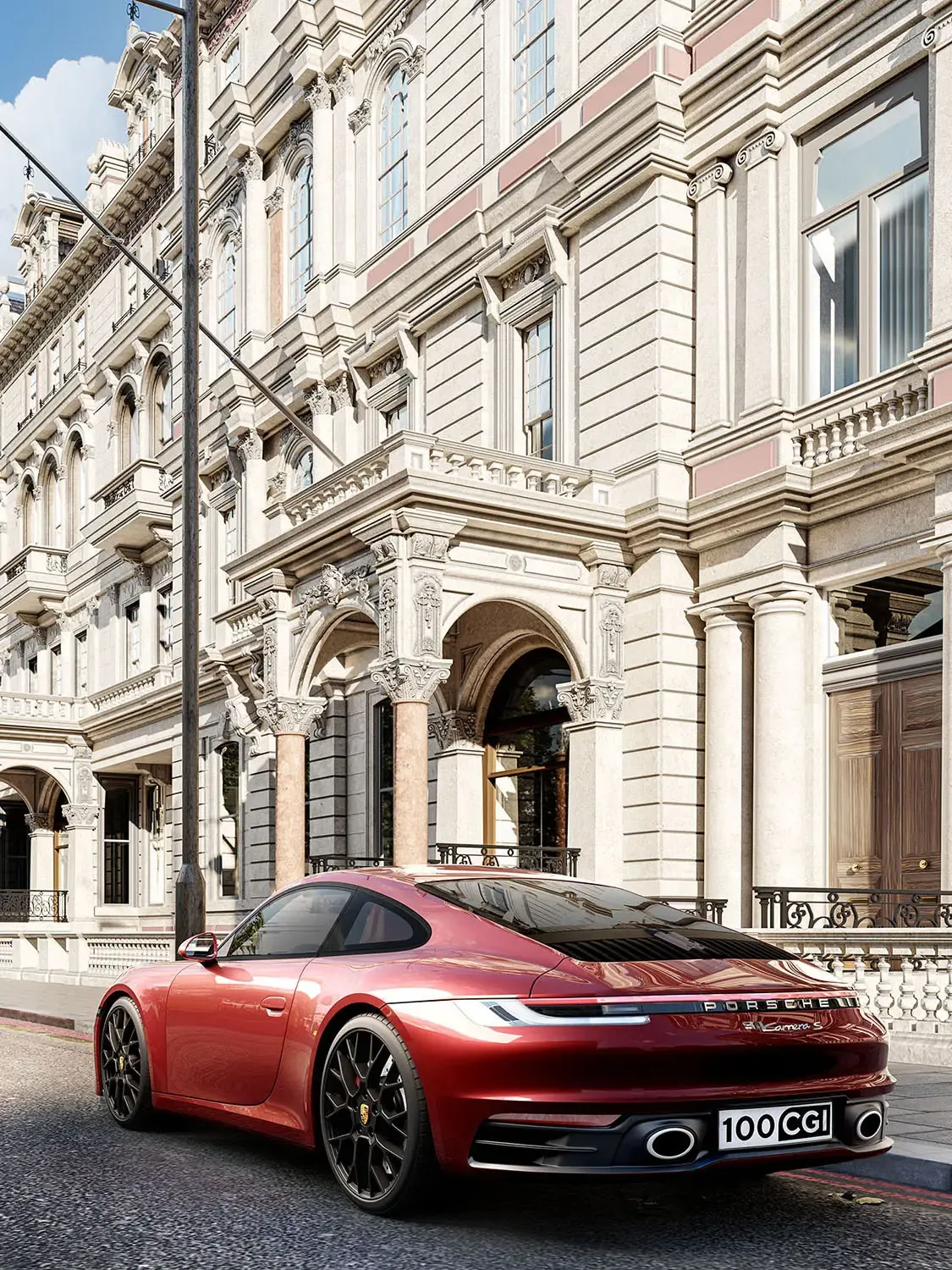
CGI stands for computer-generated imagery: any image or footage produced with 3D software instead of a camera. A rendered building that has not been built, a Pixar film, a car in an advert that never existed as a photograph, all CGI. The term covers both single images (renders) and animation, and in 2026 it sits next to, but is not the same as, AI-generated imagery, a distinction this guide takes seriously because the two are constantly confused.
What does CGI actually mean?
The literal meaning is simple: imagery generated by a computer rather than captured by a lens. In practice the term almost always means 3D CGI, where a scene is built as geometry in software, dressed with materials, lit, and then rendered into a final image. 2D computer graphics exist too, but when a film credit, an agency brief or an architect says CGI, they mean the 3D pipeline.
One neighbouring term is worth separating. VFX (visual effects) is the craft of combining CGI with filmed footage: the dragon composited into a real sky. Pure CGI needs no camera at all, which is exactly why architecture uses it: you cannot film a building that has not been built.
How does CGI work?
Every CGI image, from a superhero film to a kitchen render, goes through the same five stages.
Modelling builds the geometry: every wall, chair and door handle as a 3D object, in software such as 3ds Max or Blender, usually from drawings, scans or reference photography. Materials and texturing tell every surface how to behave: the roughness of plaster, the grain of oak, the way brushed brass smears a reflection. Lighting places and tunes light sources; it is where most of the realism lives, because human eyes forgive imperfect geometry but instantly distrust wrong light. Rendering is the heavy computation: an engine such as V-Ray or Corona simulates how light physically bounces through the scene, which is why serious studios run render farms; ours is six Threadripper nodes with RTX 5080 GPUs, and a single photoreal image can still take hours. Post-production grades and finishes the frame, the same way photography is finished.
Where is CGI used?
Film and television are the famous cases, and games run CGI in real time, but most working CGI is quieter. Advertising renders products that are easier to model than to photograph. E-commerce uses CGI for furniture and configurable goods. And architecture and property, our own field, use CGI to show buildings before construction: photoreal stills, walkthrough films and browser tours produced from CAD drawings, so a scheme can win planning, a tender or an off-plan buyer while it is still a set of PDFs. That work is what our architectural visualization services exist for.
CGI vs AI-generated images: not the same thing
This is the 2026 question, so here is the practical split. An AI image model generates plausible pixels from a prompt; it does not know what your building or product actually is, and it will confidently change the geometry between two generations. CGI builds a measurable scene: the kitchen in the render is the kitchen in the drawings, to the millimetre, and view two agrees with view one because both were photographed inside the same 3D model.
That is why the working answer is hybrid, not either-or. We use AI where plausibility is enough (concept moods, background people, voiceover) and CGI where accuracy is the product, which in architecture is everywhere a client signs something. An AI picture of roughly your building is a mood board; a render of exactly your building is a deliverable.
What does CGI cost?
The honest answer is that CGI is priced by scene complexity and accuracy requirements, not by the minute. Film-grade character work costs thousands per second. Product and architectural CGI is far more accessible: our architectural stills are 700 pounds per view, a 60-second walkthrough film starts at 2,500 pounds, and an estimate lands within 1 hour of seeing drawings. The cost driver is always the same: how much of the scene has to be built accurately, and how much light the renderer has to simulate.
Frequently Asked Questions
Is CGI the same as 3D rendering?
Rendering is one stage of CGI: the computation that turns a built 3D scene into a finished image. CGI is the whole craft, from modelling to post-production. In everyday use the terms overlap, and for buying purposes they point at the same service.
Is CGI animation different from normal animation?
CGI animation is animation produced in a 3D scene, as against hand-drawn or stop-motion frames. The animation part (timing, movement, storytelling) is the same discipline; the difference is that a CGI animator moves cameras and objects inside a model rather than drawing each frame.
Will AI replace CGI?
Not where accuracy is the product. AI is already replacing parts of the CGI workflow (concept passes, people, cleanup) and it keeps getting better. But a client approving a 3 million pound fit-out or an off-plan apartment needs the image to match the drawings exactly, and generative models do not make that promise. The pipelines are merging, not competing.
What software is used for CGI?
The standard architecture and product stack is 3ds Max or Blender for modelling, V-Ray or Corona for rendering, and tools like Chaos Vantage for real-time work. Film pipelines add Maya, Houdini and Nuke. The software matters less than people expect; the lighting eye of the person driving it matters more.
Sources
- Computer-generated imagery, Wikipedia (accessed 2026-07-07)
- Autodesk 3ds Max, Autodesk (accessed 2026-07-07)
- V-Ray, Chaos (accessed 2026-07-07)