Residential 3D Rendering: Costs, Types, Timelines and ROI
A property developer sits in a site office reviewing a £150,000 budget allocated for a physical show home that will take three months to build. Across the desk, the marketing lead suggests a completely different approach. They propose allocating a fraction of that budget to residential 3D rendering to start pre-selling units tomorrow. This scenario plays out daily in real estate development, where the race to secure off-plan reservations dictates project viability.
The transition from physical mock-ups to digital pre-construction visualization is no longer a luxury. It is a fundamental requirement for securing project financing and buyer commitment. High-fidelity digital assets allow teams to test market reactions to different finishings before a single brick arrives on site. However, navigating the procurement of these visuals requires a sharp understanding of pricing tiers, production timelines, and software capabilities.
Developers who treat computer-generated imagery as a simple commodity often face budget overruns and delayed marketing launches. Those who understand the underlying mechanics of production can accurately forecast their return on investment. This guide breaks down the exact costs, production steps, and strategic applications of property visualization for 2026.
What are residential renders?
Residential renders are photorealistic CGI images of houses and apartments produced from drawings, used to sell or approve homes that do not exist yet. The term covers everything from a single exterior view of a self-build to the full marketing set for a 300-unit scheme: hero exteriors, show-apartment interiors, 3D floor plans and aerial context shots. If the input is a plan and the output is an image a buyer believes, it is a residential render.
The distinction that matters at briefing is purpose, not style. A planning image answers to the council (see our guide to verified views when that turns formal); a marketing image answers to the buyer. One model can produce both, but the camera, lighting and dressing decisions differ, so state the purpose in the first line of the brief.
Which types of residential render does a project actually need?
Exterior renders do the heavy lifting: they anchor the portal listing, the hoarding and the brochure cover, and one strong dusk hero usually outperforms three average daylight views. Interior renders earn their fee where the specification is a selling point: kitchens, bathrooms and the living space of the show unit. If the finishes are standard, render fewer interiors and put the budget into the exterior set.
3D floor plans are the cheapest conversion tool in the stack, because buyers who cannot read a 2D plan can read furniture. Off-plan schemes add one more layer: a 360 tour of the unbuilt unit, which turns a static listing into a viewing. A typical mid-size development lands on four to eight exteriors, three to five interiors, a floor-plan set and one tour, all commissioned from a single model.
What hidden factors drive residential 3D rendering costs?
Residential 3D rendering costs are driven primarily by geometry complexity, the required level of global illumination, the number of revision cycles, and the software licensing overhead of the chosen studio. Understanding these variables allows developers to control their marketing budgets effectively.
The most significant variable in production pricing is the origin of the 3D assets used in the scene. A room populated with standard furniture from a pre-existing digital library takes minutes to set up. In contrast, modeling bespoke cabinetry or custom designer furniture requires hours of manual polygon manipulation. Every unique architectural detail you demand increases the baseline production time.
Lighting calculations also heavily influence the final invoice. Setting up a basic daylight environment is mathematically simple for modern rendering engines. Creating atmospheric dusk shots with multiple interior light sources requires complex global illumination calculations, which demands more compute time. The biggest waste in CGI budgets is renderfarm time. Conversely, the biggest gain in visual quality comes from meticulous lighting setup by a senior artist.
Revision cycles are the silent budget killers in architectural visualization. Studios price their services based on an assumed number of feedback rounds. If a developer repeatedly changes floor finishes or window specifications after the initial modeling phase, costs will escalate rapidly. Brief clarity matters more than studio skill. A mediocre brief produces mediocre work even from the best studio.
- Asset origin: Custom modeling adds significant hourly fees compared to using library assets.
- Lighting complexity: Night and dusk scenes cost more due to complex light bounce calculations.
- Revision frequency: Unplanned design changes after the first draft trigger hourly overage charges.
- Volume discounts: Commissioning five views of one room is cheaper per image than five different rooms.
- Provider scale: Automated offshore services like BoxBrownie offer interior and exterior residential renders starting at US$280 each.
- Resolution targets: Chasing 4K resolution often makes renders look worse because every small modeling shortcut becomes visible.
How much does a photorealistic residential exterior render cost in 2026?
In 2026, residential 3D rendering prices range from $200 for basic renders to $5,000 for detailed commercial visuals. The extreme variance in this pricing reflects fundamental differences in artistic skill, environmental detail, and geographic market rates.
At the lower end of the spectrum, you will find high-volume services charging between $200 and $400 for a standard exterior view. These providers rely on templated lighting setups and generic foliage libraries to achieve rapid turnaround times. The resulting images are adequate for basic planning applications or entry-level property listings. However, they typically lack the nuanced shadows and material imperfections required to evoke an emotional response from luxury buyers.
Premium photorealistic architectural visualization occupies the $1,500 to $5,000 bracket per image. Across the 200+ residential and commercial rendering projects 100CGI Studio has delivered since 2018, we have seen that premium pricing funds the critical final 10% of image quality. This budget allows artists to build custom surrounding streetscapes, simulate accurate weather conditions, and apply advanced material texturing. It also covers the cost of dedicated project management and structured revision phases.
The cost difference also comes down to the discipline of the creative process. Reference photo discipline beats high-poly geometry every time. One hour finding three to five reference photos saves eight hours of revision later in the project. When developers pay a premium rate, they are paying for a studio that enforces this discipline before touching any 3D software.
For ancillary marketing assets, pricing is highly predictable. Standard 2D floor plans average around $32, while 3D floor plans cost between $250 and $600 depending on furnishing details. Developers should view these as necessary add-ons rather than standalone marketing tools.
Which tools give the best balance of quality and cost for developers?
The best balance of quality and cost comes from pairing 3ds Max for complex modeling with V-Ray or Corona for photorealistic output, while Unreal Engine 5 is unmatched for rapid, real-time iterations. The software stack a studio uses directly dictates their pricing structure and turnaround capabilities.
Industry data from PixReady states the most common software for house rendering is 3ds Max. This Autodesk product remains the undisputed heavyweight for architectural modeling due to its vast plugin ecosystem. However, it carries a high commercial licensing fee, which mid-tier and premium studios must pass on to their clients.
The choice between rendering engines like V-Ray 6 and Corona Renderer 11 usually comes down to studio habit, not capability. Both produce indistinguishable photorealistic results at this point. V-Ray offers deeper technical control for massive exterior scenes, while Corona excels at handling complex interior lighting scenarios with minimal setup time.
| Software Engine | Primary Application | Licensing Cost Impact | Turnaround Speed | | :--- | :--- | :--- | :--- | | 3ds Max 2025 | Industry standard architectural modeling | High commercial overhead | Standard (days) | | Blender 4.2 | Open-source modeling and rendering | Zero licensing fees | Standard (days) | | Unreal Engine 5.4 | Real-time interactive environments | Favorable for architecture | Very Fast (hours) | | V-Ray 6 | Complex exterior global illumination | Moderate plugin fee | Renderfarm dependent | | Corona 11 | Photorealistic interior lighting | Moderate plugin fee | Renderfarm dependent |
Blender 4.2 has disrupted the lower end of the market by offering a completely free, open-source alternative. Studios utilizing Blender can offer highly competitive pricing by eliminating Autodesk licensing fees from their overhead. Meanwhile, Unreal Engine 5.4 is shifting the paradigm entirely by removing the traditional renderfarm bottleneck, allowing developers to review changes in real time.
How long does a typical pre-construction visualization project take?
A standard pre-construction visualization project takes between 10 and 19 days from the initial brief to the final high-resolution delivery. This timeline assumes clear communication and prompt feedback from the developer or lead architect at each milestone.
The process begins with initial concept and asset gathering, which typically consumes 1 to 3 days. During this phase, the studio digests CAD files, material schedules, and mood boards. We tracked 38 projects in 2024. Those with a 3-page brief plus 5 reference photos averaged 1.7 revision cycles, compared to 4.3 cycles on 1-page briefs.
Modeling and material setup is the most labor-intensive phase, requiring 4 to 7 days. Artists construct the core geometry, apply Substance 3D Painter textures to bespoke items, and populate the scene with digital assets. If the project requires matching an existing physical space, integrating Matterport scanning data can add another day to the structural alignment process.
Lighting, rendering, and post-production take an additional 3 to 5 days per primary view. This is where the mood of the image is established through atmospheric effects and color grading. Creating interactive assets like 360 virtual tours will add another 2 to 4 days to compile and test the panoramic nodes.
Client review cycles account for the final 2 to 4 days of the schedule. I will admit one limitation in our industry. One area where we still see unpredictable timelines is client review bottlenecks. We have not found a perfect software solution to force faster client approvals when multiple stakeholders are involved.
Why does integrating 3D renders into sales funnels boost developer ROI?
Integrating 3D renders into sales funnels boosts ROI by securing off-plan reservations months before construction finishes, directly reducing holding costs and the need for expensive physical show homes. High-quality visuals bridge the imagination gap for buyers who cannot read architectural blueprints.
When developers market premium properties, the visual assets must match the price tag. Presenting a flat, untextured CAD elevation to a buyer evaluating a £2 million property signals a lack of sophistication. Photorealistic imagery allows marketing teams to sell a lifestyle rather than just a floor plan. This emotional connection directly correlates to higher conversion rates and shorter sales cycles.
At 100CGI Studio, we have observed this dynamic across multiple high-end London developments. For example, our work on the Apartment in Mayfair required meticulous attention to material finishes to satisfy international buyers. The ability to showcase the exact marble veining and brass fixtures before procurement allowed the developer to secure commitments based purely on digital assets.
Similarly, large-scale developments benefit from exterior visualizations that establish the neighborhood context. Projects like the Mount Anvil Development and commercial spaces in Grosvenor Place rely on CGI to demonstrate how the new architecture integrates with existing streetscapes. This is critical not just for buyer marketing, but for securing rapid planning permissions from local authorities.
Virtual showrooms only pay off when integrated with real e-commerce or CRM systems, not as standalone marketing toys. By embedding high-resolution renders into interactive digital brochures, sales teams can track exactly which views capture buyer attention the longest. This data allows developers to adjust their physical finishings based on digital engagement metrics, mitigating inventory risk.
How can developers calculate the true ROI of a rendering investment?
Developers calculate true ROI by subtracting the total rendering production and licensing costs from the quantified revenue uplift per unit sold, then factoring in the saved carrying costs from faster sales. A disciplined approach to this calculation proves that premium CGI is a cost-saving mechanism.
How do you measure holding cost reductions?
Every month a property sits unsold after completion incurs financing costs, property taxes, and maintenance fees. If a £5,000 investment in premium 3D renders secures a buyer three months before construction finishes, the developer saves three months of commercial interest on that unit. For a £1 million property with a 6% interest rate, saving three months of holding costs equates to £15,000.
How do renders replace physical marketing expenses?
Constructing, furnishing, and staffing a physical show home costs tens of thousands of pounds. High-fidelity renders and virtual tours replace this requirement entirely for early-phase sales. The cost of a complete digital marketing package, including hero exterior shots and interior panoramas, is rarely more than 10% of the cost of a physical fit-out.
What is the impact on final sale price?
Properties marketed with photorealistic imagery consistently command a price premium. Buyers perceive higher value when presented with polished, aspirational visuals. If a £400 exterior render contributes to a 2% increase in the final negotiated sale price of a £500,000 home, the digital asset has generated a £10,000 gross return.
How do you structure the spreadsheet model?
To build a basic ROI model, developers should input their average holding cost per month and target sale price. Next, subtract the exact quote provided by the 3D studio. Finally, estimate the reduction in days-on-market based on historical data of off-plan sales versus post-completion sales. The resulting figure dictates whether you should hire a budget service or a premium studio.
How do you choose a residential rendering studio?
Look at three things before price. First, completed residential work at your market level: a studio that renders 400,000 pound houses well can still miss what a 2 million pound buyer expects from a kitchen. Second, process: ask how many revision rounds are included and what triggers an overage; the answer tells you whether the studio manages projects or just renders them. Third, response discipline on the first email, because communication speed before you pay rarely improves after.
Where we fit, honestly: 100CGI is a London studio of senior generalists, not a 100-artist art house. Developers come to us for photoreal residential sets on production deadlines, not for competition-winning art frames. If your scheme needs the latter, budget the premium bracket above and a longer timeline. What a launch set includes, from exteriors to 3D floor plans, is on our real estate rendering services page.
Frequently Asked Questions
How much does a 3D interior rendering cost?
Interior rendering pricing depends heavily on custom furniture requirements and lighting scenarios. According to industry data, interior renderings typically cost between $600 and $2,500 per view. Basic residential interiors with standard off-the-shelf digital furniture sit at the lower end of this bracket, while bespoke luxury spaces command the higher fees.
Can AI tools replace traditional render pipelines?
AI generative tools like Leonardo.Ai and ArchiVinci accelerate early conceptual ideation but do not replace photoreal final delivery. These tools struggle with precise spatial accuracy and specific material consistency across multiple viewing angles. They are excellent for mood boarding, but useless for verifying if a specific sofa fits within a strictly dimensioned floor plan.
What is the fastest way to get a quote?
The fastest way to secure accurate pricing is to provide a studio with locked CAD files, a clear finish schedule, and exactly three reference images for lighting style. Some high-volume platforms automate this process. For example, Render 3D Quick offers a free quote in 5 to 10 minutes through their online portal.
Do 3D floor plans add value to a property listing?
Yes, they significantly improve spatial comprehension for buyers. While hero renders sell the emotional appeal of a property, 3D floor plans explain the practical flow of the layout. High-volume providers like BoxBrownie offer 3D floor plans starting at US$32 each, making them an essential, low-risk addition to any marketing package.
To stop losing off-plan sales to competitors with better visual assets, gather your current CAD files and material schedules today. Send these documents to a professional visualization studio for a baseline pricing assessment to see exactly how much budget you need to launch your next pre-sales campaign.
Sources
- BoxBrownie 3D Rendering Services, BoxBrownie (accessed 2024-05-24)
- PixReady 3D Rendering Software Data, PixReady (accessed 2024-05-24)
See It In Action
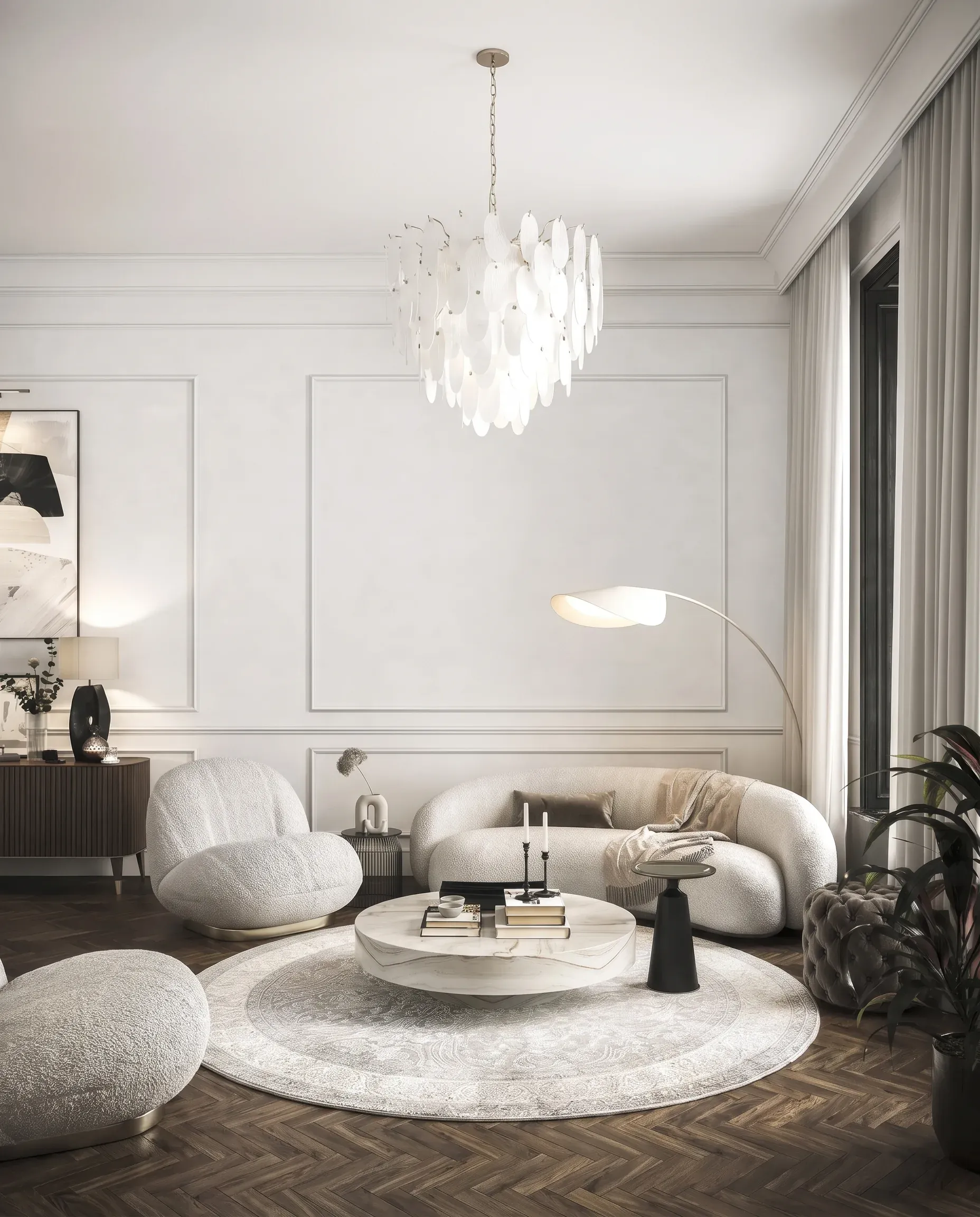
Mayfair Apartment
View Case Study →Need photorealistic renders for your next development?
100CGI Studio delivers premium residential 3D rendering services to help you secure off-plan sales faster.
Get a quote